The Brodie Family and a tale of two portraits.
I enjoy visiting the Old Parsonage at Eastbourne for a coffee on a Thursday morning. You will always get a warm welcome at his ancient half-timbered building – and usually home-made cake too!

The room is dominated by two portraits, the severe, glowering portrait of the Reverend Alexander Brodie and, close by, the picture of his rather weary looking wife Anna. She had 11 children so can be excused for her tired look but there is more to her than meets the eye!


Alexander Brodie was born on the island of Antigua in the West Indies in 1774. Having been disinherited in Scotland, his father had travelled to the West Indies, originally opening a store and later buying land. On the death of his father, Alexander inherited a 125 acre estate on the island. It was called Windy Hill and was in the southern part of the island, coincidentally in the parish of St Marys. The estate was producing sugar and rum and the inheritance included 80 slaves. A quick check on-line shows that the land is still unofficially known as ‘The Brodies’.
I am unsure when Brodie moved to England. He was ordained in 1798 and attended Trinity College, Oxford receiving a M.A. in 1801. The following year he married Anna Walter in Teddington, Surrey. She was the daughter of John Walter, the founder of the Daily Universal Register (which later became ‘The Times’) and had inherited, not only his wealth but a share in the paper.
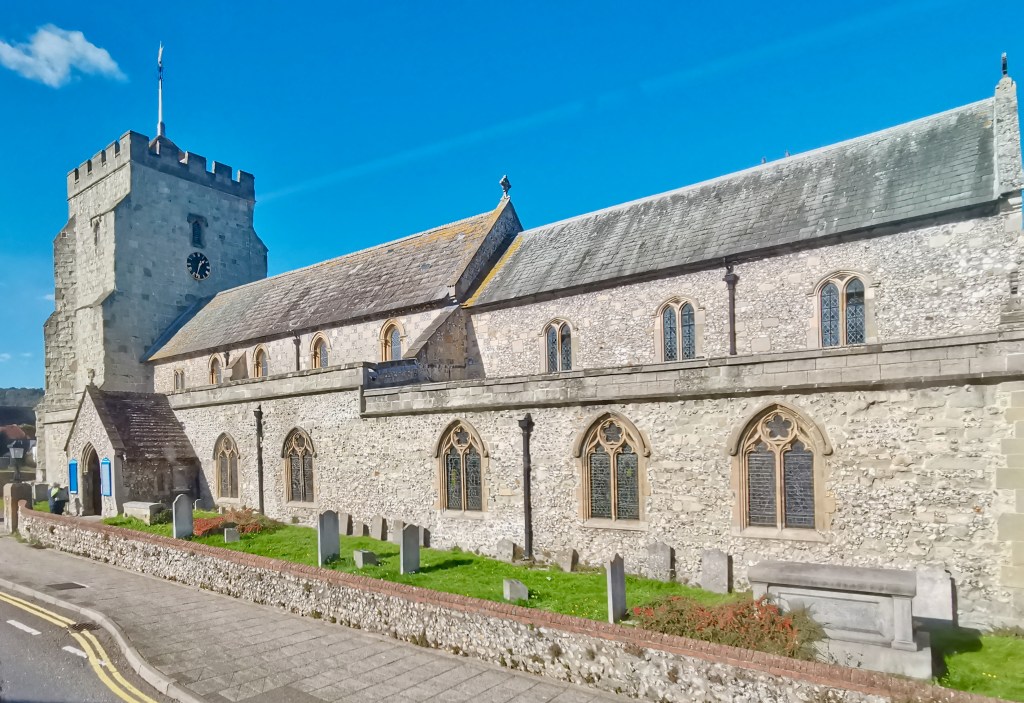
William, the family historian boasted that his father Alexander had been Chaplain to the Prince Regent – later George IV but I can find no record of this. On 14th August 1809 Alexander was instituted as Vicar of Eastbourne (St Mary’s Church) but continued his studies, becoming a Doctor of Divinity (DD) in 1811.
He lived with his wife and family in The Gore, a large house to the north of Eastbourne. Even as the vicar of Eastbourne, he benefitted from his West Indian estates, finally selling them in 1817. The sale included 64 enslaved people and a rum-store.
The family home, The Gore is described as ‘A large mansion house, with 11 bedrooms, laundry, coach house, stables, outbuildings, lawn, pleasure grounds, extensive walled-in gardens well stocked with fruit trees. It included two pastures and five acres of land with extensive views of the sea and the Downs.’ It was accessed from a drive that led from Ocklynge Road. The word ‘gore’ is an ancient name meaning a triangular or odd-shaped piece of land. There was a white boarded observatory which once stood in the grounds of the house and, for three weeks, during a particularly harsh winter in 1849 an igloo was actually built in the garden and was so substantial that tea was served in it!

Brodie made a number of changes to the church including removing the schoolroom which once abutted against the north wall (marks can still be seen to show where this was.) he arranged for the church-bells to be recast and built a gallery in the church. However in 1818 he was also responsible for the burning of the old parish chest and its contents of documents.
In 1823, Alexander but particularly his wife Anna, fell foul of the great English radical William Cobbett (1763-1835). Cobbett, famous for his book ‘Rural Rides’ was a critic of corrupt governments and stood up for Catholics and the poor, especially the rural poor.
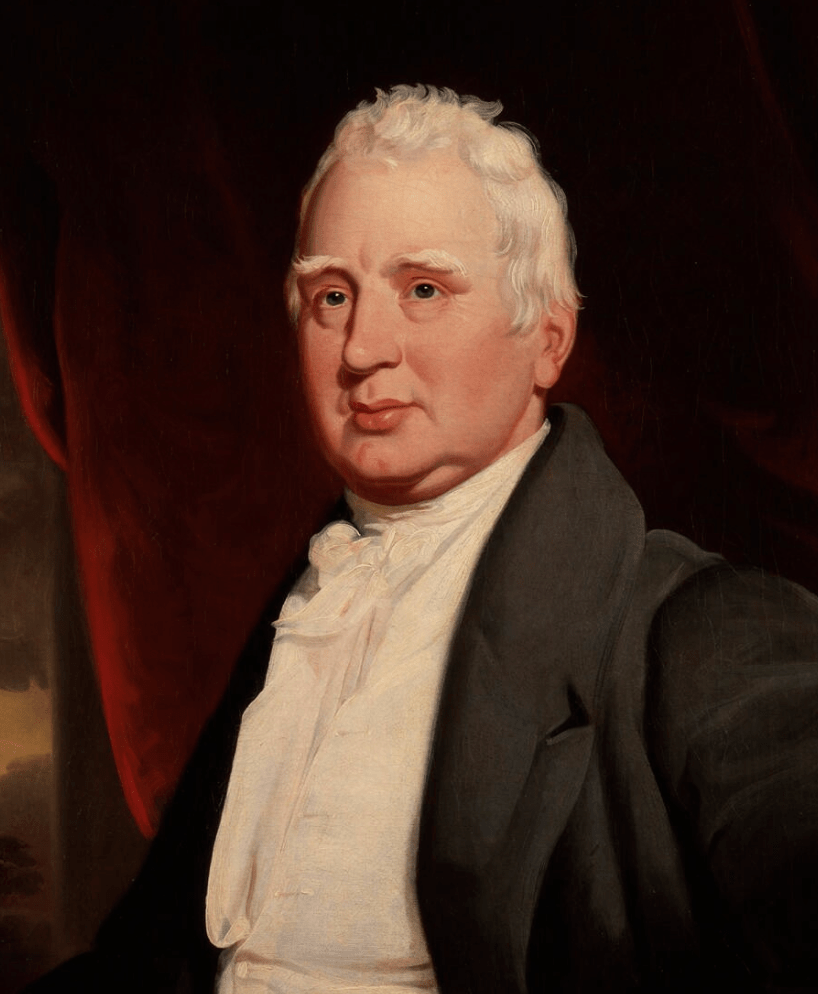
Cobbett was clearly angry that, although Anna was a proprietor of The Times newspaper, she could hide behind the fact that she was a (vicar’s) wife and had no responsibilities in law. Writing in his own newspaper ‘The Weekly Political Register’ Cobbett was brutal in his attacks on Anna calling her a she-bully, a blackguard and a foul-tongued street-walker. He accused her of being a witch saying the only thing that she had hidden under her petticoat was a broomstick and suggested that she should be kicked down stairs. He also mentions her husband; ‘The Reverend Alexander Brodie of Eastbourne who swaggers around London wearing a fire-shovel’ hat!’ (I believe that the Brodies owned property near the Strand in London – a fire-shovel hat was a tricorn hat with a long front traditionally worn by Anglican clergy. It was usually made of black beaver skin)

The spat with Cobbett continued for a few years but Anna seemed to eventually have won Cobbett over by the use of wit and poetry. In April 1828 he wrote an open letter to “Anna Brodie, Wife of Doctor Brodie of Eastbourne in Sussex and principal owner of the Old Times newspaper.” Saying that he forgave her and in his admiring eyes she was now ‘as clean and white as a smock from a washing-tub’ and that she was indeed ‘The Queen of the Press’. This may have been sarcastic though as the truce did not last and in 1833 Cobbett took her to Court when the Times hinted that Cobbett was a bankrupt. Anna had to pay Cobbett £100 damages for defamation, much less than the £5,000 he demanded, probably because of the insults that he had previously printed. Anna was clearly an influential person and a few weeks later there were demands for her to appear at the bar of the House Of Commons to explain why The Times had printed details of a debate when only Hansard was allowed to do this.

Anna (and therefore The Times) was conservative in its outlook and supported the Torys. She was a supporter and was probably friends with William Huskisson and George Canning. Huskisson (1770-1830) was the the MP for Morpeth and is noted for being the first person to be killed by a railway train. Despite having a Northumbrian constituency he lived near Chichester and holidayed in Seaford more than once. Canning (1770-1827) was Prime Minister and MP for Seaford and in September 1821 the two men and their families holidayed together in Seaford and it is more than likely that they would have visited their valued supporter Anna Brodie at The Gore just a few miles away in Eastbourne.
It seems that during the 1820s the words ‘The Times’ ‘Anna Brodie’ and ‘The Thunderer’ were interchangeable. The Statesman of March 1823 said that Anna had speculated in Spanish Bonds and In December 1827, The Trade’s Free Press estimated that Anna (and her partners) were making up to £30,000 per year from publishing The Times. That is about £6million today.
Back in Eastbourne the Reverend Brodie was the Chairman of the local Bible Society who held their meetings in the Assembly Room of the Lamb Inn in the 1820 but he died in June 1828 when he fell from his carriage. There is some discrepancy about the location of his fall. Local tradition has it, that he fell from his carriage outside the Crown Inn in Crown Street, Eastbourne however press reports tell a different story; the Aberdeen Press and Journal of 9th July 1828 reports “We are sorry to announce the death of the Rev. Dr. Brodie of Eastbourne which took place on Wednesday, in consequence of his having been overturned in a phaeton which he was driving, accompanied by his daughters, Mrs Garland and Mrs Gordon. In descending Malling Hill, (near Lewes), the horse (always till then a remarkably quiet animal) became restive and, the reins breaking, the whole party were precipitated from the carriage. The reverend gentleman, whose loss will long be regretted by his parishioners, lingered for thirty hours. The ladies were not seriously injured. Dr Brodie was married to a sister of Mr Walter of the Old Times and his lady is the person always spoken of by Cobbett as personifying that newspaper” (It is odd that this inaccurate obituary should be reported so far away but it should be remembered that the Brodie family were originally from Scotland.)
However the more local Sussex Advertiser reported “As the Rev. Alexander Brodie DD, the universally respected Vicar of that parish, was returning towards his residence in a low four-wheel chaise, accompanied by three ladies, the horse, just as it passed the Lamb Inn, galloped off at full speed, occasioned, it is supposed, by the splinter bar pressing upon its hocks, and the Rev. Dr. having lost all command of the animal, he continued his career until the wheels of the vehicle came into contact with a post near to a cottage, when, by sudden shock, the whole party were precipitated with considerable violence to the ground. The Rev. Gentleman falling upon his head on a brick pavement leading to the cottage, was taken up in a state of insensibility with a paralytic affection. Surgical assistance arrived with promptitude but was unavailing and the unfortunate gentleman expired at three o’clock on Wednesday morning” An inquest was held the following day and the Coroner returned a verdict of Accidental Death. The Sussex Advertiser went on to report that “It is impossible to describe the universal gloom which the deplorable and fatal accident has spread among the inhabitants of Eastbourne. Rev Dr Brodie was, in life, as highly respected and beloved as he is in death and is sincerely and deeply lamented. His urbanity of manners and benevolence of heart had endeared him to all”

It is probable that the horse bolted as it turned past the Lamb Inn onto the hill of Ocklynge Road and careered down to the junction of Crown Street probably hitting a post near the Crown Inn.
Alexander’s will left his estate , including the portraits, to his wife Anna. I was interested to see who had witnessed his will (which was proved on 2nd August 1828) You would expect that the good reverend would choose two people from the gentry or maybe his two churchwardens, however his will was witnessed by ‘Thomas Baker Jnr – Innkeeper and William Dumbrill – Shoemaker’. Thomas Baker was the landlord of The Lamb Inn from 1812 to 1832.
Alexander was buried in the family grave in the churchyard but there is a memorial to him at the west end of the nave. It reads “Sacred to the memory of the Revd Alexander Brodie DD, 18 years the beloved and esteemed Vicar of this parish who died June 18th 1828 in the 54th year of his age. In him a widow and eleven children mourn the irreparable loss of an affectionate husband and kind parent, while the poor lament a beneficent and considerable friend, and the Christian world an active and zealous member”.

After the death of her husband, Mrs Brodie, Anna continued to live in The Gore. In March 1860 she wrote an open letter to national newspapers concerning the rights of children working in factories. Her letter was headed ‘An Appeal to the Women of the United Kingdoms of Great Britain and Ireland on a Subject Demanding Immediate Attention’. It was jointly signed by Lady Mount Temple (wife of the liberal MP William Cowper), Mrs Charles Dickens and Mary Gilbert of Eastbourne’s Manor House. The 1861 census shows Anna living at The Gore and her occupation as a ‘Fundholder’ which implies that she was still benefitting from her shares in The Times. She was sharing the house with three family members, two ladies-maids, a laundry-maid, a house-maid, a kitchen-maid, a cook and a coachman. She died at The Gore aged 85 in 1864 and is buried in the Brodie family vault in the graveyard at St Marys.

Brodie Place in Ocklynge Road is named after the Brodie Family. The Gore was demolished to make way for housing but Gore Park Road is a reminder of this former grand house.
I find it interesting that in local history books, there is far more emphasis on the Reverend Alexander Brodie rather than his wife Anna. It is clear she was a much more significant and interesting figure than had previously been realised.
A few extra details about Alexander and Anna Brodie’s eleven children:
Anna 1803 Eastbourne – 1864 Eastbourne (Married Doctor David Hall)
Both Anna and David who was in the Royal Navy are commemorated at Ocklynge Cemetery in Grave B49 (a cross on a pile of rocks) Anna is also remembered on a church window at St Marys.
Emma 1805 Eastbourne – 1890 Eastbourne (Married Rev H. Grace, Vicar of Jevington.)
With her brother, William she established the Mission Hall in Church Street in 1872. (Later Edgmond Hall). She and her husband are remembered on the family tomb in the churchyard.
Maria 1806 Eastbourne – 1892 Eastbourne
Maria established a school in Meads. She died within a few days of her sister Lydia and like her also left £500 to the Princess Alice Hospital in her will. She is remembered on the family tomb in the churchyard.
Alexander 1808 Eastbourne – 1815 Eastbourne
A church window is dedicated to him in St Marys.
Alfred 1809 Eastbourne – 1857 Eastbourne (Married Mary-Ann Fanning)
He is remembered on the family tomb in the churchyard.
Walter 1811 Eastbourne – 1884 England (Married Maria Jane Burrow)
When he was young he was alone in the church when he looked into a vault which had been opened for a funeral. He could not climb out and later had to be rescued. He lived for much of his life in New Zealand where he became an MP. He is accredited with introducing pheasants and sparrows to New Zealand. He published several books including a history of the Pitcairn Islands. In 1844, he caused a diplomatic furore when he wrote to the Times to accuse Queen Pomare of Tahiti of ‘bigamy and habitual drunkenness’ he also said that the British missionaries on the island were ‘the opposite of tee-totallers’.
Julia 1814 Eastbourne – 1872 Eastbourne
Transcribed many of her father sermons between 1815 and 1828. A bound volume of these is held in the archives of Aberdeen University. She established a school at Seaside close to what is now Christ Church. (My grandmother Bessie Gordon nee Roberts went to this school.) With her sister Lydia she established the ‘Eastbourne Blanket Loan Society’ in 1849. A church window is dedicated to her in St Marys and she is remembered on the family tomb in the churchyard.
Lydia 1815 Eastbourne – 1892 Eastbourne
Lydia (sometimes spelled Lidia) established an Infants School in Church Street in 1853. It later became the parish school and is now known as ’The Flint Halls’ (My great-grandfather Ebenezer Roberts attended this school)
She was a supporter of Princess Alice Hospital and like her sister Maria, left £500 to the institution in her will. She is remembered on the family tomb in the churchyard.
John Walter 1817 Eastbourne – 1839 Edinburgh (died of typhoid)
William 1819 Eastbourne – 1908 Eastbourne Married aged 36 to 20 year to Jane Moore in Somerset.
Having seen Lord Radstock preaching in Uckfield he decided to leave the established church. With his sister Emma he established the Mission Hall in Church Street. He was the ‘Clan Brodie’ genealogist and did extensive research into the family history. He married and had 14 children.
Cecilia 1820 Eastbourne – 1897 Eastbourne (Married Dr Richard Chambers of Wimpole Street, London)
She is remembered on the family tomb in the churchyard.
Frederick 1823 Eastbourne – 1896 Isle of Wight
In 1858 Frederick married Ada Carden, the daughter Sir Robert Carden MP, the Lord Mayor of London. Purchased Fernhill House on the Isle of Wight in 1880. He was a Justice of the Peace and a Fellow of the Royal Astronomical Society. Apparently his hobby was making fireworks!
The Brodie Portraits
The two portraits now seen on the Old Parsonage, were once hung in The Gore, the Brodie’s Eastbourne home and later displayed in family homes in Doncaster and Richmond, Surrey.
Maurice Walter Brockwell was the great-grandson of Alexander and Anna Brodie and had inherited their two portraits. Shortly before his death in 1958 he donated them to St Mary’s Church. Brockwell was a renowned art-historian, specialising in Flemish art. He is noted for assisting Sir Charles Holroyd, the Director of the National Gallery in writing the official catalogues for the gallery. He was himself the son of a clergyman and had been educated at Hurstpierpoint School in Sussex.
The two portraits were brought to Eastbourne in February 1958 and presented to the vicar of St Mary’s, the Reverend Walter March. They were first displayed, later that month, at the ‘Annual Gathering’ of St Mary’s Church in the Winter Garden.
The portraits can be seen during the regular coffee-mornings at the Parsonage but if you go don’t forget to buy some cake!
Sources:
Eastbourne Memories (G.F. Chambers 1910)
Old Eastbourne (Walter Budgen 1912)
Religion & Society in Eastbourne 1735-1920 (Graham Neville 1982)
Public Houses in Eastbourne (Alan Smith 2017)
Centre for the Study of the Legacies of British Slavery (University College of London 2023)
Antigua Sugar Mills (Griot Institute 2023)
Ancestry.Com
National Newspaper Archives
 Quirky Sussex History by Kevin Gordon