As you leave Seaford heading east towards Eastbourne, the cottage on your right seems to have a very high number – 151 – surely there are not that many houses in narrow Chyngton Lane?

In nearby Bishopstone, the old Post Office is now divided into three cottages numbered 133, 134 and 135 !
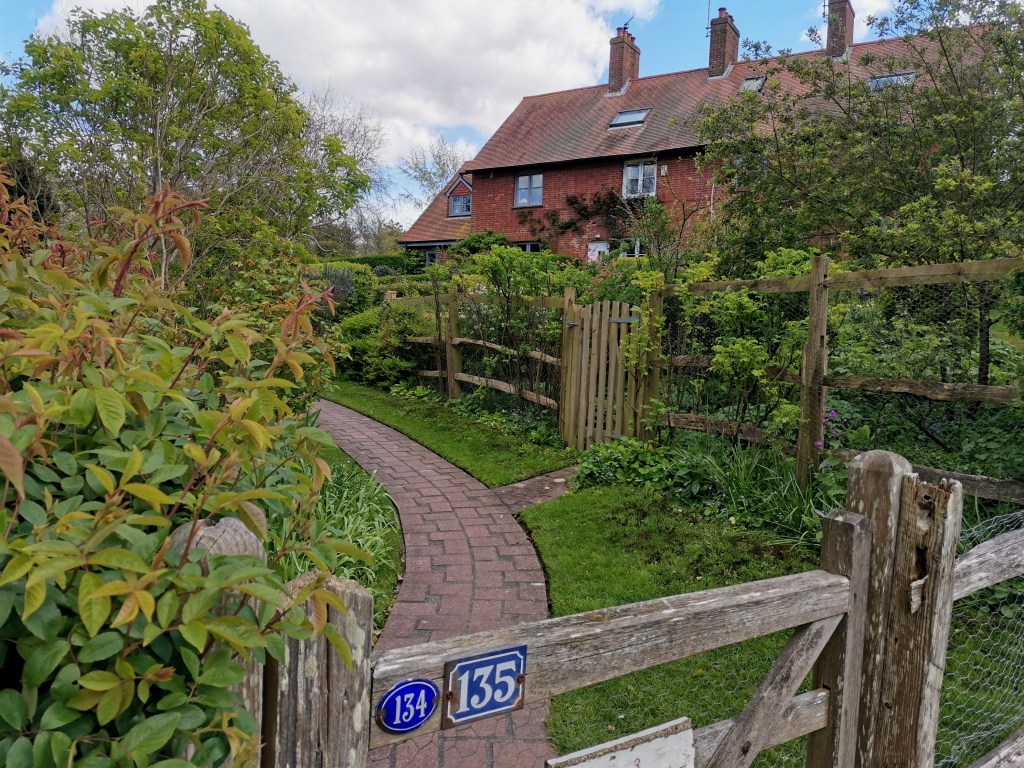
I recently visited Falmer and sitting by the pond in the sunshine noticed that the houses around also had high numbers considering that there are only about a dozen cottage in the village. What is going on!?
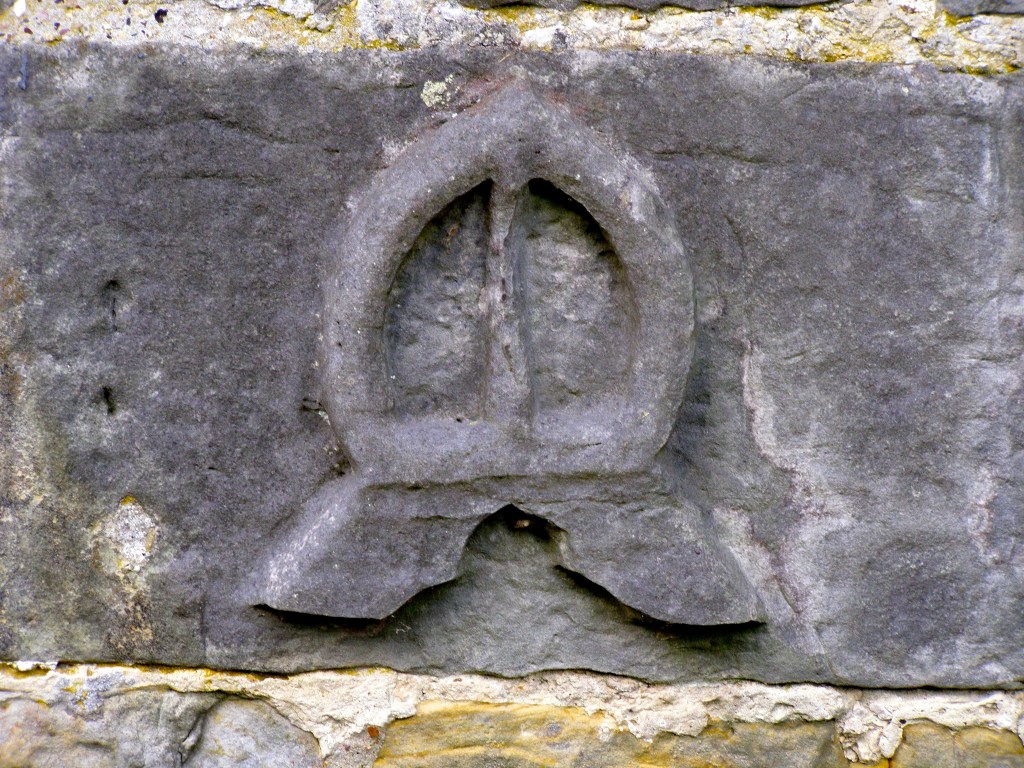
The clues can be seen around – many of these buildings have a carving of the Pelham Buckle prominently displayed to show that they were built as labourers cottages for the Pelham family – the Earls of Chichester, who lived at the sumptuous Stanmer House near Brighton. The cottages are numbered 1 in Stanmer Park and consecutively numbered right across East Sussex to cottages numbered over 200 in East Hoathly.
The origin of why the Pelham’s changed their family crest from a vulning* pelican to a buckle is unknown. There is an oft-circulated tale of a Pelham at the Battle of Poitiers in 1356, capturing the French king’s sword and being given the buckle as a (surely disappointing) reward. What is far more likely is that John Pelham was knighted by Henry IV (on his coronation day) and appointed ‘Royal Sword Bearer’.
The estate houses are numbered
1 – 21 Stanmer Park
21-91 Falmer Village
102-105 Plumpton Village
106-107 Little Wales Farm, Plumpton
108 Wooton Farm, Plumpton
109-115 Deans Farm Piddinghoe
116-122 Hoddern Farm, Piddinghoe (Closer to Peacehaven)
123- 138 Bishopstone Farm
139 -144 Norton Farm (west of Bishopstone)
145-146 Foxhole Farm (between Newhaven and Seaford)
151-157 Chyngton Farm, Seaford
158 Wales Farm, Plumpton
159-200 Laughton Village
171 Whitesmith Village
201 plus East Hoathly Village (where buckles decorate the parish church)
This is why small East Sussex villages often have high numbered cottages.
I particularly liked that 77 and 78, Mill Street, Falmer (a lane with a handful of buildings) has hinges in the form of Pelham buckles.

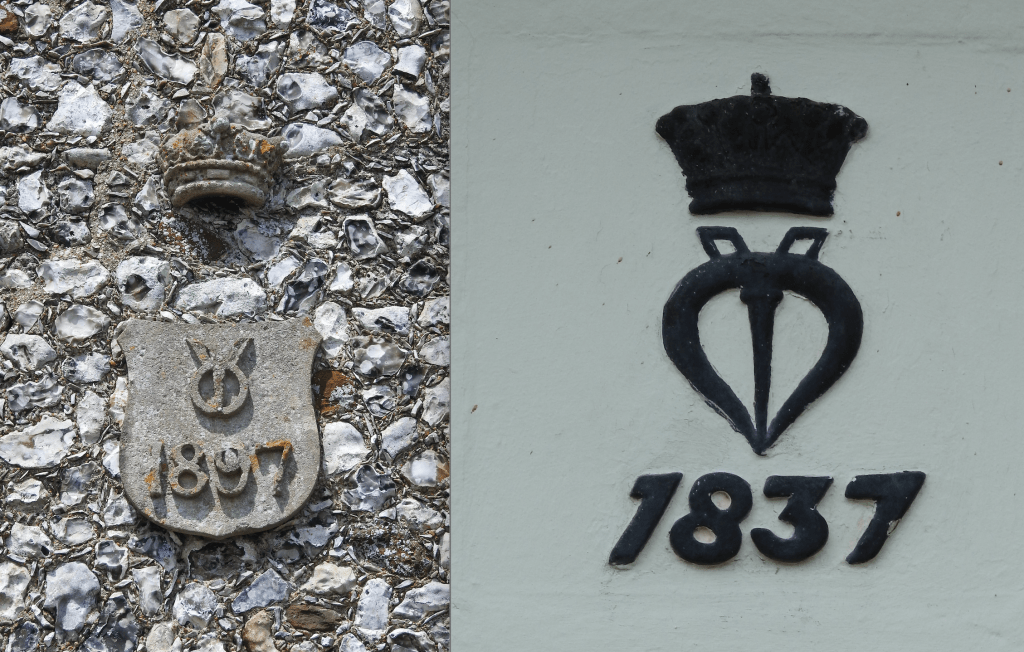
A Pelham buckle under an earl’s coronet decorates the side of Victoria Cottage (91 South Street, Falmer) and nearby, the old village school has a the same badge and the date 1837 displayed – clearly the Pelhams owned the whole village.
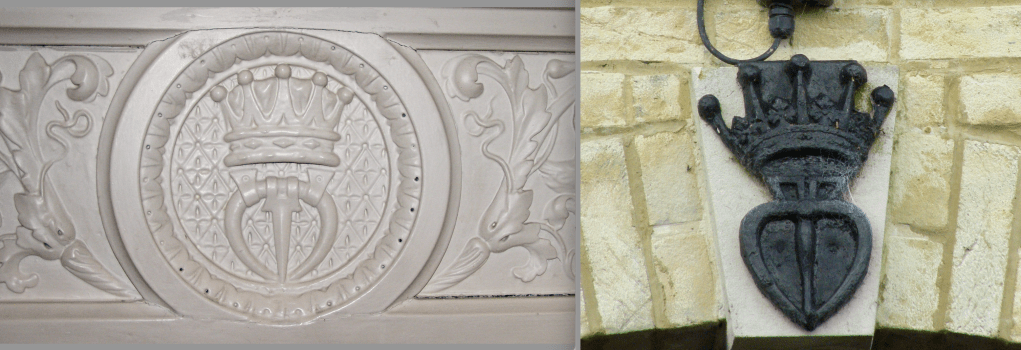
Across East Sussex the buckle pops up everywhere, on churches, schools and other buildings. If ever you are lucky enough to visit Stanmer House near Brighton (Pelham HQ) the magnificent plasterwork in the public rooms are decorated with many buckles and a there is even one above the door to the stables.
In July 1545 Sir Nicholas Pelham repelled 1,500 French raiders from the beach at Seaford (I am sure he needed some help!) and the area became known as ‘The Buckle’. His monument in St Michaels Church in Lewes reads ‘WHAT TYME YE FRENCH SOUGHT TO HAVE SACKT SEA-FOORD – THIS PELHAM DID REPELL THEM BACK ABOORD.’ A bit of Tudor humour there and also a hint of how to pronounce the name of the town Seaford which rhymes with ‘abroad’.
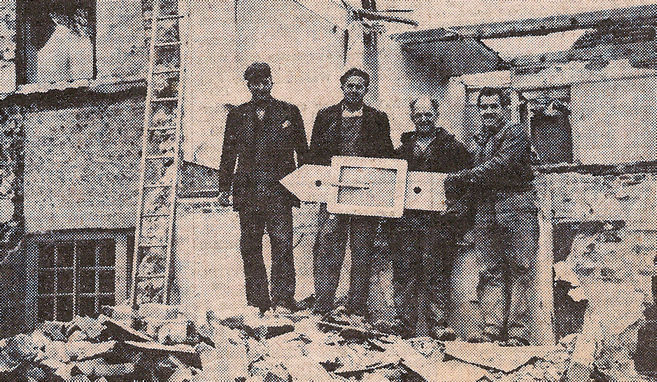
A pub was later built on the site of the battle and unsurprisingly took ‘The Buckle’ as its name. When the old pub was demolished in 1963 the old buckle sign was carefully removed.
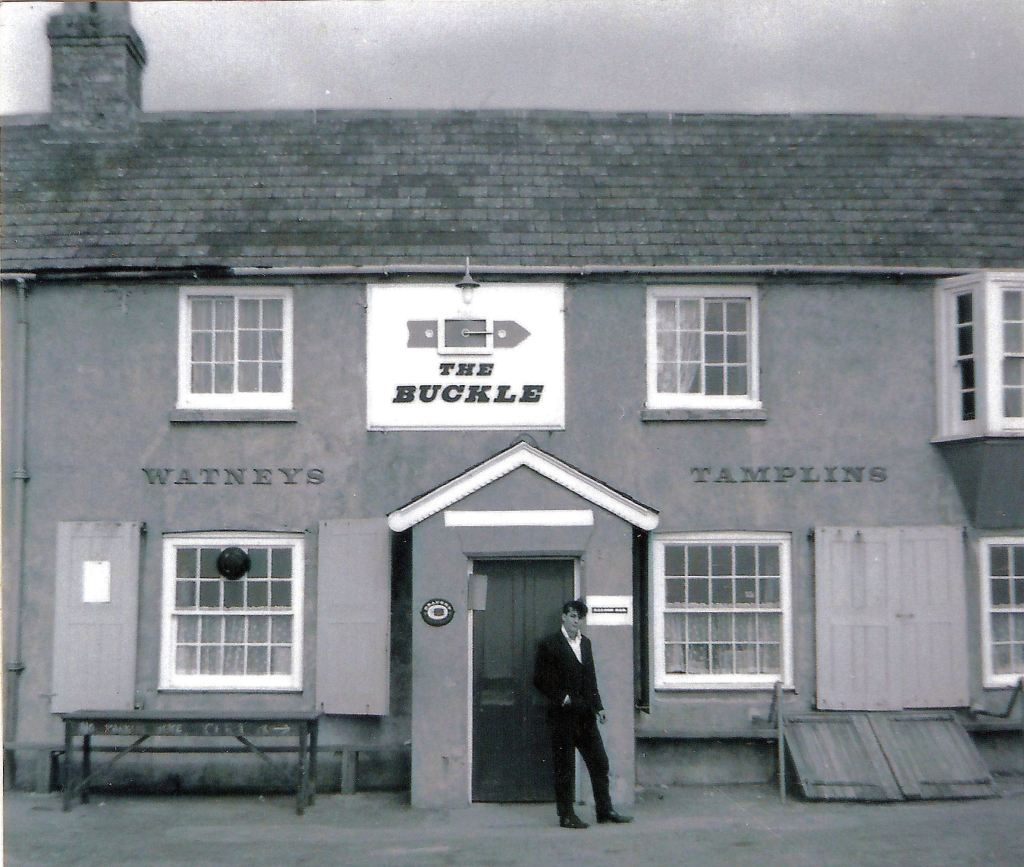
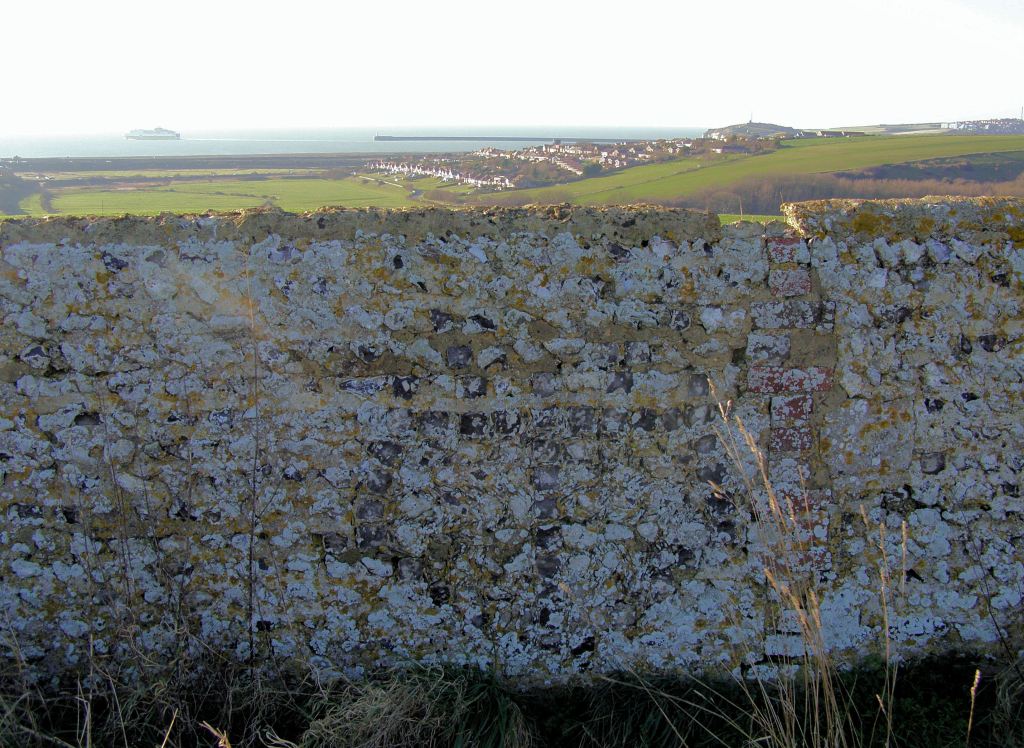
Nearby in Bishopstone there is a buckle above the door of the old village school and a buckle with the date 1688 on the old Manor building. Not far away a buckle has been cleverly picked out in flint on a wall of Silver Lane showing that the Pelhams owned land as well as buildings.
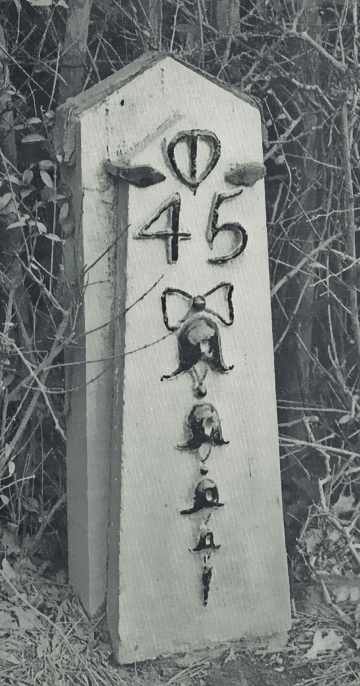
Buckles even decorated mile-posts as they crossed Pelham Land at Halland – under the buckle is the milage to London and a rebus showing bow-bells.
Here are some other buckles I have spotted around East Sussex but I am sure there are many many more.

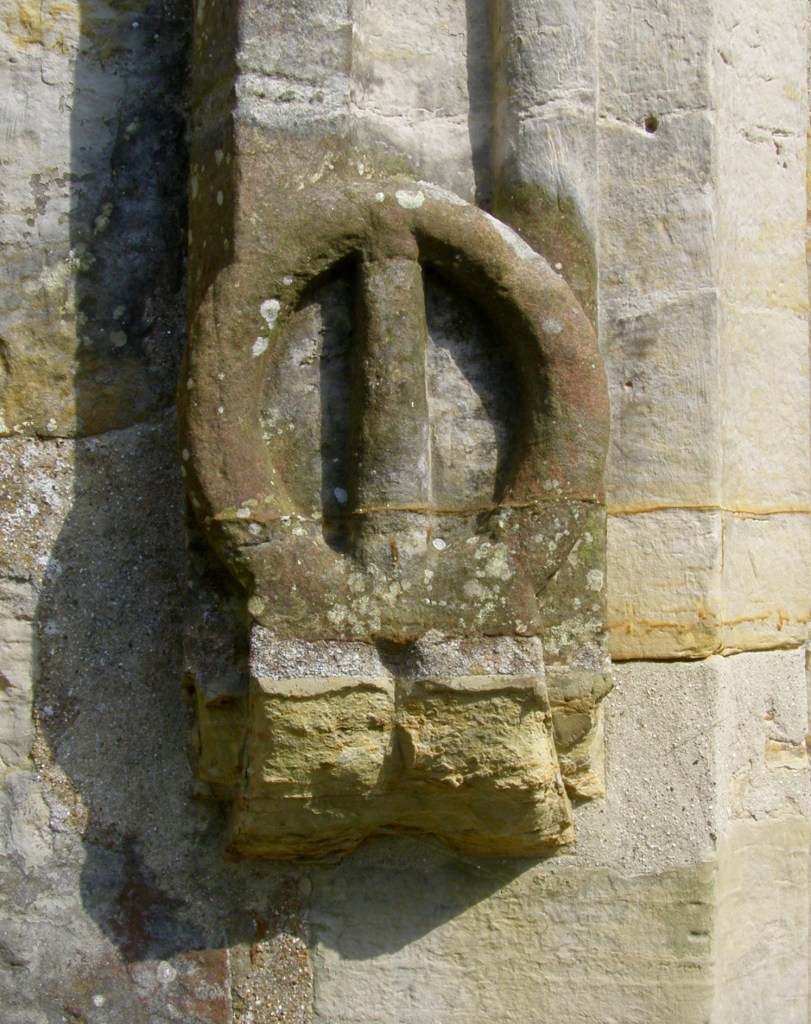
East Hoathly Church


- I didn’t know what the word ‘vulning’ was either – it is the act of causing self-harm by biting your own breast!
Sources: Bishopstone historian Philip Pople and ‘Stanmer’ by Peter Robinson (2007)
 Quirky Sussex History by Kevin Gordon