The Cuckmere Railway
The Cuckmere River (never the River Cuckmere!) has always decided its own route to the sea. This map shows the various places where the mouth of the river has been since the eighteenth century. The map shows something else of interest, a thin black line at the top marked ‘Tramway’. Cuckmere Haven once had its own narrow-gauge railway.

The Cuckmere regularly silted up (or should I say shingled up) between Exceat and the sea causing the famous curved meanders. In 1846 Thomas Ade of Milton Court Farm paid for a new cut to be excavated between Exceat Bridge and the sea. However the constant changes of the flow of the river and the tides caused this to become clogged up too. The Land Drainage Act 1930 allowed the Ministry of Agriculture and Fisheries to establish ‘Catchment Boards’ to oversee river drainage and coastal defences.
In September 1931, Alfred Smith of Hailsham was given the contract by the Cuckmere Catchment Board to remove 700 tons of shingle per month from the seashore at Cuckmere Haven. Alfred had originally worked as a blacksmith in Heathfield but by the Great War had expanded the business which included a general store and hauliers in Hailsham.
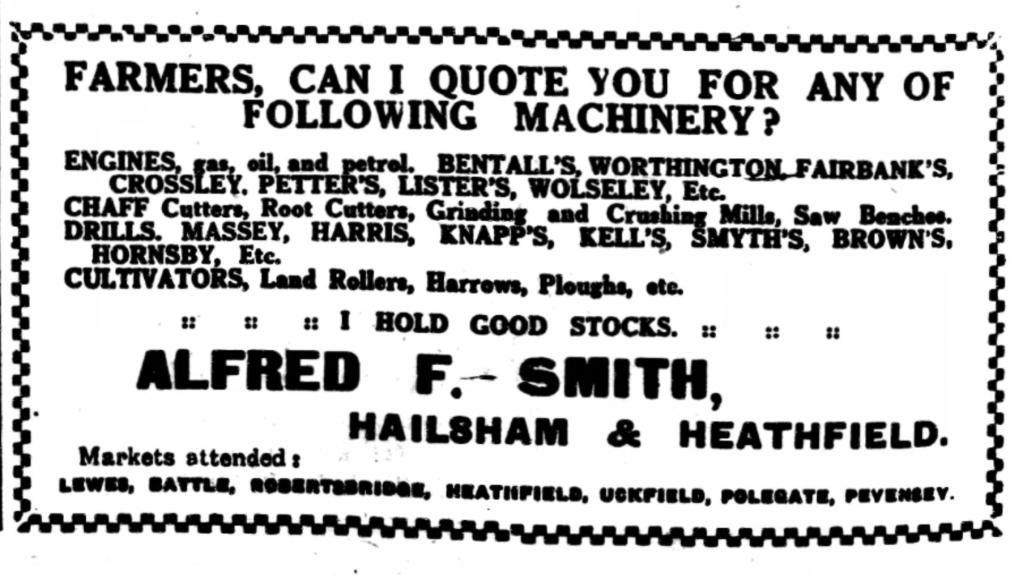
Originally the shingle was removed by barge but this was slow and cumbersome so on 12th January 1933, a licence was granted to him to build a light railway.
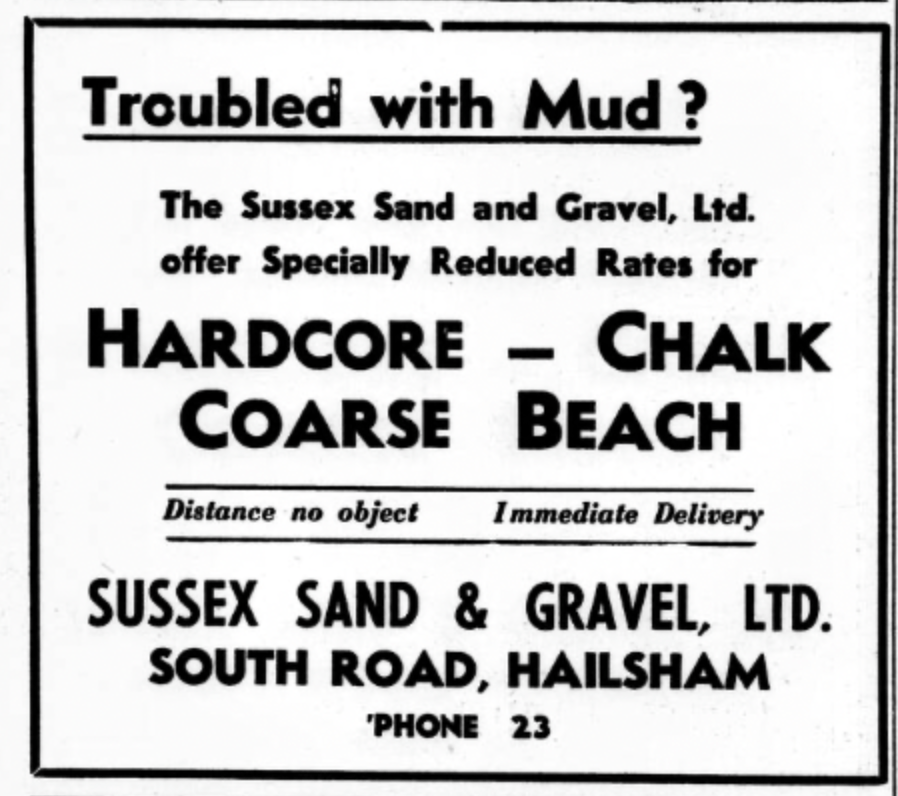
In March 1934, a new company was established at South Road, Hailsham by a Mr Frederick Hastings. The new company was named The Sussex Sand and Gravel Company and aimed to provide materials for building roads and buildings. Mr Hastings not only purchased the shingle from Cuckmere Haven but also bought out Alfred Smith’s Haulage business purchasing nine of Smith’s lorries. The next month they were advertising for a foreman to work at their ‘beach wharf’.

By the end of the year, the new company were advertising that they were able to supply ‘coarse beach’.
Frederick Thomas Hastings was born in Hailsham. He was a mechanical engineer by trade and owned a part of the Crumbles, the large shingle beach between Eastbourne and Pevensey. He was extracting shingle from there too and in 1932 had crossed swords with the Pevensey Catchment Board who complained that his actions were causing coastal erosion. Maybe this is why he changed his focus towards Cuckmere Haven.
It appears however that Alfred Smith kept an interest in the Cuckmere site and worked closely with the new company. I imagine that Smith, the blacksmith and Hastings, the mechanical engineer both played a part in the construction of the railway.
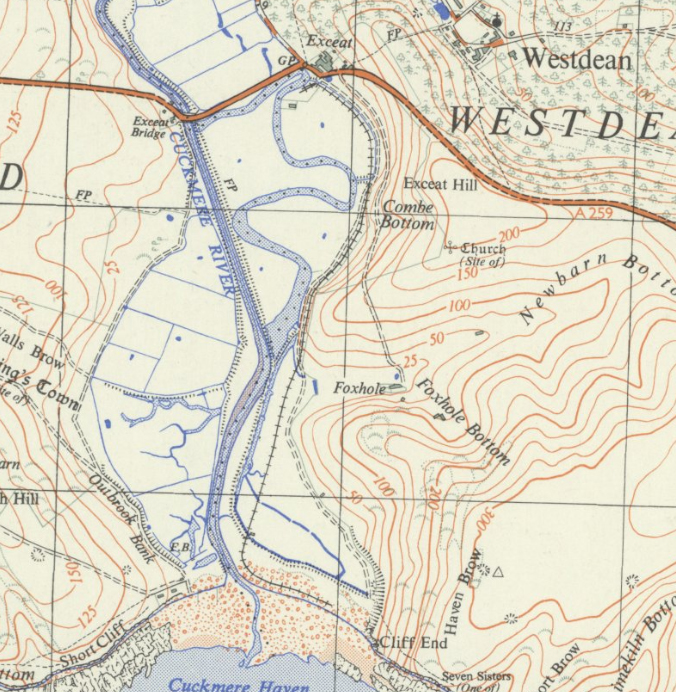
The track ran for about a mile and a half from Exceat to the cliff at the east of the river-mouth. The rails were 2ft gauge and were laid in 18 feet lengths, attached wooden sleepers, laid 4 feet apart, some were made from driftwood found on the beach and some were even metal. The track was laid directly onto the shingle and It was said that it looked a ‘child’s tin-plate toy track’. The railway used two small locomotives made by Ransome & Rapier of Ipswich. Apparently there were frequent derailments.
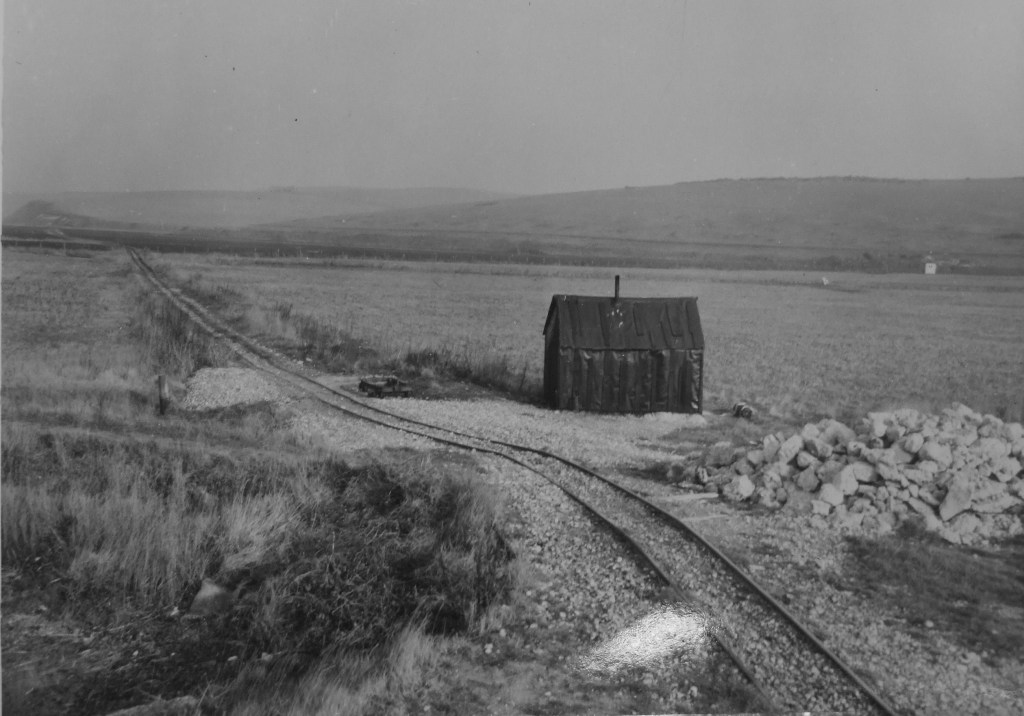
Shingle was pulled from the beach using a dragline and then placed into hopper-trucks. About ten of these were then pulled by a small engine to Exceat. Initially there was a small engine shed at the seaward end of the line.
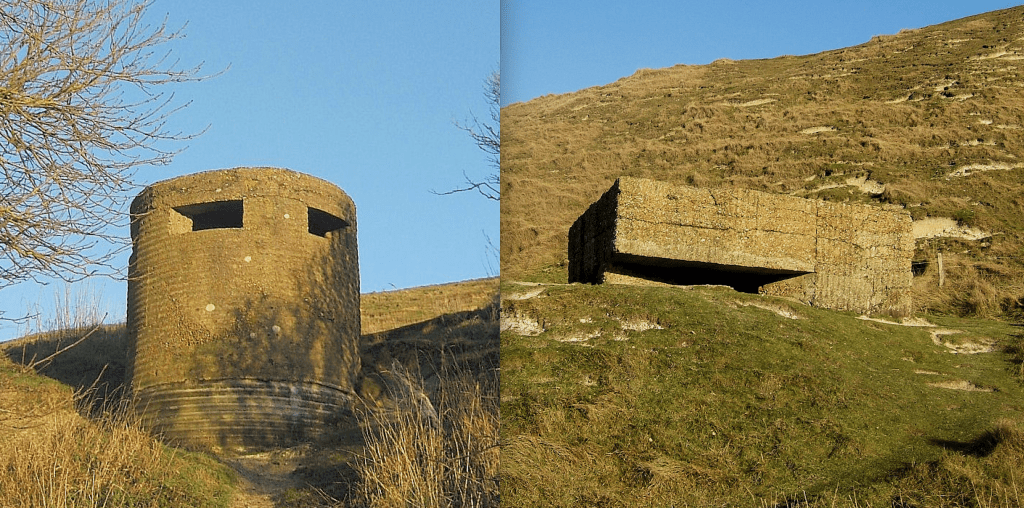
It is not clear what happened to the railway during the war although it is likely it would have been used by the military to carry materials needed to build the war-time sea-defences and military gun-emplacements that can still be seen.
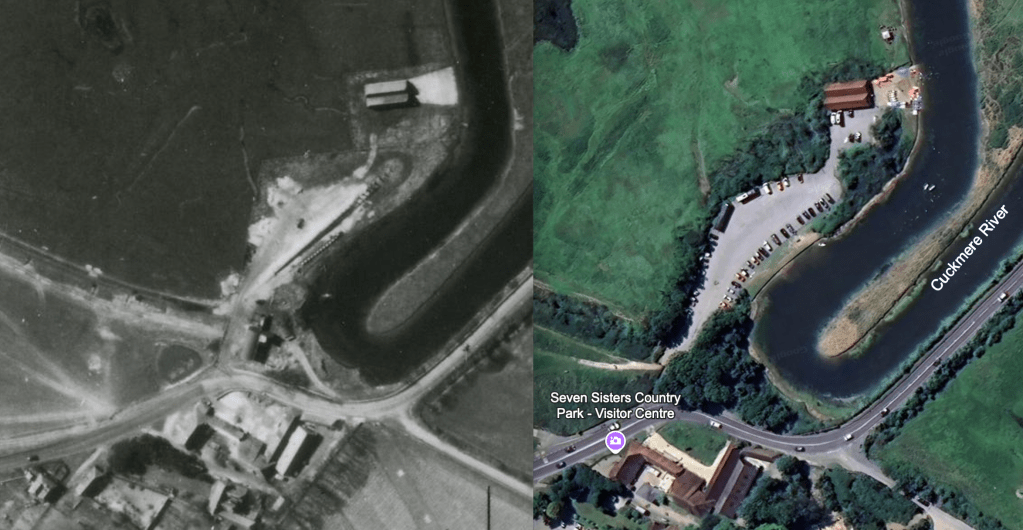
After the war the business of extracting shingle recommenced. A new company was now running the line, The East Sussex Transport and Trading Company Limited who were based at a ‘ballast works’ at the West Quay at Newhaven. They invested in updating the Cuckmere railway. The line was extended along the beach and closer to Haven Brow (the first of the Seven Sisters) and a hopper was built to fill the trucks.
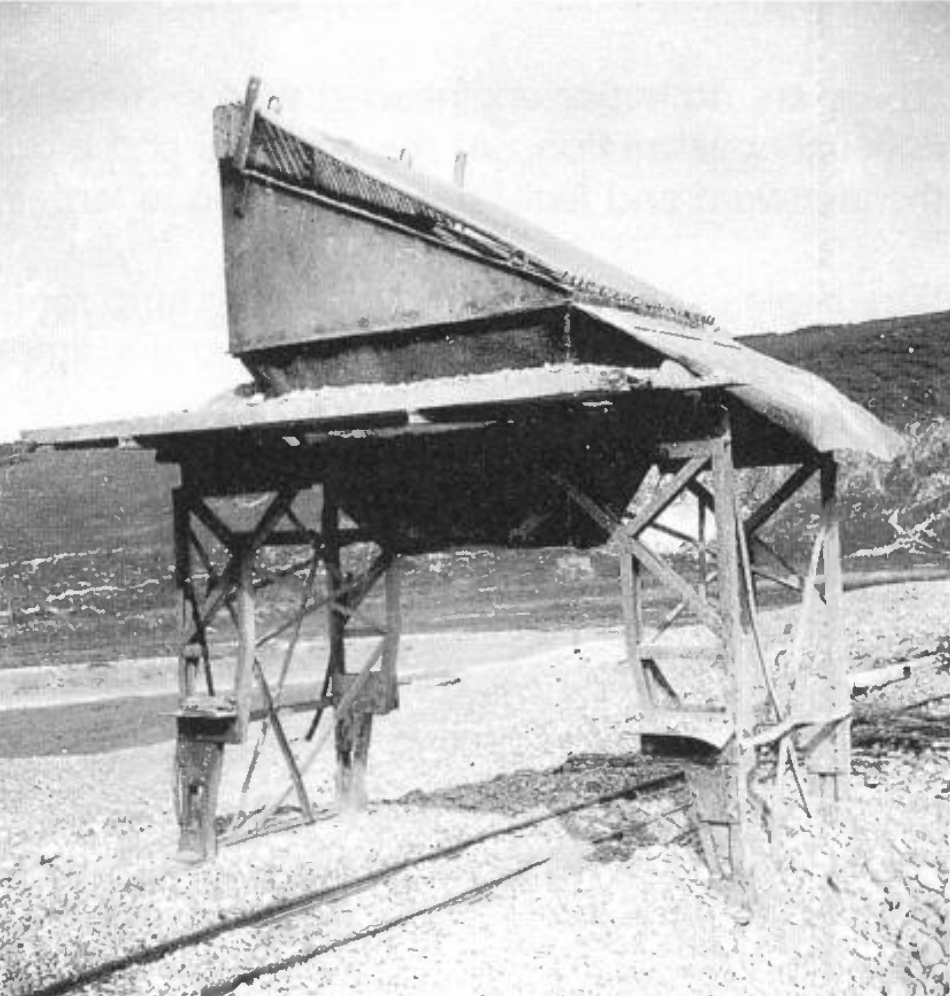
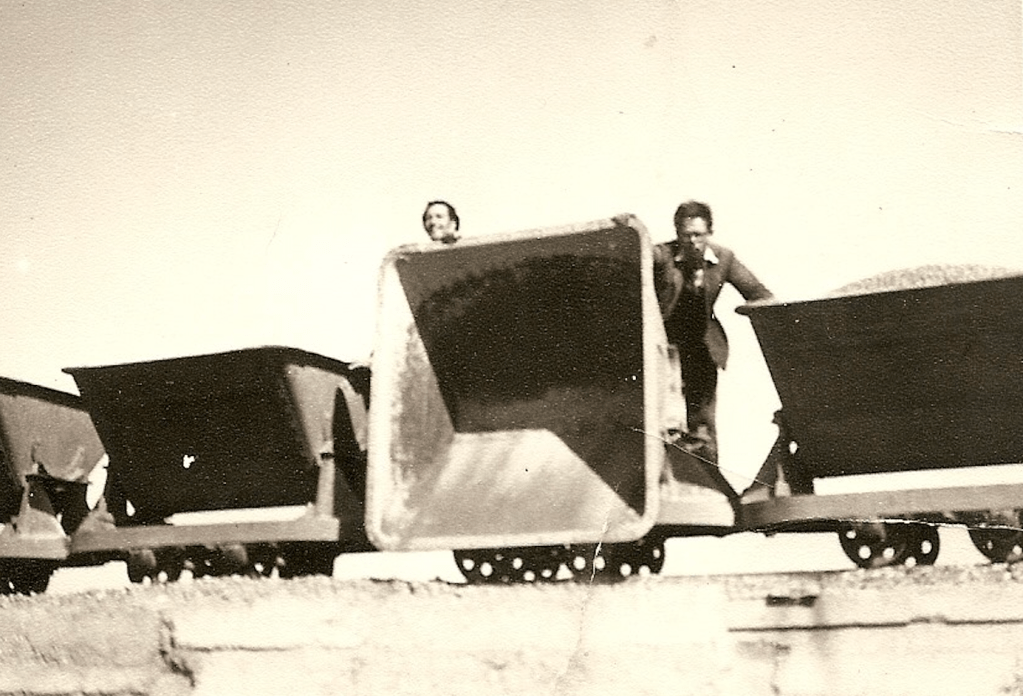
By this time two MotorRail Simplex diesel engines were used to pull a fleet of 21 side-tipping trucks.
At the Exceat end, a viaduct was built in order fill lorries that deposited the shingle nearby to be graded.
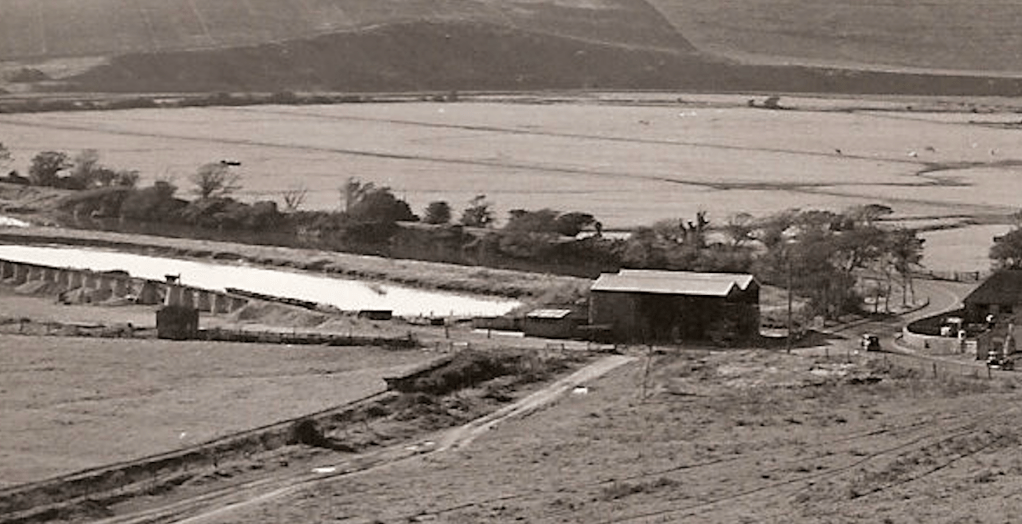
A larger engine shed and office were also built.
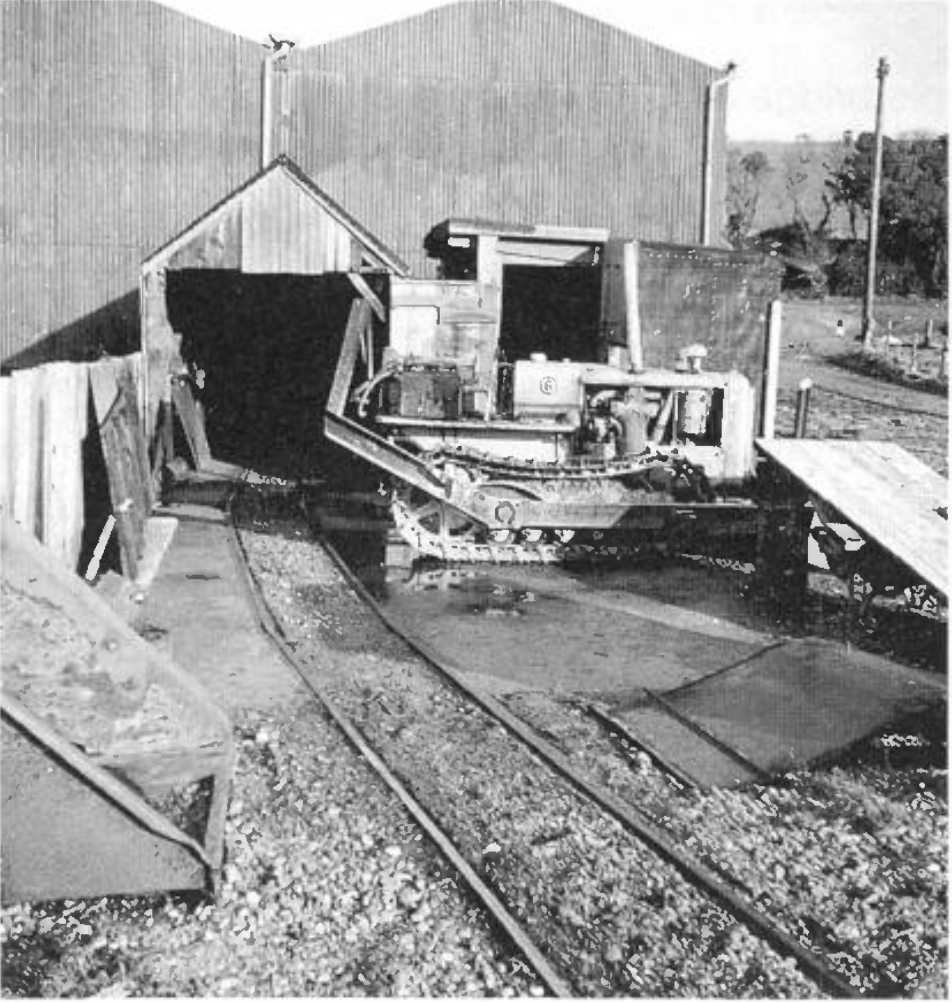
The footprint of these works is almost exactly the same as the car-park that is now located there.
In 2002, local historian Peter Longstaff-Tyrell interviewed Des Sutcliffe who was one of the engine drivers on the railway. He recalled that the engines had open cabs so there was no protection from the icy cold wind and rain. The top speed of the engines was about 10 mph and driving too-and-fro many times a week in all weather was monotonous.
The business ceased at Cuckmere in 1964 and by September 1965 most of the track had been removed. The whole area was purchased by East Sussex County Council in 1971 and is now The Seven Sisters Country Park.
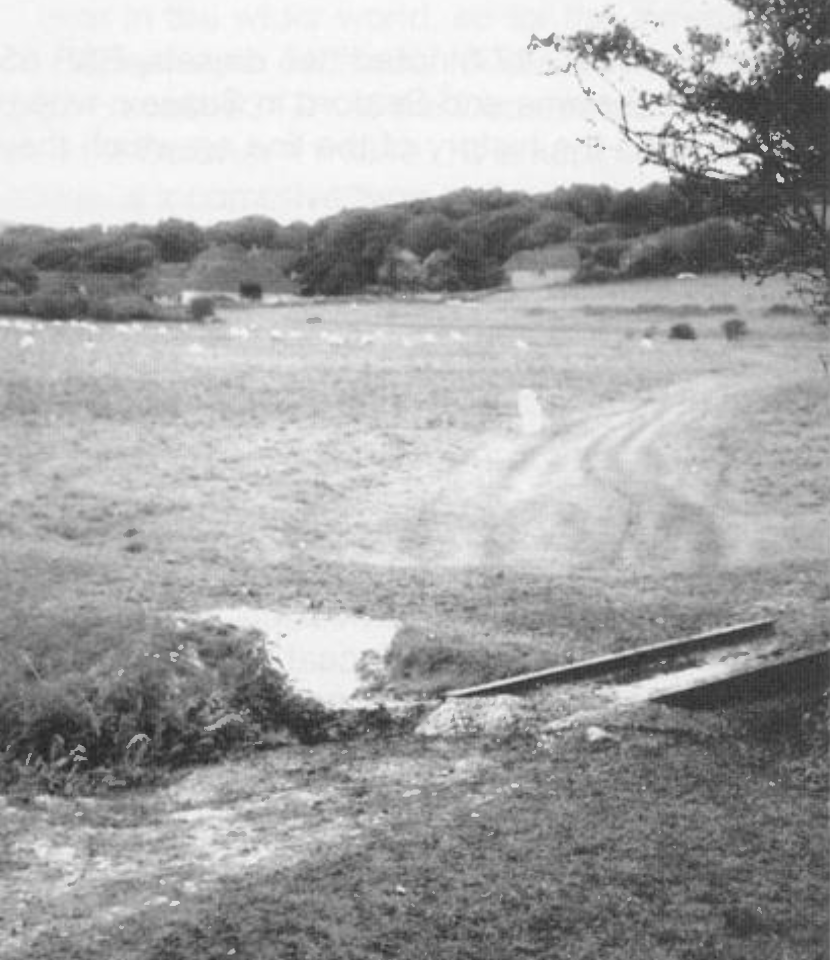
Today there is virtually no trace of there ever having been a light railway at Cuckmere Haven however the area is now very popular and it is estimated that nearly a million tourists visit it ever year. I tell you what would be useful and heavily used – some form of light-railway to take people from Exceat to Cuckmere Haven – I think it would be very popular!!
My thanks to the Narrow Gauge Railway Society and one of its former members Peter Longstaff-Tyrell for much of the information. I also used the National Newspaper Archives and “Industrial Railway Locomotives of Sussex & Surrey” published by the Industrial Railway Society.
Thank you to Chris Tracey, Adrian Backshall and Seaford Museum.
If you are interested in narrow gauge railways please consider joining the Narrow Gauge Railway Society www.ngrs.org.
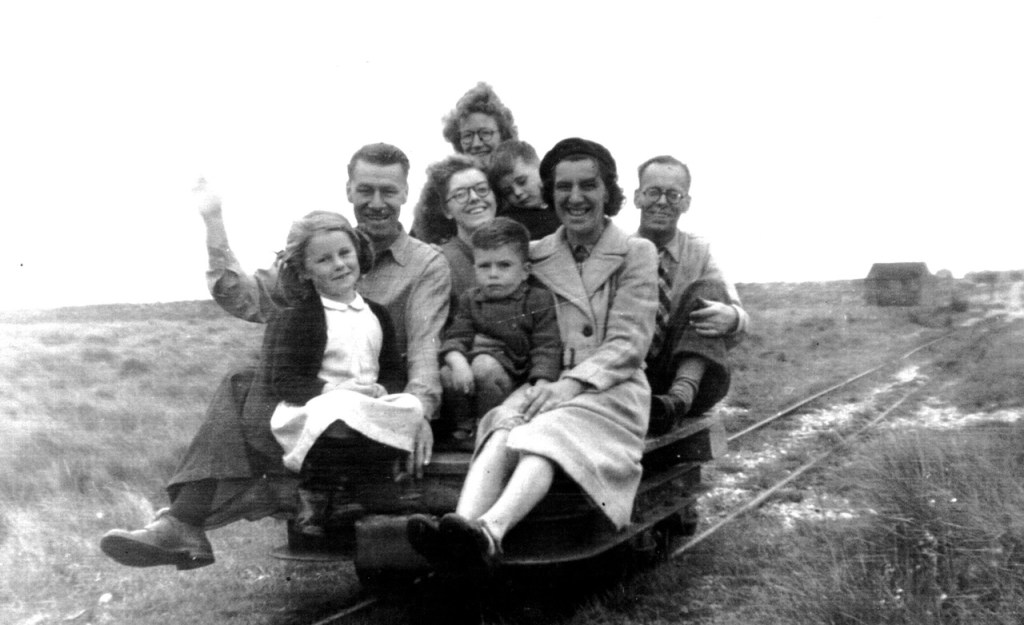
Update 2nd December 2024: Thank you to Rosalind Hodge for providing this family photo of the Cuckmere Railway in 1948 – It looks fun!
The following is an Ordnance Survey map showing the line…
This is a painting of the Cuckmere Valley by Eric Ravilious on display at the Towner Art Gallery in Eastbourne. I wonder (with a bit of artistic licence) if that line across the middle is the Cuckmere Railway?

 Quirky Sussex History by Kevin Gordon
From memory, there was some remains of track on the western bank of the river too?
LikeLike