Damaris is an unusual name. It is thought to derive from ‘little calf’ an old Greek term of endearment. The name is mentioned in the bible and indeed the Greek Orthodox Church recognise Damaris as a saint.
Damaris Richardson was born in Brede, East Sussex in 1834 and baptised at St George’s Church, Brede on 27th April that year. Her parents were Ann and Henry Richardson.

Damaris was apparently an attractive and intelligent girl and helped at a small school run by the village rector, the Reverend John Williams Maher and his wife. She was well liked in the village. She must also have been a strong and able girl as the 1851 census shows that she was the Housekeeper at a large house called Mount Pleasant. At the time the census was taken, 17 year-old Damaris was the sole occupant, the owners being away and clearly trusting her to look after the house.
Unfortunately some people did not trust Damaris. They were farmer David Smith and his wife Sarah who lived at the Church House next to St George’s Church. Smith owned and farmed 550 acres of land around Brede and employed over 30 farmhands. The Smiths were not happy that their son Lewis was courting Damaris, who as a ‘servant girl’ was presumably from the ‘wrong class’. She was also three years older than him. They must have been most annoyed when the couple got engaged and refused to allow her on their premises.

Despite his parents displeasure, Lewis found a way to meet Damaris. It was in the churchyard of St Georges, close to the wall but out-of-sight, of Church House. One can only imagine the plans they discussed as the sweethearts hid amongst the gravestones but sadly any bright romantic future for the couple ended abruptly when Damaris died suddenly in September 1856. The villagers were sure she had died of a broken heart.
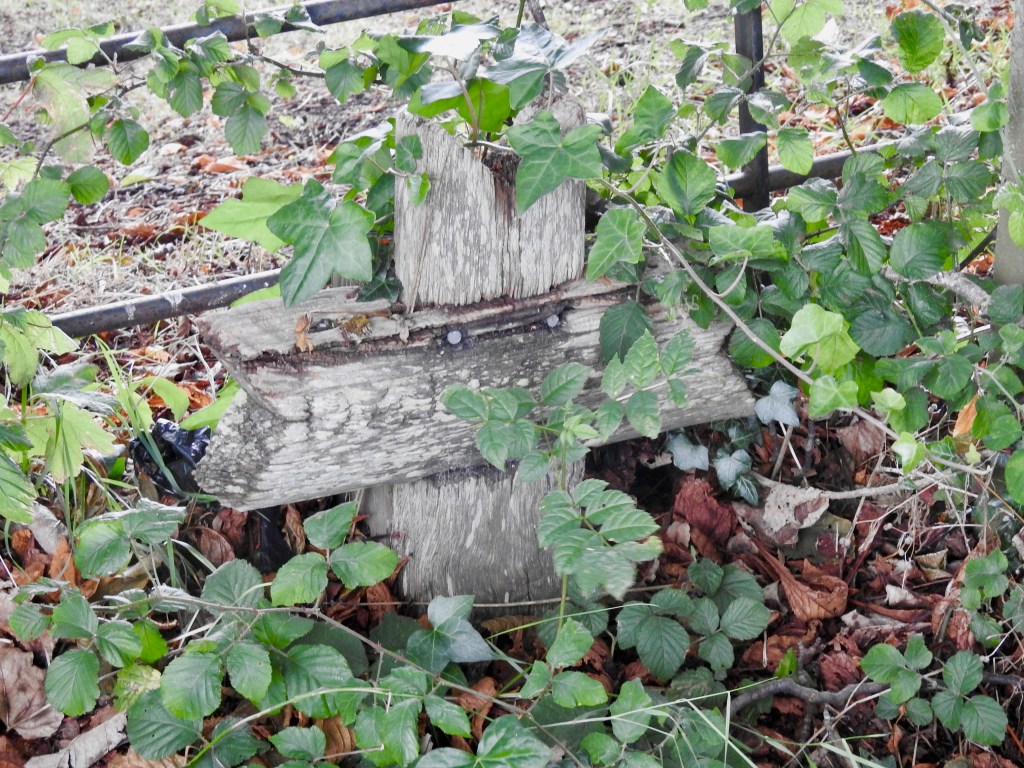
The Reverend Aylward who had succeeded John Maher as vicar, knew Damaris and arranged for her to be buried as close as possible to the grieving Lewis – against the wall of Church House on the spot where the two lovers had regularly met. He also arranged for her grave marked with a simple small oak cross carved with just one word DAMARIS.
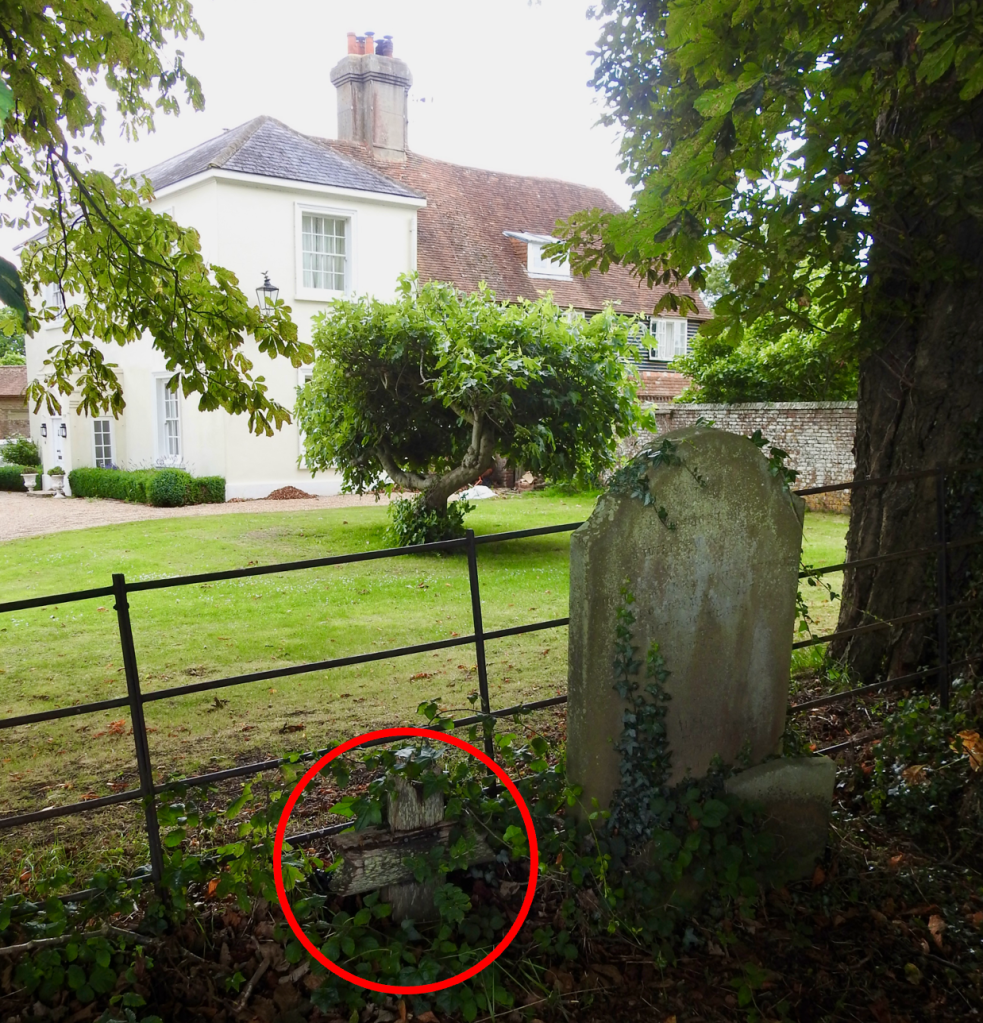
Lewis never married and never seemed to have a career for himself – on the 1871 census he is still living at Church House with his 70 year old father. The occupation shown for 35 year old Lewis is ‘farmers son’. After his father’s death in 1874 Lewis took over the farm which he run with his sister Emma. He died in 1896 after a life of mourning for his true love.
Today, Church House is Grade II listed and the wall separating it from the churchyard from has been removed however the little cross, now badly worn has survived. The pathetic little cross can just be seen among the ivy and the lettering is barely legible. It won’t be long before all traces of the grave disappear however I hope that this sad village romance will still be remembered.
Sources: St George’s Church Guide – Ancestry.com – Sussex Express.
 Quirky Sussex History by Kevin Gordon