In the churchyard to the north of St. Leonards church Seaford is a large box tomb decorated with anchors.

This is the last resting place of Admiral James Walker who had an adventurous life on the high seas. Walker was born in Scotland in 1764 and joined the Navy at the tender age of twelve. He came from a naval family; his father was good friends with Admiral Lord Rodney, and an uncle, General Melville invented naval guns.
In 1780 young Walker was nearly drowned off Jamaica when he was attempting to rescue prisoners from a pirate ship which was sinking. The following year he was appointed to the Princess Royal which was the flagship of Sir Peter Parker who was then Admiral of the Fleet. Parker promoted Walker to Lieutenant it is interesting to note that a short time after this, the Admiral was elected as the Member of Parliament for Seaford.
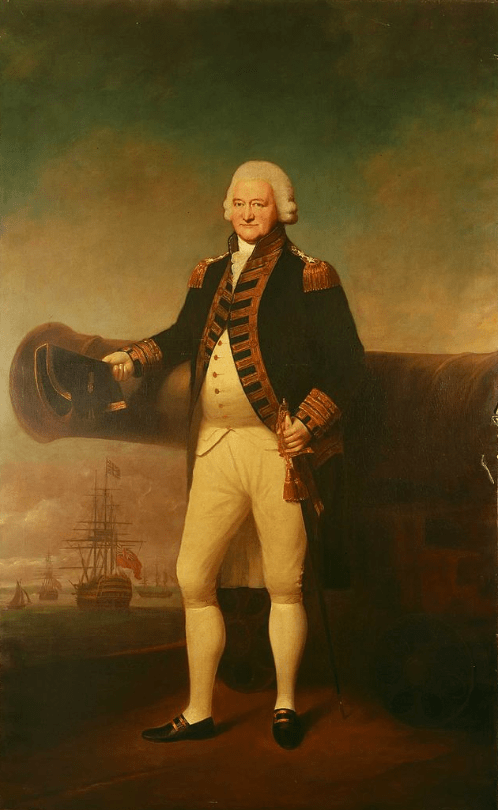
Walker served on a succession of ships and steadily rose through the ranks and by 1797 was commanding the ship of the line, the Monmouth. The Monmouth had 64 guns and in fact had been the first ship that the infamously cruel Captain Bligh served on. The Navy at this time had been troubled by a series of mutinies. On 11th October 1797 the British fleet engaged the Dutch off the coast of Holland in what was later known as the battle of Camperdown. Walker rallied his crew by addressing them saying “My lads you see your enemy; I shall lay you close abroad and give you an opportunity of washing the stain of mutiny off your characters in the blood of your foes”.
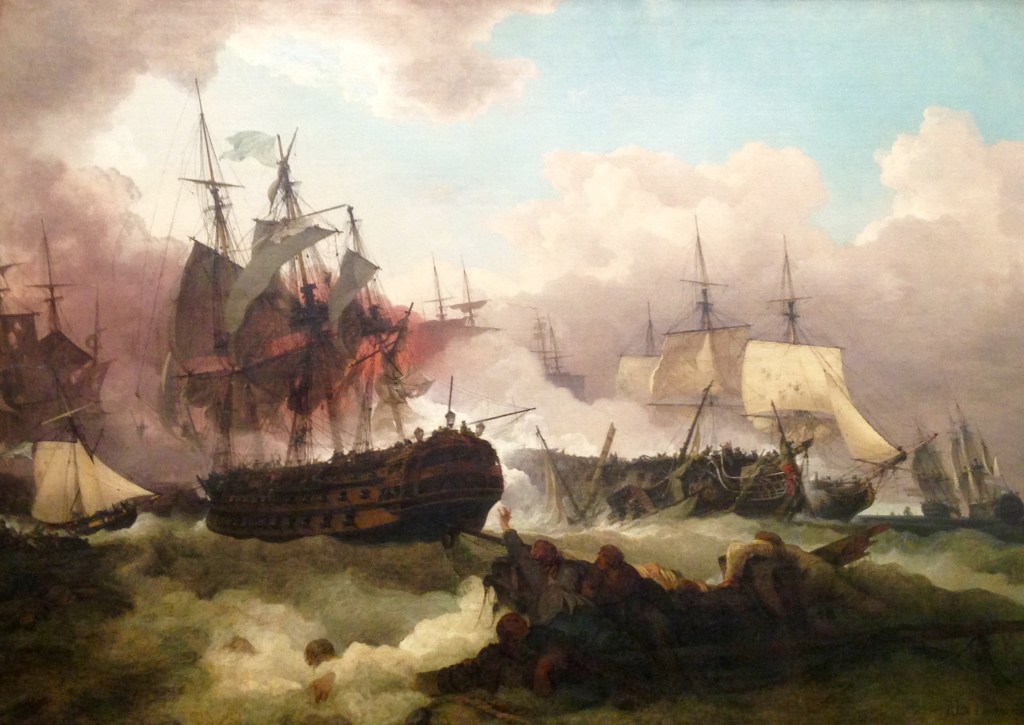
The Monmouth engaged the Dutch frigate Monnekendem and, under Walker’s command, the enemy ship was severely damaged and eventually sunk. It is recorded that Walker’s ship lost ‘one Petty Officer, one Seaman, two Marines and a boy’ during the battle.
Four years later Walker was in action again, this time as the captain of the Isis during the battle of Copenhagen on the 2nd April 1801. The Danes had shelled British ships and in revenge the Danish Navy was attacked.
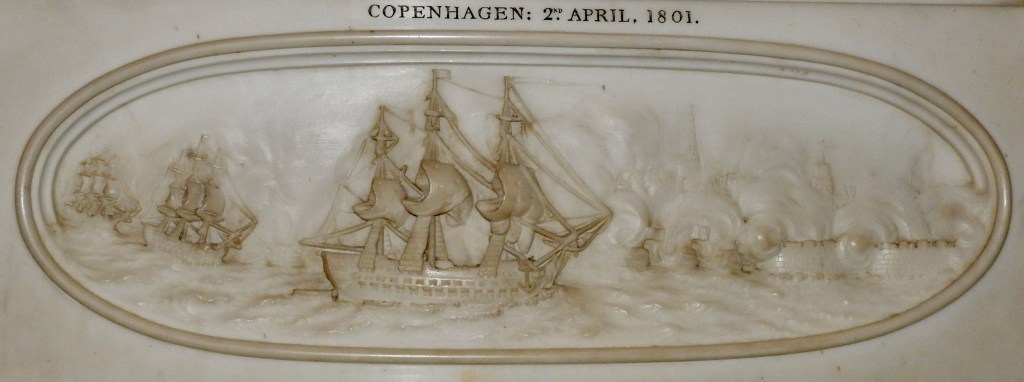
It was during this battle that Lord Nelson was ordered to disengage the British fleet and retreat but he famously put a telescope up to his blind eye and said that he could not see the signal and carried on the battle. The British won the day but not without heavy loss, the Isis lost 112 crew including seven men killed when a cannon burst open on the lower gun deck.

The Isis was so badly damaged it had to be towed back to England for repair but Nelson had notice Walker’s and the seas around North and South America. While in Rio de Janeiro he became friends with the Prince Regent of Portugal who confirmed him with the Order of the Tower and the Sword and presented him with the diamond ring.
The Walker family lived in Sussex and his son Levin Charles Walker also served in the Navy and was the Commander of the Sussex Coastguard based at Blatchington barracks at Seaford which was close to where the Salts Recreation Ground is now situated.
Walker was appointed Rear Admiral of the Red, a post once held by Nelson, but died in Seaford in 1831. He was buried in the large box-tomb in the church yard of Seaford’s parish church. It is decorated with anchors and tridents. He is also commemorated under the tower inside St. Leonards church.
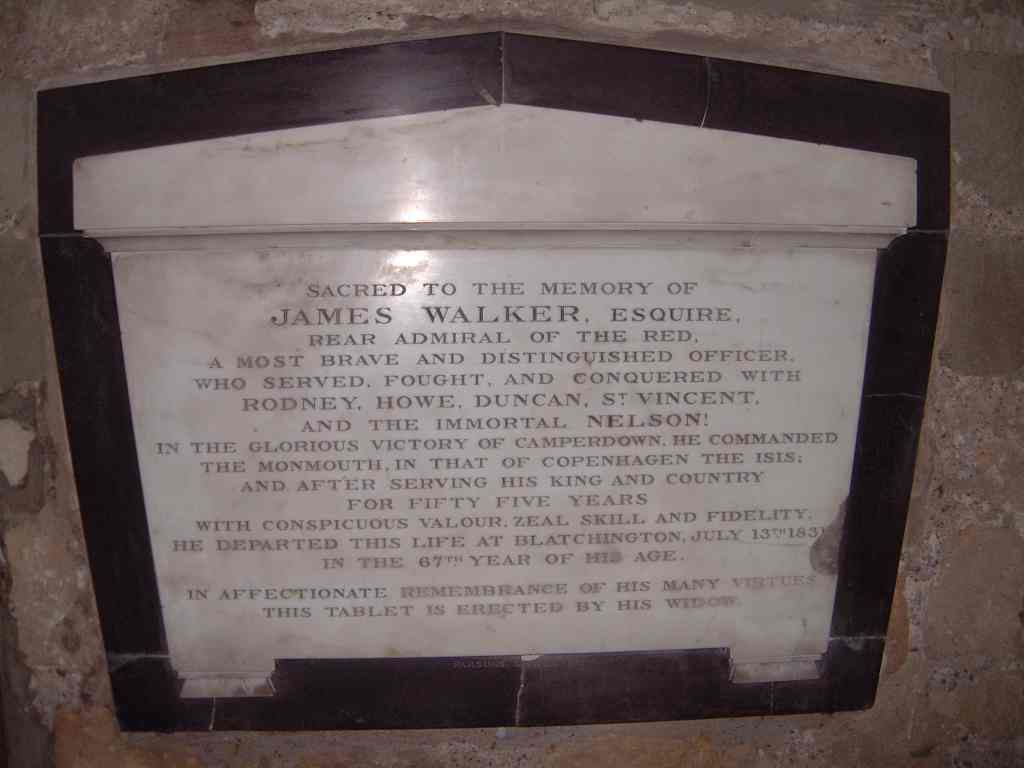
The marble memorial was erected by his widow and list some of his naval achievements including the names of some of the men he served under including Admiral George Rodney, Admiral Richard Howe, Admiral Adam Duncan, Admiral John Jervis (Earl Saint Vincent) and the “Immortal Nelson!” How unusual to see a memorial with an exclamation mark on it!
Thank you to Mr Greenwood of Seaford and Artware Fine Art for assistance with this item.
 Quirky Sussex History by Kevin Gordon