A few years ago my wife and I were on holiday in Italy and spent a wonderful day at the beautiful walled town of Lucca a few miles north of Pisa. Enjoying my history, I just had to take in the Cathedral and a few of the churches (but only after we had stopped for a delicious Italian ice-cream) The huge church of San Frediano is impressive with a massive lofty nave. The gloomy chapels contain tombs and monuments but one caught my eye – a glass case which contained the mummified body of a saint – St Zita. A euro coin was put in a slot and she lit up for a better view.

Zita was the first and probably the only saint I will ever see in person and to be honest she didn’t look bad for her 800 years! (she was born in the year 1212) Zita spent 48 years as a hard working but down-trodden domestic servant. Many saints are attributed with unlikely miracles but the good Zita seems to have been canonised due to simple devotion and sheer hard work. She is still working hard today as apparently she is the saint who Italians call upon if they have lost their keys.

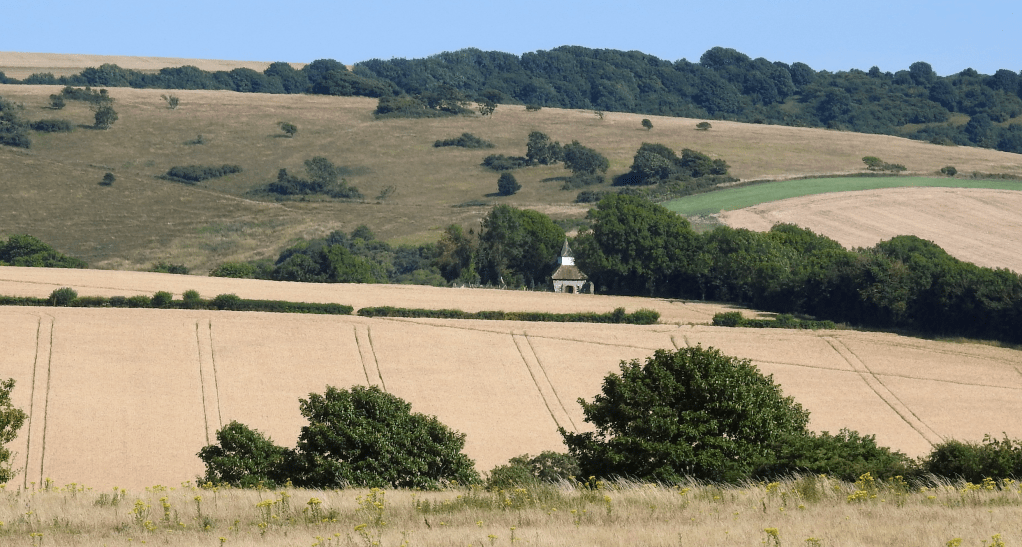
OK. So you are now asking what has this got to do with Sussex? Let me explain. Many of you will know the delightful tiny church at Lullington. It is hundreds of miles away in distance and size to that church in Italy but the two buildings have a connection. In the 1500s Lullington Church is believed to have been dedicated to St Zita (The Anglicised version of her name is Sithe) The reason why a church in a tiny East Sussex hamlet should be named after an Italian housemaid has been lost in time. She was certainly revered in England in medieval times and there was also once a St Sithe church in London and an image of her in Westminster Abbey.
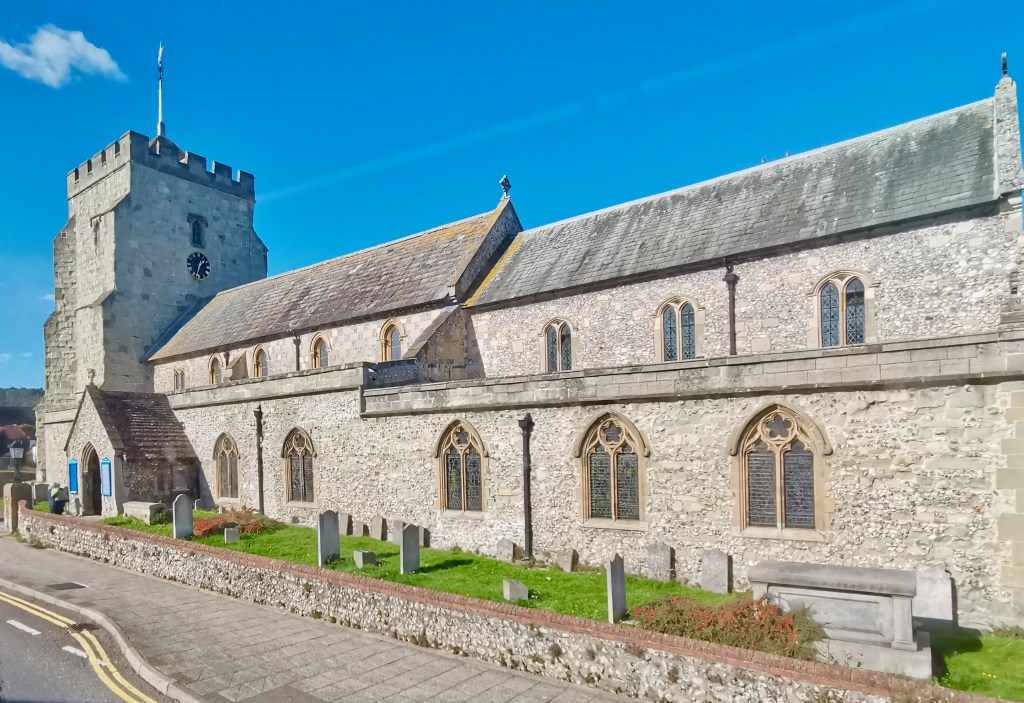
At Eastbourne in the 15th Century there were once five ‘brotherhoods’ which probably acted had a similar role to later friendly societies. They helped their members in times of need. One of these was the Brotherhood of St Sithe, they probably had their own chapel in the south aisle and even contributed to the maintenance of the church.
A paper written by the Honourable Secretary of the Sussex Archaeological Society in 1899 concludes that the Brotherhood of St Sithe may have acted as an early fire brigade. If this was the case the brotherhood probably provided a ‘fire-bell’ in the church tower to gather people to help if there was a fire.
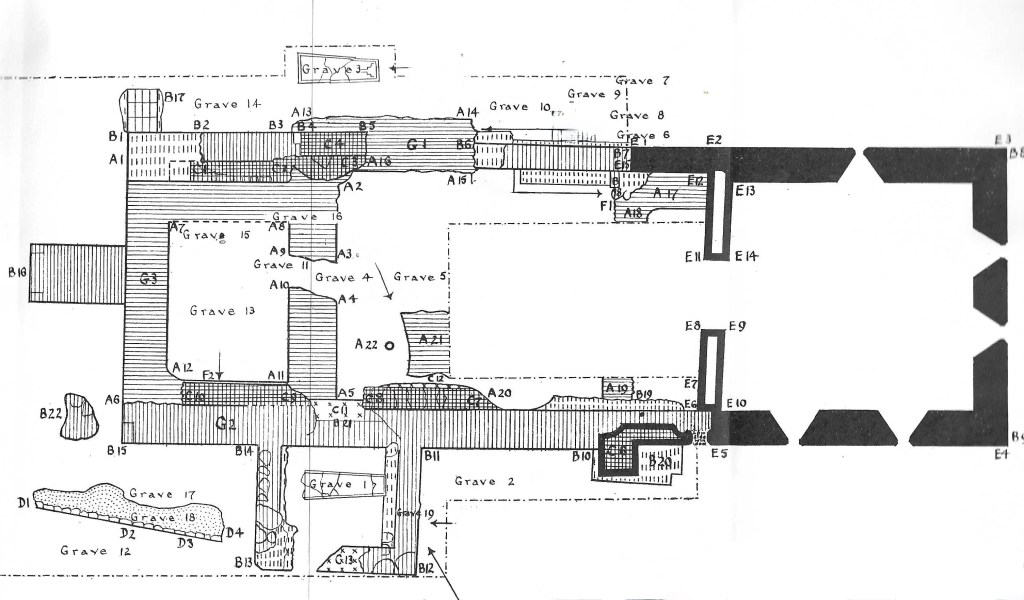
Lullington church was once quite a tourist attraction and known as the “Smallest Church in England” although it is clear that the existing building is just the chancel of a once much larger church. We know more about the history of the church as in 1965 Alec Barr-Hamiliton, the editor of the Sussex Archaeological Society Newsletter, led a team of budding young archaeologists from Ratton School in Eastbourne in an excavation of the site.

They discovered walls of a much larger church which was first built in the 12th century and expanded in the 14th century.
How and when the church was destroyed is not known but the theory that it was destroyed by Cromwell’s Army is unlikely as they were not really active in this area during the Civil War. Being only half a mile from the huge church of St Andrews at Alfriston it is probably that it simply became too costly to maintain and was made redundant.
The church was repaired in 1806 and the quaint bell tower was added. It was reopened for prayer and today services are still held there. In 1927 the parishes of Lullington and Alfriston were merged and in September 2000 the church was re-dedicated as the Church of the Good Shepherd.
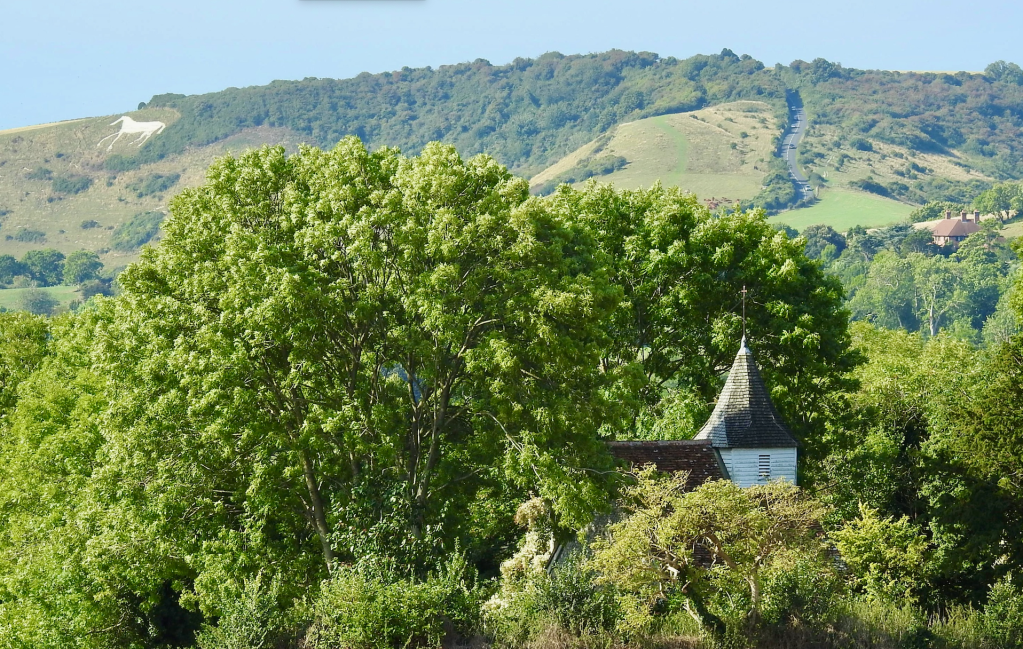
A visit to Lullington church is always a joy and if you visit this week you will see the snowdrops, although shortly the churchyard and the brick path that leads to the church from the Wilmington Road will be a riot of yellow with daffodils everywhere. The best way to access the church however is from Alfriston. The two sister churches are linked via the White Bridge (also known as the Plonk Bridge – probably named after planks of wood) Just follow the footpath across the river and over the hill and you will be at the church after about 15 minutes.
Why not jump in your car and visit Lullungton Church this weekend. What? – you can’t find your car keys? Well you know who to ask – I am sure Saint Zita will assist!
Sources:
Sussex Archaeological Collections Numbers 42 (1899) and 108 (1970)
Old Eastbourne by Reverend W.Budgen (1912)
The beautiful painting of Lullington Church is by James Bateman (1893-1959) and is in the collection of the Royal Academy of Arts .
 Quirky Sussex History by Kevin Gordon