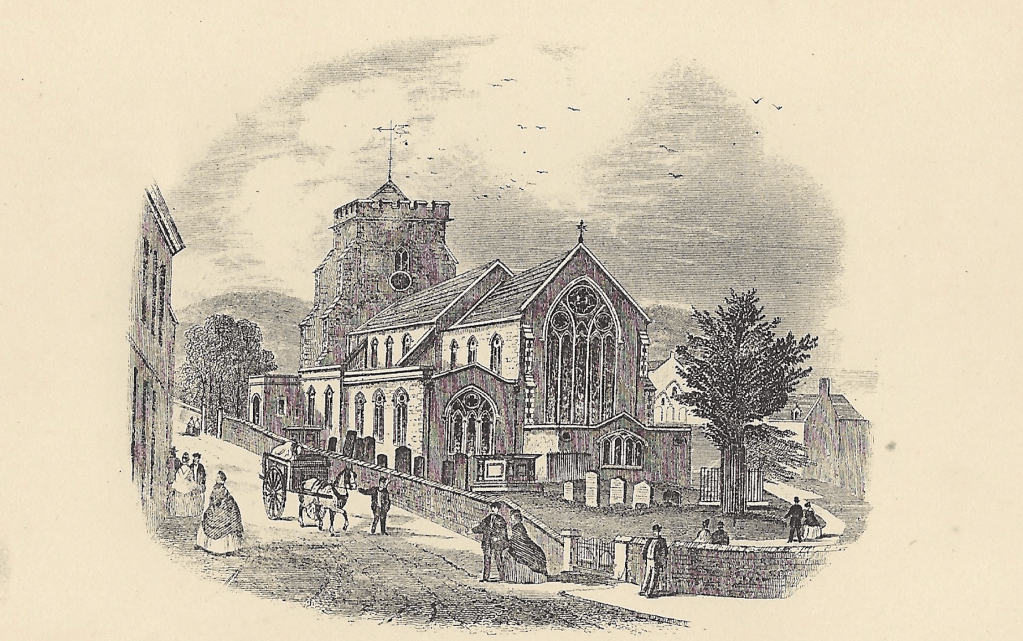
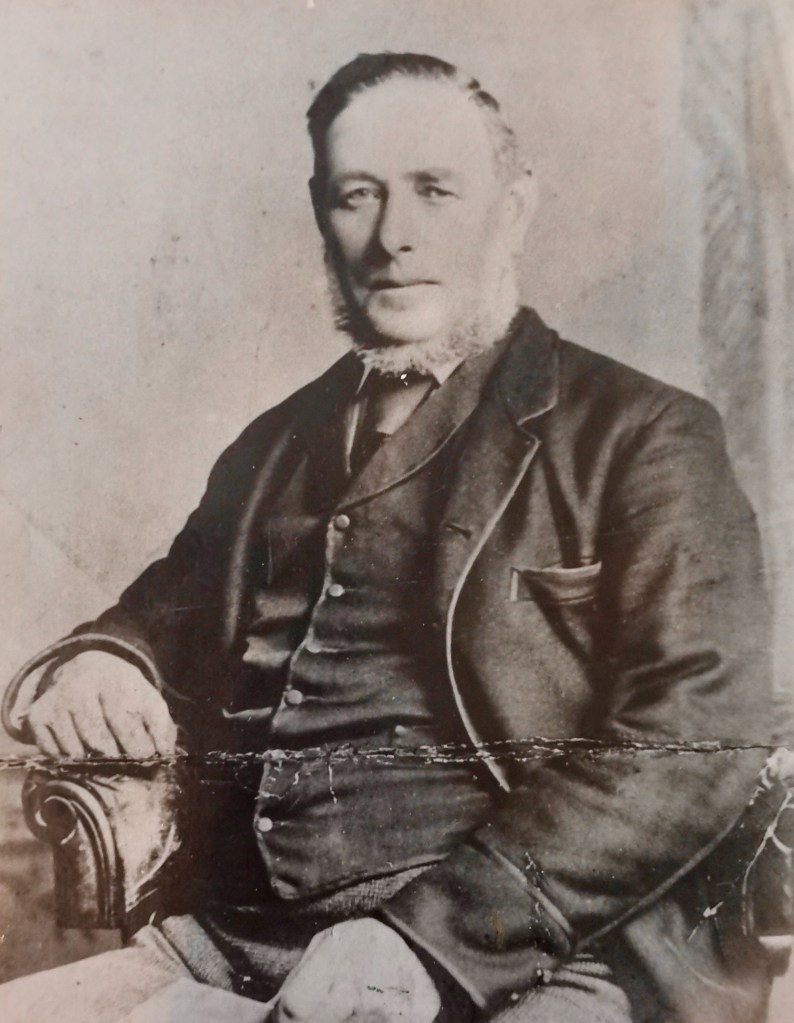
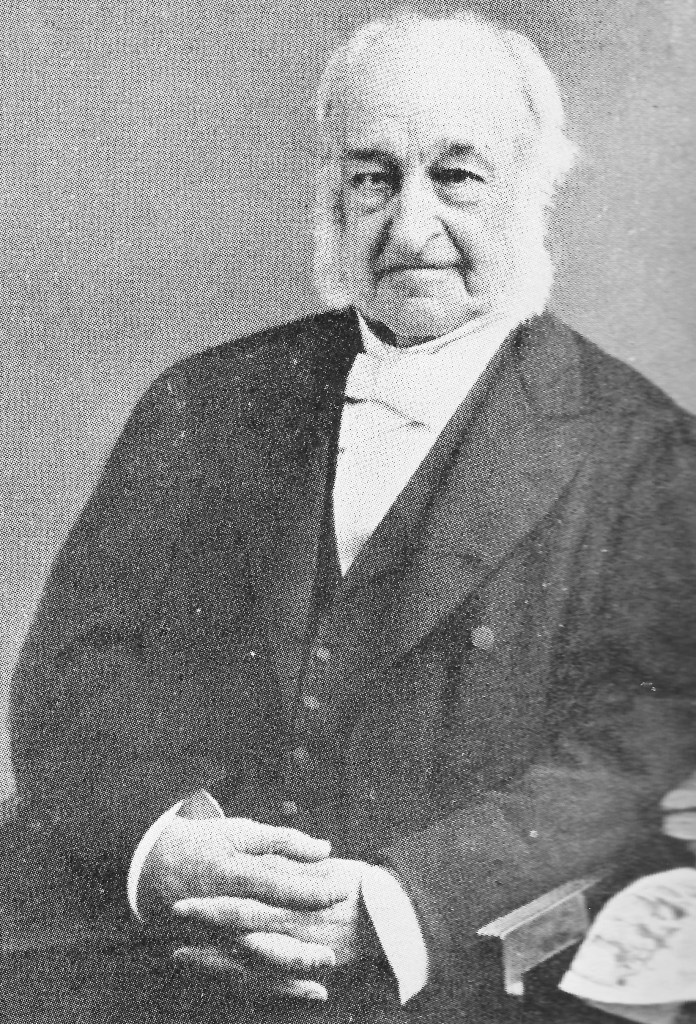
George Paul (1837-1920) was the last ‘Pew-Opener’ at St Mary’s Church, Eastbourne. This task was basically the role of a church usher. In Victorian times about two-thirds of the church were reserved for the gentry who paid pew-rents, not only for themselves but for their servants. The pew-opener would know who sat where and move on anyone who sat in the wrong place. The role of pew-opener was explained in the ‘Christian Times’ in 1867. ‘The ideal pew-opener should be neat in person, polite in manner and inaudible in movement. They need to welcome visitors and show them to a pew with grace and with a footpace as soft as a gentle nurse. They should note if the visitor is carrying a prayer-book and if not, provide them with one.”
The role was usually done by an elderly woman and, although they received a small salary, could attract a considerable amount of gratuities. A good pew-opener would know which of the paid pews would not be in use (members of the gentry often spent a considerable time away, often in London) and would be able to direct visitors to them – the closer to the pulpit the larger the tip!. It was said that a pew-opener could quickly assess the wealth of a visitor by their dress, which would determine how close to the pulpit they would be placed. The pew-opener was also responsible for keeping pews clean and even oiling hinges of pew doors.
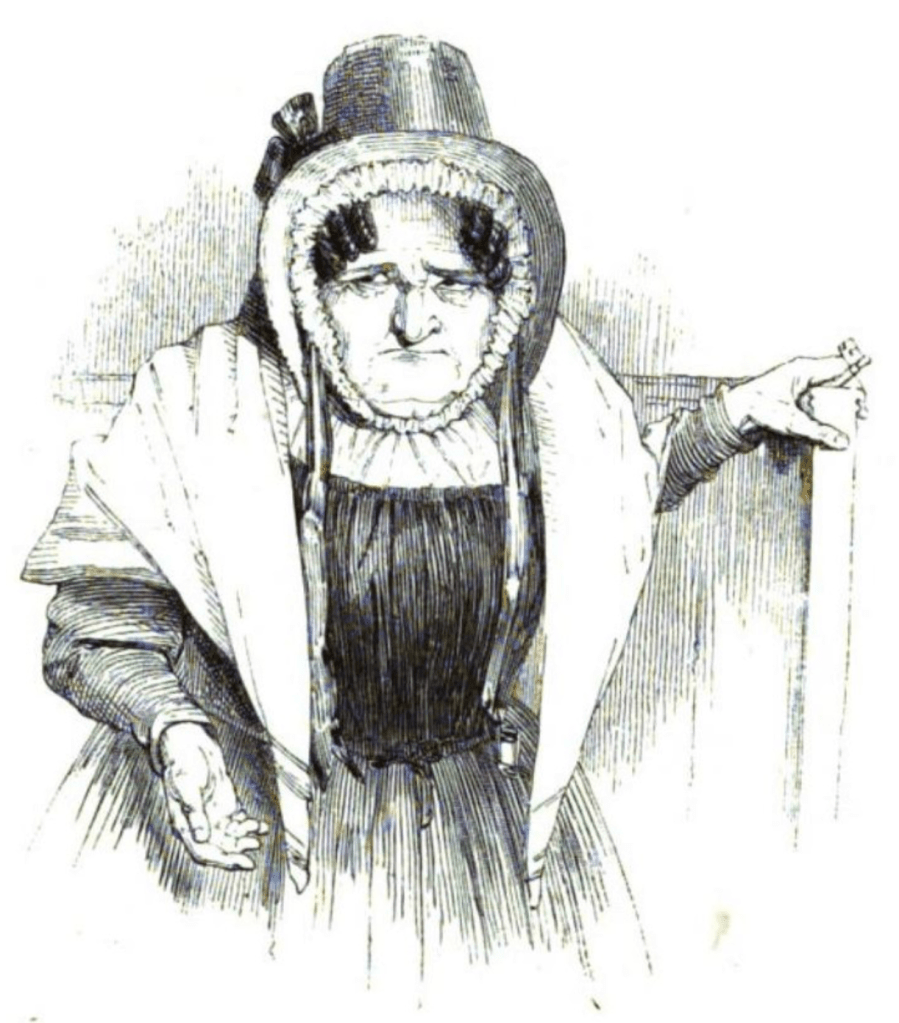
The 1839 diary of one London pew-opener, Abigail Spikenhard (I suspect this is a pseudonym) makes interesting reading.…
Epiphany: Hard frost – Short Sermon – sixpence from a woman in a red coat.
Sexagesima: The dear Bishop preached a moving discourse – run off my legs – church full – seven shillings and sixpence – got a bad half-crown – I suspect a lady in blue velvet wearing a yellow bonnet.
Easter Monday: Ten couples married but made only a pound. Oiled pew-locks.
Shrove Sunday: Bishop preached long service. It was rather hot and a lady fainted. Made a shilling. I saw the woman in blue velvet and mentioned the bad half-crown and she complained of my impudence! Christenings in afternoon. Shabby parents with noisy brats. Godmothers and fathers shockingly ignorant. A woman with twins gave me only as much as one. A poor day so home early for tea, – muffins.
Rogation: The new bishop has the whitest hands I’ve ever seen. He gave a beautiful discourse about the lusts of the flesh. It was a sweet sermon which made some ladies sob. He has a lovely carriage and his footmen are fine and tall. Made fifteen shillings but got a bad sixpence. Do people come to church to pass off bad money?
I am sure that not all pew-openers were so mercenary as Abigail, particularly George Paul who had previously been a teacher at St Mary’s School and was a member of the Eastbourne Oddfellows who raised money for good causes. He later went on to be the Superintendent of Ocklynge Cemetery.
It appears that all Eastbourne churches had pew-openers although St Saviours Church never charged pew-rents so had no pew-opener. In 1872, the one at Holy Trinity was described as a lady ‘wearing a black dress with white muslin collar, cuffs and cap.’
Herbert Campbell (1844-1904) was a music-hall female impersonator and one of his characters was a pew-opener.
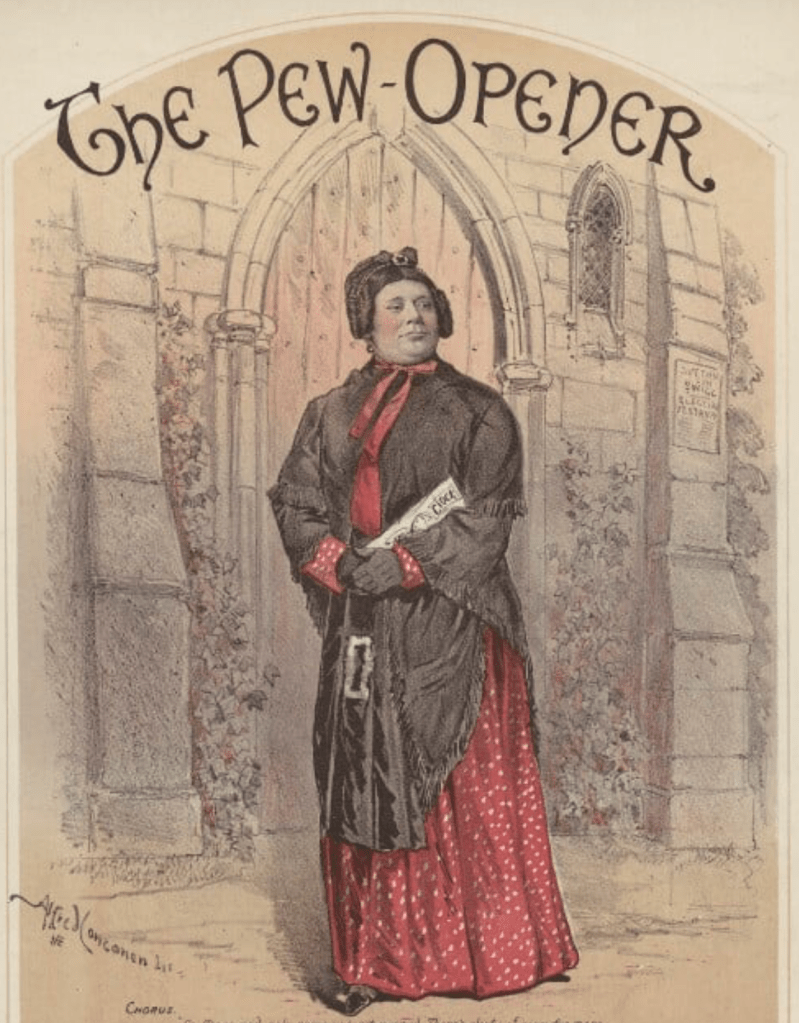
He sang:
So chaps and gals come and get married. There plenty of room for more,
There are Tinkers, Tailors, Soldiers and Sailors all wanted by the score,
My old man’s the Beadle and he’ll give you away if you choose,
But mind you, don’t forget to tip, the party who opens the pews!
But there was a serious side to pew-rents; it effectively pushed the poor of the parish to the back of the church.
A London organisation called the Free and Open Church Association (F.O.C.A.) was against pew rents and St Mary’s Church was mentioned in their magazine ‘The Advocate’ in 1879: “The system of pew-letting pursued at Eastbourne parish church will not bear the light and the authorities are uncomfortably conscious of the fact. St Mary’s being an ancient parish church, pew-rents are of course, illegal, and any assignment of seats to non-parishioners, whether for money or not is equally illegal. The churchwardens at Eastbourne however take a different view of their duties and they do not scruple to let pews to wealthy non-parishioners who hire more seats than they require and who, in many cases, frequently attend elsewhere on Sunday afternoons and evenings. It appears that at St Mary’s, 92 of the best seats in the church are specially reserved for less than 50 persons although sometimes 100 people are waiting anxiously for sittings”
When challenged, the Vicar, the Reverend Thomas Pitman, was astute and said that pew-rents were notcollected at St Marys, however some pews were ‘reserved for donors towards a fund for ecclesiastical purposes’. But the F.O.C.A. were not fooled by this play on words and said “The present system (at Eastbourne Parish Church) is maintained solely in the interest of a few wealthy persons who must not be unseated lest they should withdraw their subscriptions to the (church) school and other institutions. This however is not the object of a parish church which is for parishioners to worship in and not for the purpose of being hired out to strangers to provide funds for teaching children. This church in a fashionable watering place cannot usually spare many seats for the poor, especially in the season.”

The matter was discussed in the local press and complaints were made to the Bishop. Mr G.F. Chambers, the prominent local historian wrote in 1880: “For many years one pew at St Mary’s has been let to a wealthy London gentleman who lives in London for ten months of the year and when he occasionally attends worship in the parish church takes up four seats. The secret to this is clearly that he is a man of golden guineas’ The result of continued bad publicity was that the bishop eventually banned pew-rents in 1890 (the same year that Reverend Pitman died)

The money that was made from pew-rents was put to good use and the ‘Pitman Institute’ was opened in Church Street in 1898. It was an early community centre and library and no doubt benefit the poorer members of the parish.
The services of the pew-opener at Holy Trinity church were dispensed ten years later in 1900 when it was reported that she was paid £15 per year for ‘attendance, cleaning and washing’.
It was around this time that most churches stopped the paying of ‘pew-rents’, although, they were still being collected at St Annes Church until 1943 and at the Presbyterian Church until the mid 1960s! The end of pew-rents also saw the end of the role of ‘pew-opener’.
The St Mary’s Parish office still has a plan of who sat where in the church before pew-rents were abolished and, if you look carefully at the end of the pews, you can just make out the old pew numbers and where the hinges for the doors were.

Although today, we can chose where we sit in church, many members of the congregation have a favourite place however they can rest easy, knowing that they will not be moved on by a pew-opener!
Sources:
Ted Goss (the grandson of George Paul)
National Newspaper Archives
St Mary’s Parish Church Office
National Portrait Gallery
“All Things Georgian” Blog.
 Quirky Sussex History by Kevin Gordon