There are complaints on social media today that Eastbourne toilets now cost £1. Local loos however have always been an issue ….
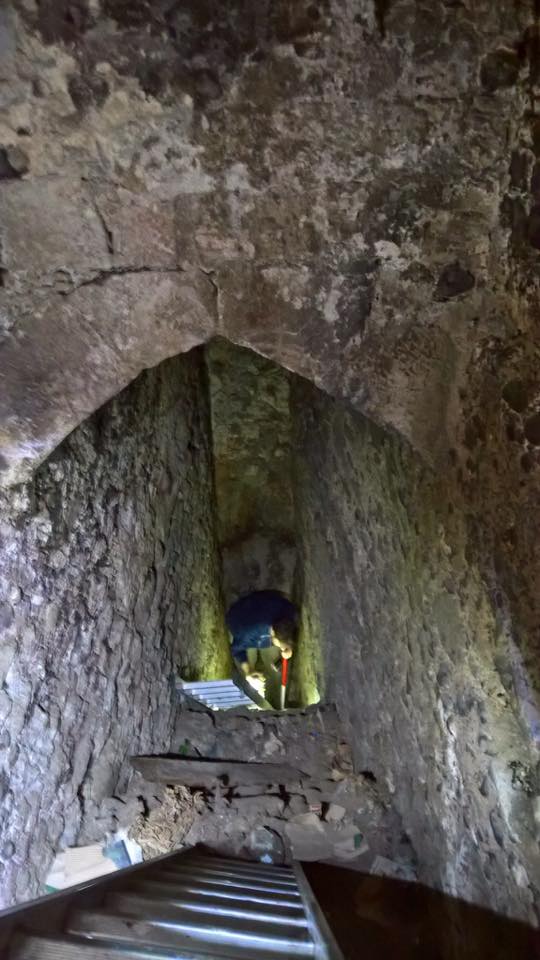
Despite our idea of Victorians being genteel and prudish they would have got used to seeing people going to the toilet in public. If you stayed at a hotel or inn you would have to use a chamber-pot and, as your room may well have been occupied by several people, privacy was not an option. The Lamb Inn had a more sophisticated solution with a two storey garderobe. (mistakenly identified in the past as a smugglers tunnel).
Local archaeologist Lawrence Stevens once told me that when the old Star Brewery site (now Waitrose) was excavated it was clear that structures across the Bourne Stream were early toilets, convenient to the householders but maybe not so pleasant for people who lived downstream.
Even if you stayed at a ‘posh’ hotel there were no en-suite facilities. When the Queens Hotel opened to the public on 1st June 1880 there were sixty bedrooms but only two bathrooms and, amazingly, no toilets! They were provided in a separate wing.

It appears that the first suggestion of a public lavatory in Eastbourne was in 1870. It was reported that during the annual regatta, as there were no public toilets, over 1,000 people had made use of a stable near the pier. (It would be interested to know if the owner charged and if there were separate facilities for men and women!) The Eastbourne Ratepayers Association therefore held a meeting December 1870 and called on the Local Board (the council) to provide urinals on Grand Parade. The council agreed and asked the association to suggest suitable locations. Although it was thought that the best place would be under the pier, the pier company objected saying that many people sought shelter there during inclement weather and the urinal may become a nuisance. It was agreed that the most suitable place was near the pier toll house. The council agreed and the following month it was decided to build a ‘place of convenience’ at the foot of the steps to the west of the pier.

A year later there were still problems and it was necessary for the Ratepayers to again press the Corporation for better public toilet facilities ‘there being violations of public decency arising for the want in proper conveniences’
A public toilet must have been erected at the Wish Tower in 1873 as in January 1874 the council paid £30 for a wall and a rockery around the urinal to hide it but later in the year the War Department complained that the urinals had been built on their land without their consent. In 1882 there was a complaint that the Wish Tower urinals were not properly signposted as ‘many ladies often mistake the entrance to the urinal for the entrance to the Wish Tower’ This is interesting as it is clear that the early urinals were not signposted. It wasn’t until 1890 that the council decided to have a notice outside them with the word “GENTLEMEN”. Surprisingly at least one councillor objected.

In the 1870s and 80s a number of public urinals were built across the town although it is clear from reports that these were not fitted with a supply of running water. Probably because of this, there were several complaints about urinals becoming a ‘public nuisance’ to people who lived nearby and in 1882 the council agreed that none would be built without public consultation. At the same meeting it was proposed that urinals be installed ‘in the trees in Trinity Place’, at the back of the Sussex Hotel and by the Rose and Crown pub. One councillor said there was “nothing wrong with a nice iron urinal !”.
In 1883 it was stated that that the influential Duke of Devonshire was against the erection of urinals and when ‘these indecent places were built they very much depreciated the value of nearby property’.
Not everyone used the public conveniences and in 1894 there was a suggestion that public toilets on the seafront be provided free of charge. The correspondent to the local paper said that the only public toilet was ‘miserable’ and a penny was charged. He said that if the fee was waived local fishermen may even use it. It was in this year when public toilets near the bandstand were proposed.

A public lavatory was built at the junction of Cornfield Road and Hyde Gardens in 1900. At a council meeting, Councillor Francis angrily objected but Councillor Wenham stated that there was no better location for a convenience in the whole town. This is also the first council meeting I have seen where there is a mention of ‘provision of lavatory accommodation for ladies’. As a result there was a proposal to build a ladies toilet at Trinity Trees but, following complaints from councillors, (who were all male!) the scheme was rejected.
In the following years and as the town expanded a number of euphemistically titled ‘public conveniences’ were built around the town. Many were painted to blend in with their surroundings but maybe the most unusual one was installed amongst the trees at Hampden Park. This was a French style cast-iron pissoir.
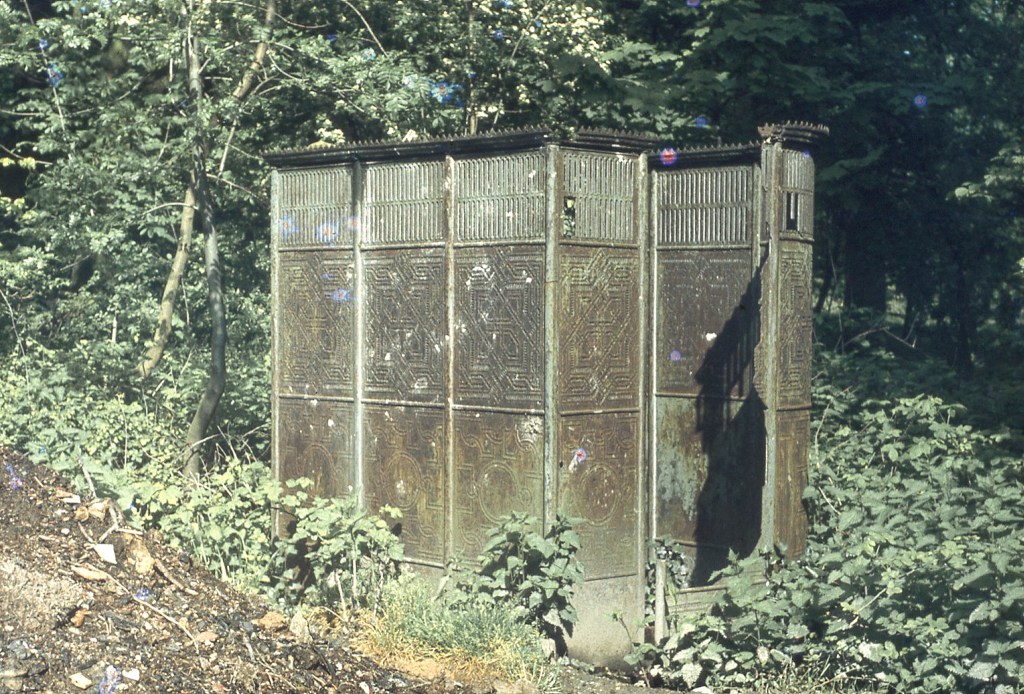
It was built at the MacFarlane’s Saracen Foundry in Glasgow and was originally painted green to blend in with the scenery. Amazingly this four stall urinal is still in-situ but has suffered from neglect and vandalism. The art-deco design of is still clear and for a gents toilet it really is a thing of beauty. I do hope that one day it can be restored and returned to its former glory.
These are not my favourite loos in Sussex however – they are the urinals at the Bell Inn at Ticehurst!

And, iff you want to see the actual toilet used by the Pre-Raphaelite artist Dante Gabriel Rossetti (and why wouldn’t you?) you don’t have to go far. For some strange reason it is on display in a glass case at St Clement’s Church in Hastings!

 Quirky Sussex History by Kevin Gordon