Amongst the archives of the Eastbourne Society, is large full length portrait of a smiling, alert, dark-suited woman with her hands crossed on her lap. She looks like a lawyer but this is Rannie, a long-serving Eastbourne headmistress.
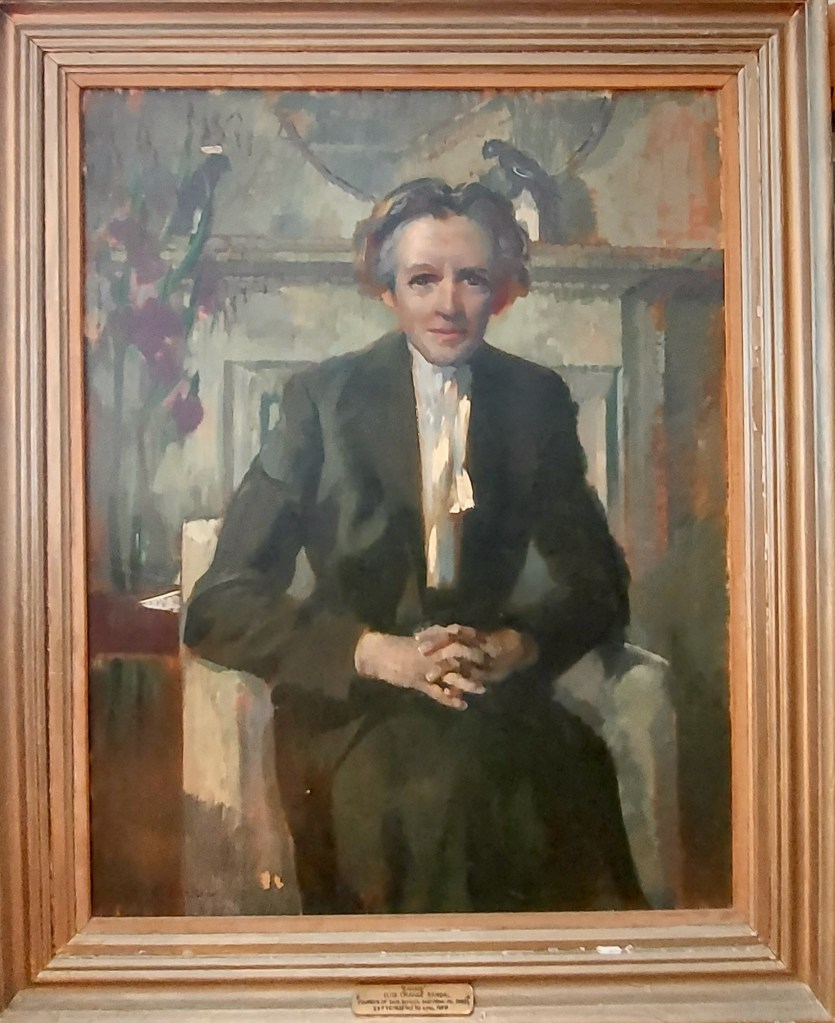
Elise Orange Randall was born on the island of Guernsey in 1884. She was the daughter of Eliza and her husband Robert, who was a brewer. It is claimed that her family could trace their ancestry on the island back to Norman times. Her nickname was ‘Rannie’ and it was by this name she was known throughout her life. For over fifty years Rannie was the principal of a girl’s school in Eastbourne, Sussex.
Rannie claimed to have established the school in 1907 at 11, Silverdale Road near the back of the Grand Hotel. She would later tell people she started off with ‘one house, one pupil and £5 in the bank’. This is not quite the case.
A Miss Bullock had opened the ‘Eastbourne School of Cookery and Domestic Economy’ at 11, Silverdale Road in 1904.
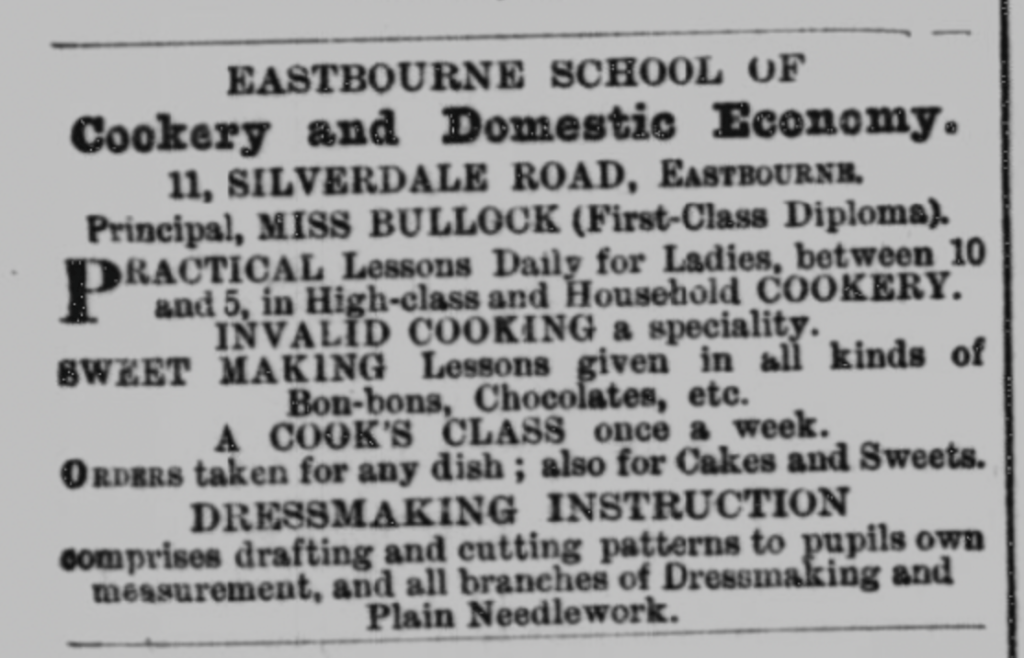
Miss Bullock offered classes in cookery, sweet-making and dressmaking, with ‘cooking for invalids’ being a speciality. Rannie and a friend Olive Goodman purchased the school as an on-going concern in September 1908 but did not advertise courses (‘high-class cookery’) until a year later in October 1909.
The school was popular. It was one of the first local businesses to have a telephone installed (Eastbourne 11) and became known as the ‘Eastbourne School of Domestic Economy’. The school expanded to the whole terrace of houses in Silverdale Road. Three nearby houses were purchased to provide hostel accommodation for girls who boarded, the first ‘resident pupils’ being admitted in 1910.

Rannie was to head the school for over fifty years, although during the Great War, she also helped to train women to be VAD (Voluntary Aid Detachment) nurses. In 1928 the old Victorian terrace, built in 1870 and was now the school was modernised with the white cladding we see today.
Originally, the school curriculum was to ‘to prepare girls, when married, in the efficient running of their homes.’ However the emphasis changed to educate and prepare girls for careers in catering. By 1989 girls (aged 16-21) were able to attend diploma courses on Cordon Bleu Cooking, as well as learning commercial catering, secretarial and even flower arranging skills. The aim of the school had changed from preparing girls for marriage to preparing girls for a vocation.
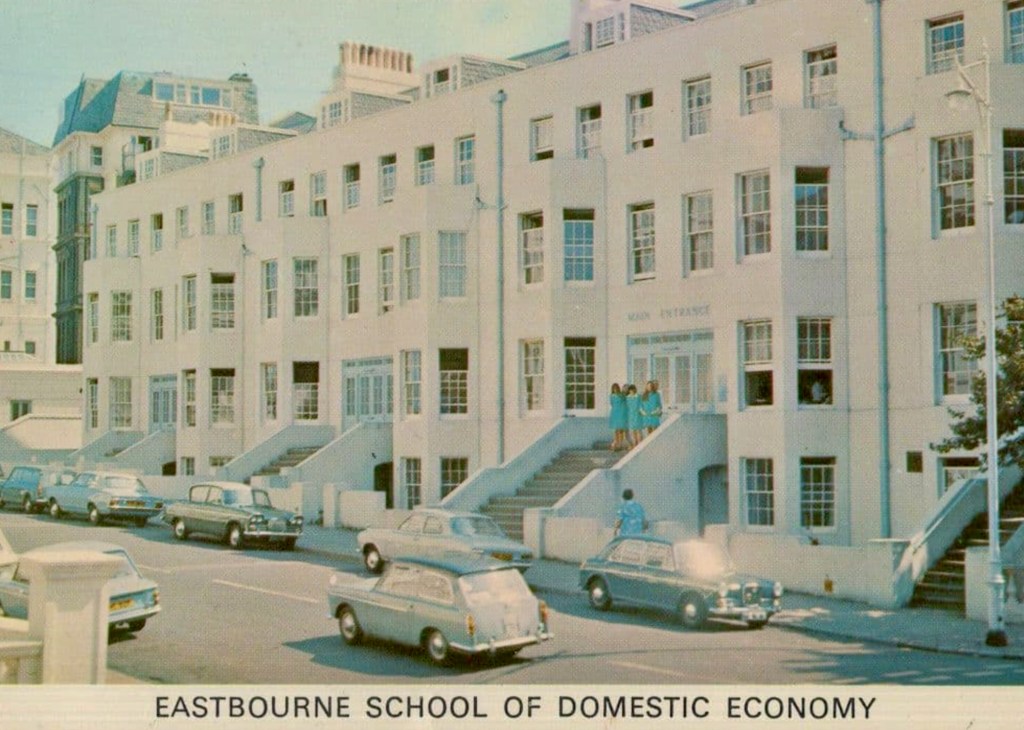
Rannie lived at 1, Silverdale Road. Inside the large school building were ten full-sized kitchens and a mock-up restaurant (unsurprisingly called Rannie’s) where girls were able to practice their culinary and hospitality skills. One of the pupils was Felicity Attlee the daughter of the former Prime Minister, Clement. Former pupils describe it as being a cross between a Swiss finishing School and St Trinians! Rannie insisted that when girls left the school they knew how to cook, dust, iron, make beds and clean toilets. Her mantra ‘Flush-Brush-Flush’ was never forgotten! Other girls remembered that when cooking, every dish has to be garnished with a sprig of parsley and napkins should be shaped to look like a swan.
Rannie’s girls were known as ‘cookers’ in the town and were permitted a considerable amount of freedom. Many of them dated the boys from Eastbourne College. On 5th July 1949, the Daily Express ran a front-page story “COLLEGE BOYS SAY: WE CAN’T SEE GIRLS”.
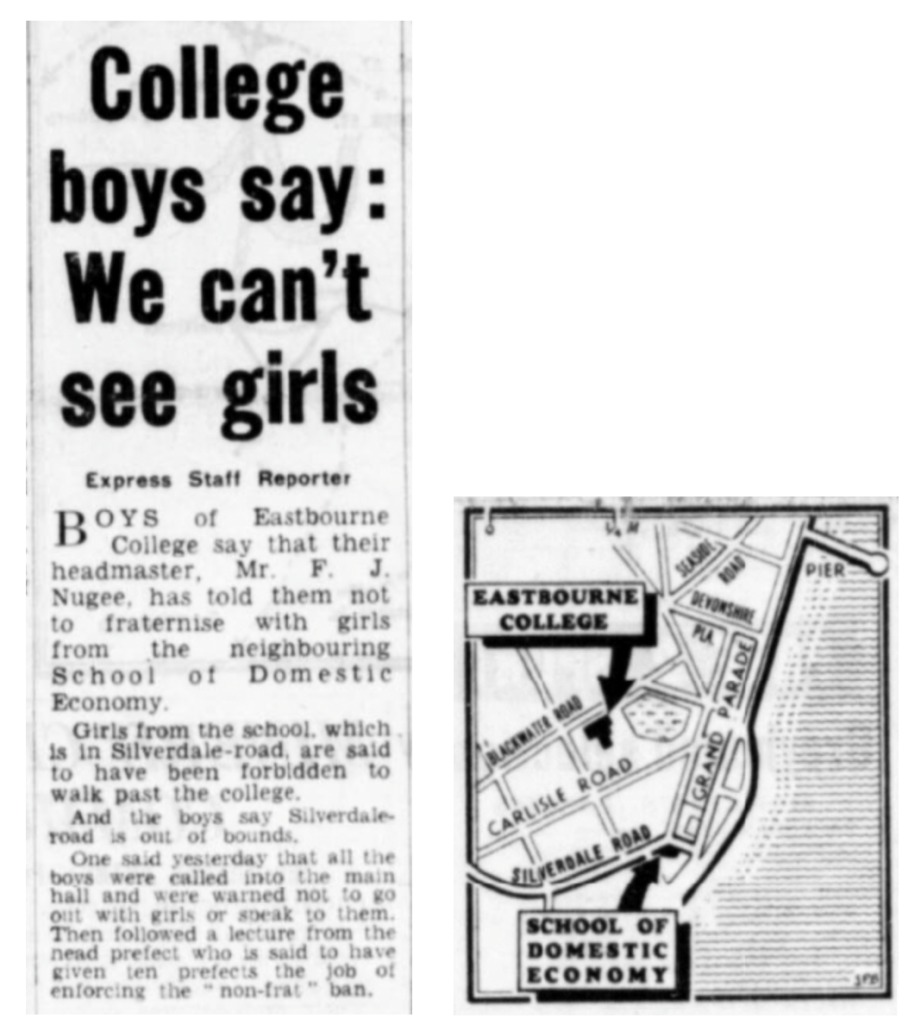
The story explained how girls from the School of Domestic Economy had been forbidden to walk past Eastbourne College and the boys had been told not to ‘go-out with the girls or speak to them’. A handy map showed the location of the two schools. This was a bit of a non-story and the supposed ban was never enforced. This maybe because at least two of the college masters had previously married ‘cookers’. I am sure that the headteachers of the time, Mr Nugee and Rannie, preferred their pupils dating each other than the boys and girls from the town.
In 1957, the school celebrated its jubilee and former staff and pupils travelled from all over the world to visit their alma mater. Rannie was presented with a mink coat and a diamond brooch and discovered that many of her ‘girls’ had gone on to have successful careers managing schools, hotels and hospitals.
Rannie died in April 1959, after a short stay at the Esperance nursing home. She returned home to Guernsey where she is buried in the family grave at the Candie Cemetery.
On 4th June 1961, a stained glass window depicting Saint Martha and Saint Mary Magdalene was dedicated at All Saints Church in Carlisle Road a short distance from her school.

When the school closed in July 1996, the Daily Telegraph said it was ‘ Britain’s last residential finishing school’. I wonder how many former pupils remember ‘Flush-Brush-Flush’ !
Sources:
Daily Express 5th July 1949
Independent 2nd November 1996
Eastbourne Society Magazine No 153 (Winter 2002)
Old Eastbournian Yearbook 2024
findagrave.com
Eastbourne newspapers sourced via the National Newspaper Archive
 Quirky Sussex History by Kevin Gordon