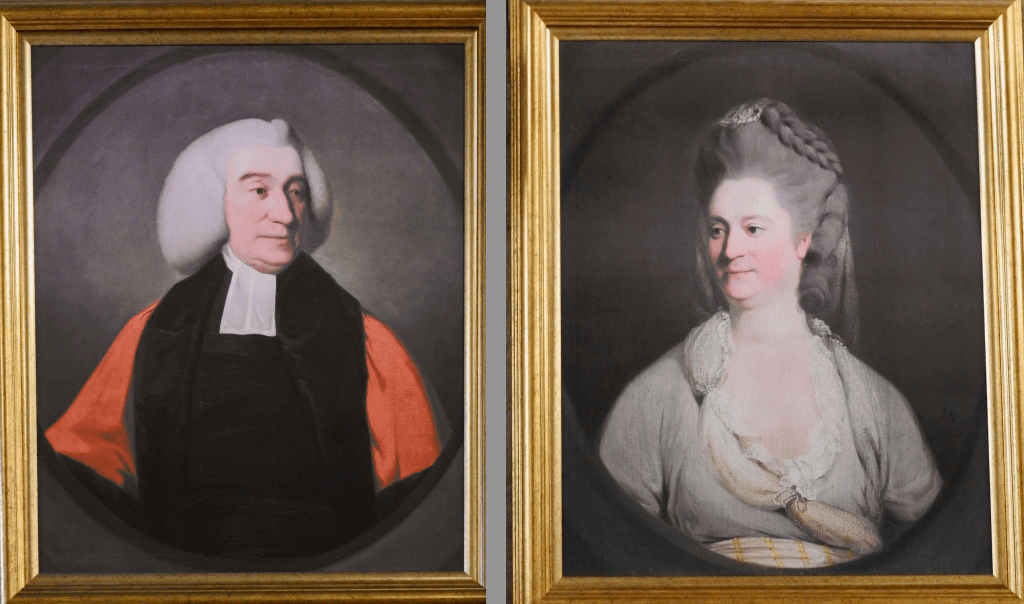
Henry Lushington is remembered at St Mary’s Parish Church, Eastbourne with a massive memorial which includes his bust. Henry’s life was short but action packed. He was the son of Mary and the Reverend Henry Lushington, the vicar of Eastbourne and resident of the Manor House. In 1754 at the tender age of sixteen, Henry left Sussex , joined the East India Company and sailed to India. He died just ten years later and his detailed monument can now be seen on the wall of the north aisle at St Mary’s Church.
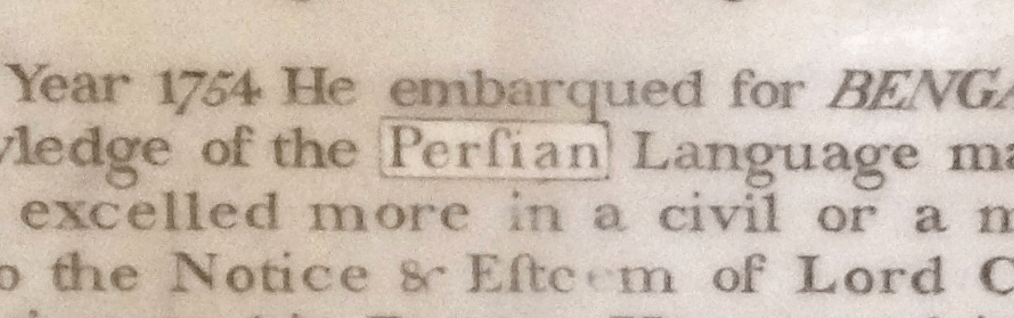
On arrival at the port of Calcutta (now Kolkata) in Bengal in the east of India, according to his memorial, young Henry had apparently become fluent in ‘Persian’. I am not sure if this correct as, knowing the language of Persia (now Iran) was probably not much use thousands of miles away in India. It is interesting to note that, on his memorial, the word ‘Persian’ has clearly replaced another word.
At the age of eighteen, young Henry came to the notice of the head of the East India Company, Lord Clive of India. Robert Clive (1725-1774) was the man who had laid the foundations of the British Raj in India. His wealth had helped to bankroll his friend Thomas Pelham-Holles to becoming Prime Minister so he was given a peerage. Pelham-Holles had large estates in Sussex including a manor-house at Bishopstone near Seaford. His main abode was at Claremont in Surrey – a house that was later purchased by Lord Clive. (This explains why the main road through Seaford is called ‘Claremont Road’) Clive apparently engaged young Henry Lushington to be his secretary and interpreter.

By the 1750s, the heavily armed East India Company (EIC) occupied much of Bengal and not surprisingly were frequently, not only in conflict with local rulers, but also the French East India Company who were trying to get a slice of the action in the area. The EIC started to fortify Calcutta with the construction of a huge defence called Fort William. The local Nawab (Governor) Siraj ud-Daulah ordered the construction to be stopped but of course the obstinate British refused, so it was put under siege by the local Indian forces. The British military commander unwisely left Fort William with just 146 men to defend it and one of these was the Eastbourne teenager Henry Lushington.
On 20th June 1756, Indian troops (known as sepoys) over-ran Fort William and took Henry and his fellow EIC colleagues prisoner. At 8pm they were all forced into the fort’s small prison-cell. Conditions in what was to be known as ‘The Black Hole of Calcutta’ were cramped and many died in the stifling heat. When Nawab Siraj ud-Daulah was told of the situation the next morning, he ordered that the prisoners be released. By this time, 9am, only 23 men were still alive; one of them was Henry. He had probably survived because of his age and the fact that he had sucked the sweat from the sleeves of a fellow prisoners! However, although Henry escaped, his memorial reminds us that ‘he was reserved for greater misery’.

By 1760 the East India Company had military control of much of North East India and Clive had returned to England. In the Bihar area, the EIC ruled alongside the local Nawab Mir Kasim (described on the Eastbourne memorial as ‘Nabob Cossim Ally Kawn’). The British by this time were reaping the benefits of the area by running factories and exporting the fine but cheaply made cloth back to England. The factories were protected by the EIC and one of their number was Henry Lushington.
Mir Kasim didn’t seem to mind that the British were exploiting his fellow country men and women, but was annoyed that they were running this profitable trade without paying (him) local taxes. When he sent his tax-collectors to a factory in the city of Patna the local EIC official, William Ellis took them prisoner. The city of Patna now has a population of over 2 million people and has the distinction of being one of the oldest inhabited cities in the world.
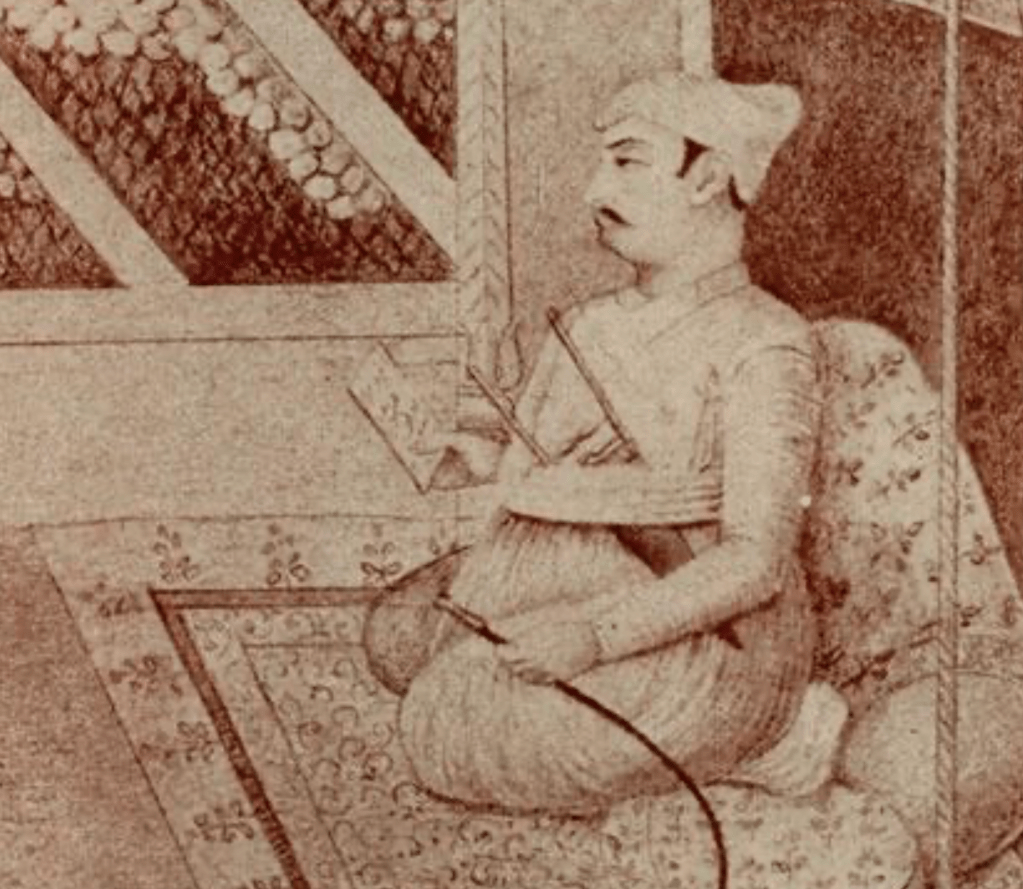
In April 1763, the EIC sent two representatives, Mr Amyott and Mr William Hay to ‘negotiate’ with the Nawab but when he found that the EIC was also sending a fleet of heavily armed boats, laden with firearms towards the city, he seized the two men as hostages. William Hay also had Sussex connections as his father, also William, was born at Glyndebourne and had been the MP for Seaford between 1734 and his death in 1755.
The delicate situation did not go down well with the EIC in Calcutta who declared war on the Nawab. On 25thJune 1763 the British over-ran and captured Patna, plundering and looting many homes. (a contemporary account says that many houses were left without even one piece of straw.) Mir Kasim was incensed by what he saw as a betrayal of his arrangements with the EIC and the conduct of its soldiers. He ordered one of his commanders ‘Somru’ (Someroo on the Eastbourne memorial) to retake Patna and put to death any British Prisoners.
Somru was actually not an Indian but a German called Walter Reinhardt. (1725-1778). He was a mercenary and had arrived in India as part of the French East India Company. He was called ‘Somru’ because of his dour and sombre nature. He was something of a turncoat and would work for whoever paid him most, either European of Indian.

On 5th October 1763 Somru came to a fortified house in Patna that was occupied by members of the EIC including Henry Lushington and William Hay. Somru ordered that the house be taken and the occupants shot. The EIC men defended themselves with what they had to hand including bottles, stones and bricks. Despite being shot, Henry Lushington ran at his assassin and managed to grab his sabre and killed him with it. (although the Eastbourne memorial suggests that he killed three and wounded two more). The following day Henry and the other dead were thrown into a nearby well. Only one man, Doctor William Fuller, had been spared.
51 people were killed in what was to be known as the ‘Patna Massacre’ they included six artillery officers, eighteen infantrymen, eight British merchants, three surgeons and a number of unnamed local soldiers working for the EIC.
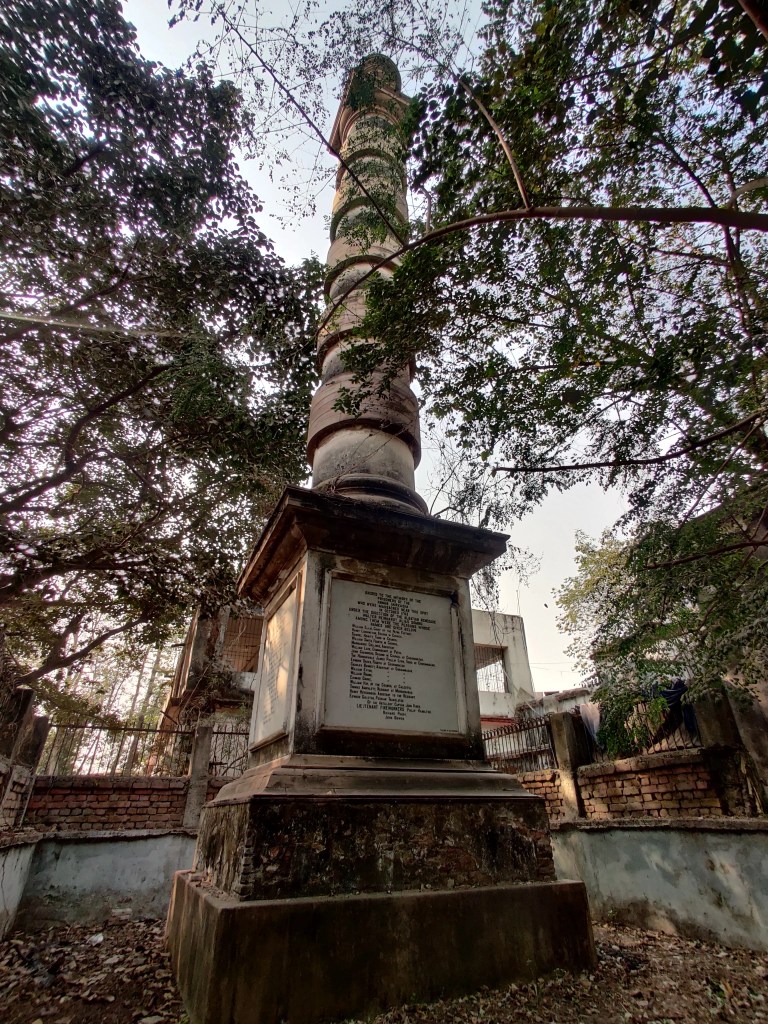
The city of Patna returned to British rule and in 1880, Sir Ashley Eden, the Governor of Bengal arranged for a monument to be placed near the site of the massacre. The monument lists 28 of the people killed including Henry Lushington. The historian James Talboys-Wheeler wrote that ‘English gentlemen were murdered in cold-blood at Patna together with others of inferior rank’. This is probably explains why they are not recorded on the memorial.
Three years after the Patna Massacre, Walter Reinhardt (Samru) married a 14 year old girl called Begum and they established their own private mercenary force. At one point he became the Governor of Agra which is where he died in 1778. Although her husband was a Lutheran, Begum Samru was a Roman Catholic and became one of the richest women in Asia.
Back in Eastbourne the grieving Reverend Henry Lushington, had decided a large memorial was needed for his son and employed the services of Sir Robert Taylor (1714-1788) to design it. Sir Robert Taylor was from Essex and originally trained as an architect, indeed he had designed Lushington’s own home, the new Manor House in Eastbourne. Amongst his many commissions he is noted for designing the Bank of England in London (After his death the work was taken over by Sir John Soane.) He was also responsible for clearing all the buildings on London Bridge to make it safer and in 1780 made extensive alterations to 10, Downing Street.

Henry Lushington’s memorial at Eastbourne is strangely worded with awkward grammar, haphazard spelling and a liberal flourish of capital letters where they would not usually be used. The word ‘the’ is often, but not always, replaced with ‘ye’.
In 1763 the bust of young Henry was originally placed in the 14th century Easter Sepulchre to the left of the altar at St Mary’s Church, but in 1851 the bust and memorial were moved to the north chancel. An organ was installed nearby in 1868 but this hid much of the wording on the memorial, so in 1908 it was moved again to its present location in the south nave. This last move was undertaken by Mr Lacy William Ridge, (1839-1922) the surveyor for the diocese of Chichester and president of the Architectural Society.
The Christian cemetery at Patna was closed by the British Government in 1912. It is now neglected but still occupies a small area near the city hospital amongst the bustling, busy streets.

Most local residents don’t know and probably don’t care about the crumbling memorials to the Raj inside its walls. Remarkably however, the column that is the memorial to the Patna Massacre still stands and the name HENRY LUSHINGTON can still be clearly seen on it. How strange that the same man is still remembered at two memorials 5,000 miles apart.

Sources:
Old Eastbourne (Walter BUDGEN 1912)
Dr William Fuller and the Patna Massacre of 1763. (K.K. SINHA Published by the Royal College of Physicians of Edinburgh 1995)
The Patna Massacre of 1763 (Published by the Indian Government of Culture 2022)
Lost Souls : Forgotten Graves of the Raj (item on a blog by ‘The Khwaabgah’ WordPress 2021)
Internet research including ‘Ancestry’ and the British Newspaper Archives.
 Quirky Sussex History by Kevin Gordon
On the question of the mention of Persian, it is perhaps not as odd as it sounds. There is a close relationship between Persian and Urdu, and, to a lesser extent, Hindi.
LikeLike