I have always had an affinity for the Long Man of Wilmington. It has been a constant part of my life, and I know that my family, particularly my grandmother, Bessie adored it too. The Long Man was even on my school badge. (Willingdon County Secondary School as it was then)
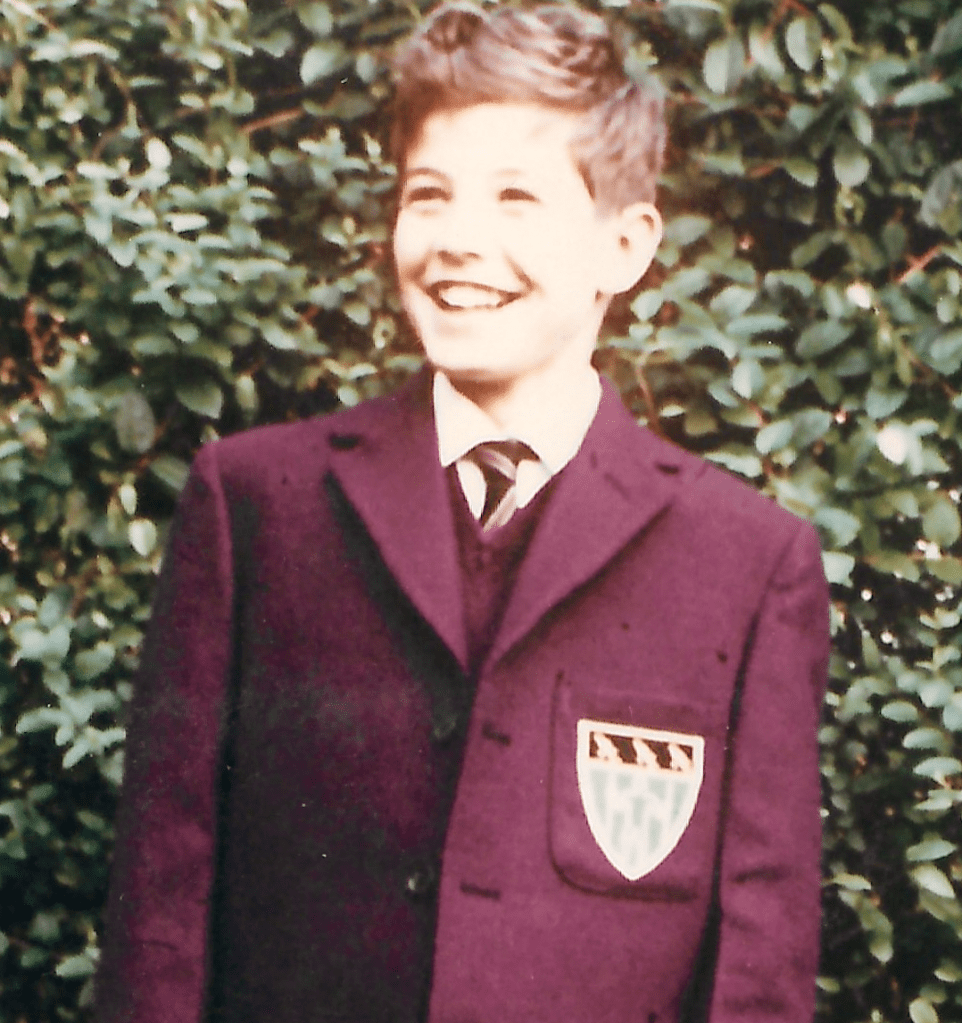
The Wilmington Giant stands tall and clear, boldly gazing down from Windover Hill as he has done for centuries, however his origins and identification are far from bold and clear. His name is unknown despite many suggestions, although Bessie told me that he was a man standing in an open doorway. “Door to where?” I asked. “Maybe the door to the underworld” she always replied. Bessie kept a diary and I was interested to note her entry for 14th February 1940 which read “Gladys, Sheila and Roger and I took the bus to Wilmington and saw army manoeuvres on a large scale. The snowdrops were lovely. Saw old yew tree reported nearly 1,000 old. Bee and Butterfly Window has been removed from Wilmington Church for safety. Walked towards the Wilmington Giant which is now overgrown with grass so as not to be a landmark for the Germans. Watched aeroplanes overhead.”
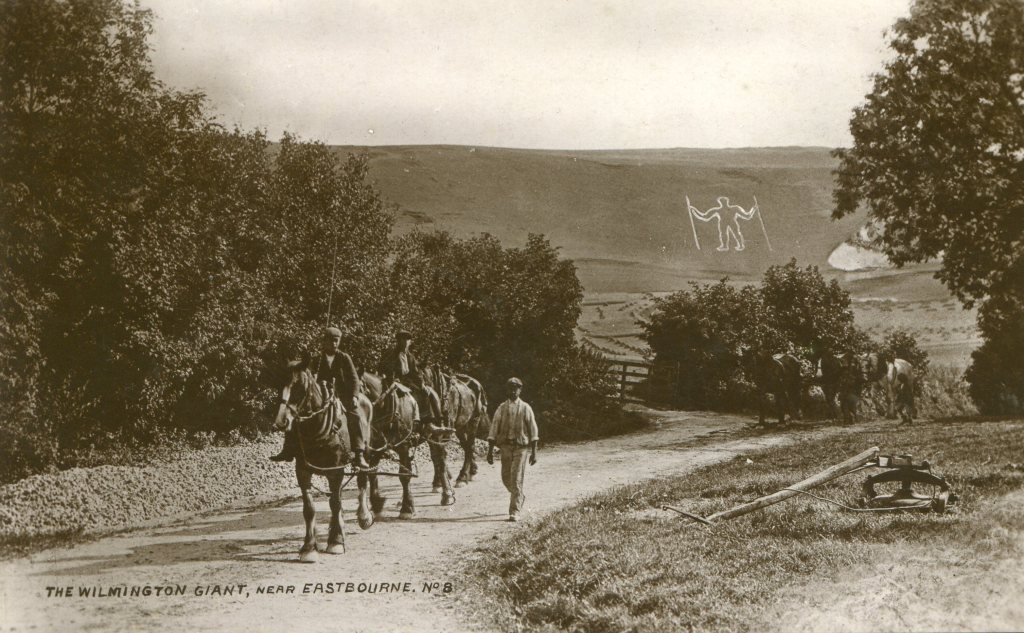
The Long Man of Wilmington is over 70 metres tall and, despite what people think, is no longer cut into the chalk. In the early 1870s the cricketing vicar of Glynde, William de St Croix (1819-1877) took it upon himself to mark the outline of the giant with yellow bricks which he painted white. These early bricks were replaced by concrete. In August 1969 Sussex archaeologist Eric Holden (1911-1989) excavated the head of the giant and this photo shows the two sets of stones.

A Seaford friend of mine, Rodney Castleden has written extensively about the Wilmington Giant and a recent book by Dr Mike Allen, the President of the Eastbourne Natural History and Archaeological Society investigates the similar Cerne Abbas Giant. Neither author however mention a curious phenomenon regarding the hill figures – their effect on cattle!
In 1960 the BBC explored this effect in a radio programme called ‘The Long Man and Bluebell the Wonder Cow’. The programme aired on the BBC Home Service at 4pm on 3rd May 1960 and was researched and presented by Stewart Wavell (1921-2010), an Anglo-Malaysian broadcaster. He had spent several days interviewing local people but was particularly impressed by George Page of Warren Farm, Wilmington.
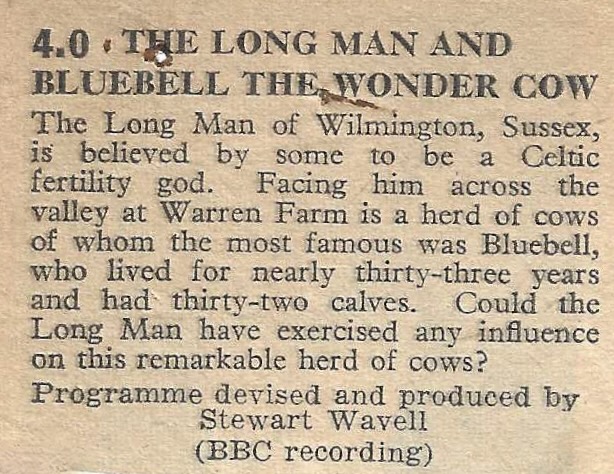
The 180 acre Warren Farm is overlooked by the Long Man and Farmer Page was sure that his herd of cows was under the influence of the giant, particularly his famous cow Bluebell. Bluebell, a Friesian Short-horn was born on 27th February 1927 and in her 33 years had given birth to 32 calves including three sets of twins. After the birth of her first calf, she was providing eight gallons of milk a day (as opposed to an average yield of five or six gallons). He farmed naturally and used no artificial fertilisers. Mr Nicholas from Plumpton Agricultural College confirmed Bluebell’s health saying that she looked half her age and had ‘well shaped deep silky udders’.

Farmer Page went on to say that Wilmington born babies were always large and healthy, local people were big and strong and many lived into their 90s. He was sure the reason was that they were under the influence of the Long Man who he believed to be a god of fertility and longevity. The programme narrator spoke to some of the farmers friends. Mr Branston said ‘The influence of the Long Man gives Mr Page confidence which is passed on to his cattle. He works with the seasons and he fits in with his environment. Mr Melville Thorpe (1885-1978) of Glynde Avenue, Hampden Park explained how the Long Man influenced both the herd and his friend who was ‘steeped in the atmosphere of the district.’ Mr Thorpe said “The Giant says ‘ I Iaughs to myself when humans argufy – I do not change but nobody knows how I came here and nobody don’t know when’”.
Others were interviewed for the programme including members of the local Women’s Institute and Colonel J Waymark who thought the giant was connected to the Phoenicians. Mr Bradford of Priory Farm, Wilmington retold the legend of two local giants who had a fight. The victor was the Firle Giant who knocked his opponent so far that he landed on Windover Hill where local people drew around him in the chalk leaving the outline we see today.
Unfortunately by the time the BBC broadcast the programme poor Bluebell had died – apparently the giant had failed to prevent her from eating some deadly nightshade. The farmer George Page died aged 68 at his farm just a week after his voice was head by millions on the radio.
How do I know all this? I doubt if a copy of the recording survives, however my grandmother Bessie made notes which she tucked into the copy of Rodney Castleden’s book which I bought her in 1986! Indeed she was so influenced by the radio recording that a few days later she persuaded my poor grandfather Alex, to climb onto the Long Man where she sketched him. Climbing up the steep hill to get to the figure is no mean feat for the able-bodied but Alex only had one leg!
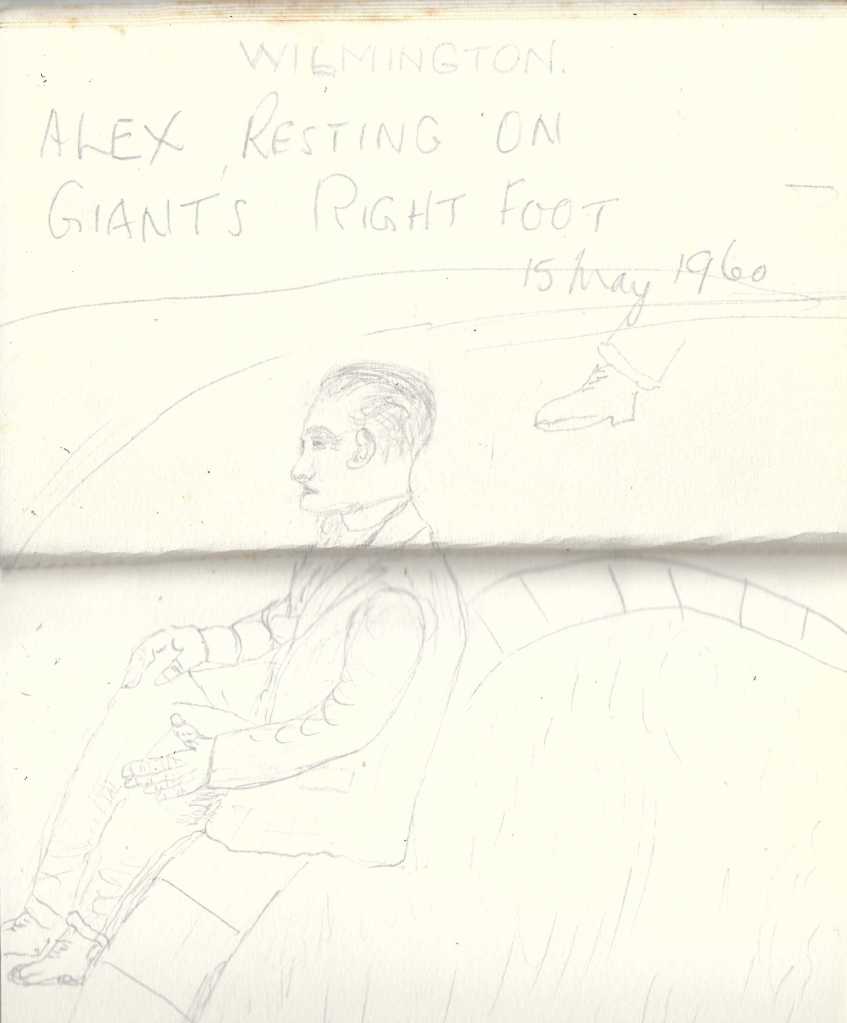
Bessie mentions the Wilmington Giant in her diary again in 1967 when she drew another sketch and reports that he been mentioned on the television by Dr Alex Comfort, the author of that controversial book ‘The Joy of Sex’. Maybe the he too had discovered the Long Man’s reputation as a fertility symbol?

For more information about the Wilmington Giant and British Hill Figures see…

 Quirky Sussex History by Kevin Gordon
A fascinating account. Thank you. I love the sense of stories, knowledge, beliefs passed down by long time residents. A happy read on a sunny morning. Incidentally I think our son, when about primary age in the early 90s, helped with a repainting of the giant. He loved it!
LikeLike