Edmund David Ransom was born in Hampshire in 1894. He was the son of William Ransom, an Irish-born coastguardsman and his wife Elizabeth from the Isle of Wight, herself, the daughter of a coastguardsman.
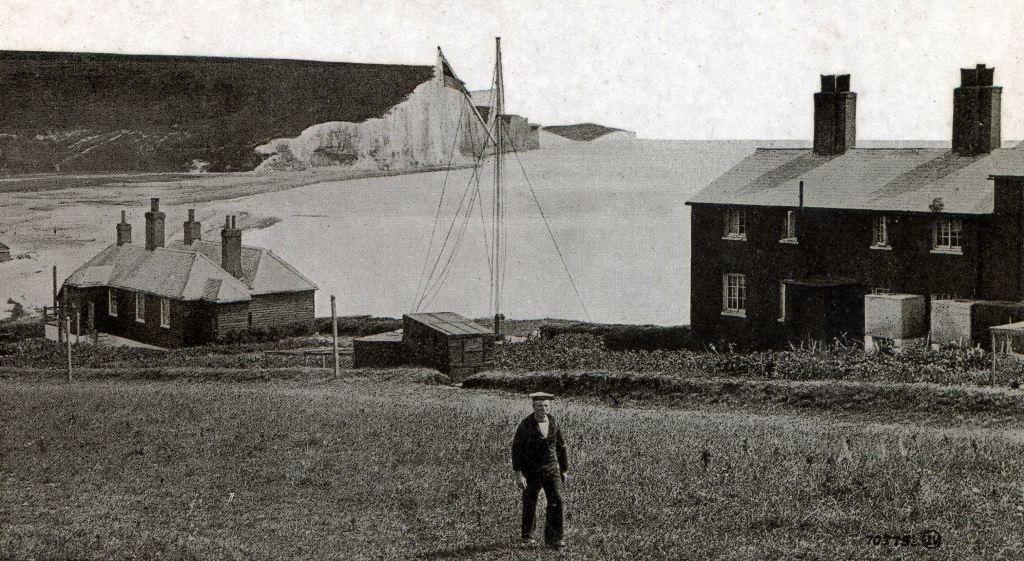
In 1898, Edmund (known as Eddie), his older brother William and parents moved to live in the Coastguard Cottages at Cuckmere Haven. In 1979 he wrote down his memories of his time there.
Early in 1898, my father was moved from Langstone Harbour, in Hampshire, a very pleasant spot, to Cuckmere Haven, a desolate spot between Seaford and Beachy Head in Sussex. There was only the Coast Guard Station on top of the cliffs, a fisherman’s small bungalow on the beach with a farm and a cottage on the other side of the river. There were no roads only cart tracks; the coast road was not in existence then.
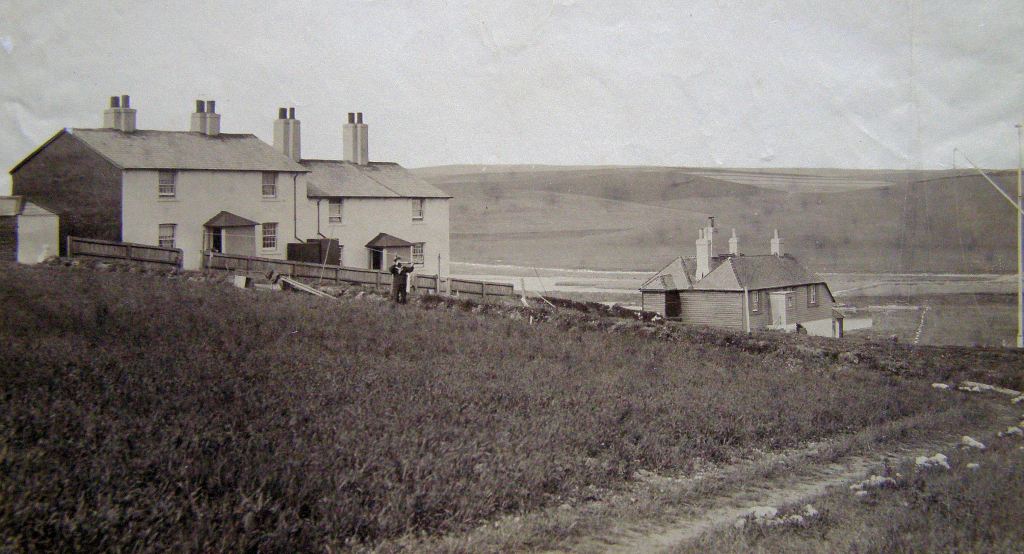
The only source of water was rainwater stored in tanks and used for cooking and washing. For drinking purposes it had to be filtered and a filter was supplied. The sanitation consisted of earth closets situated at the far end of the buildings.
When the tanks ran dry, water had to be brought from a well at the farm by the bridge. A huge cask holding some 52 gallons was used. It had a heavy pair of wheels, with shafts and ropes by which it was pulled over the rough tracks. For lights we had oil lamps and candles. For provisions we had to tramp over the hills to Seaford to get meat and bread.
We could not go to school as it was too far for us kiddies to walk, especially in the winter. Our mother bought us some copy books to teach us to write, but as soon as she went upstairs, we were out of the door and down onto the beach or along the riverbank. At this time my brother was just over seven years old and I was six
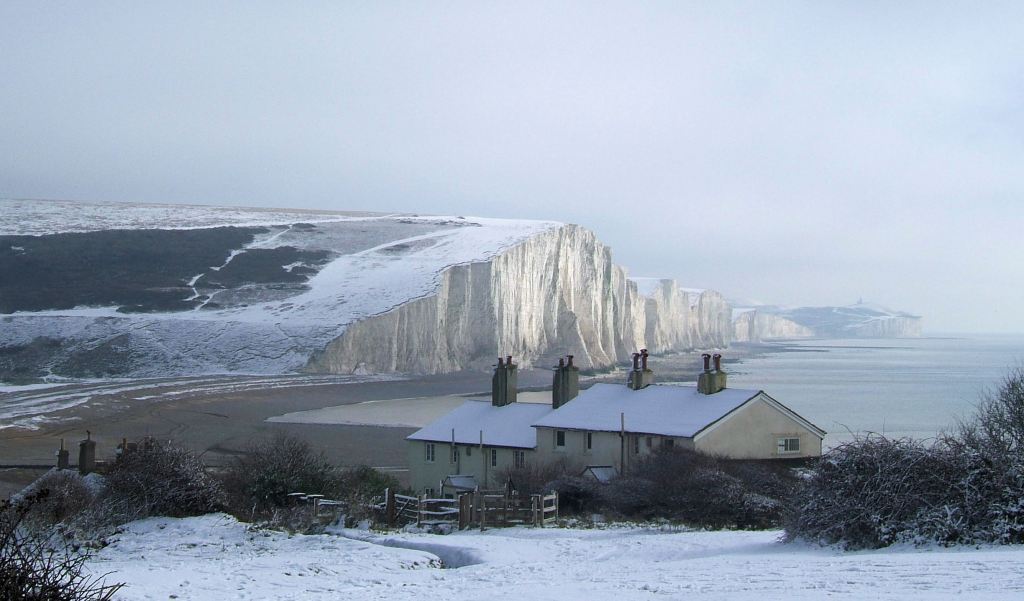
The mouth of the river had silted up and my father took us to see the shingle ploughs at work. They were made of wood and drawn by horses. When the tons of shingle had been shifted, the current became very swift. A rope was stretched across to the other bank so that the boat could be hauled across hand over hand. This could be very dangerous especially on night duty and in stormy weather. To mark the track over the Downs when patrolling at night, chalk stones were placed at four or five feet apart, but in bad or stormy weather it was possible to miss them.
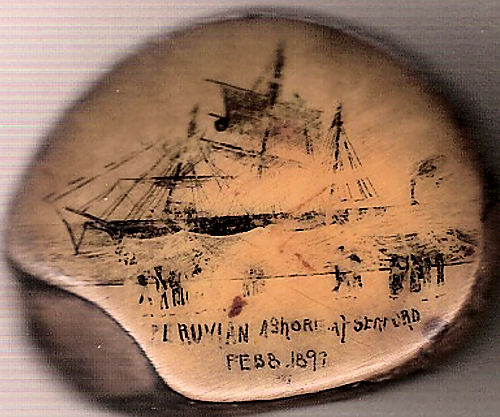
(On 8th February 1899, the coastguardsmen) went over to the aid of the Peruvian, a square rigger, ashore off Seaford. The crew of the Peruvian were rescued by the Newhaven lifeboat but two of the crew could not be taken off.
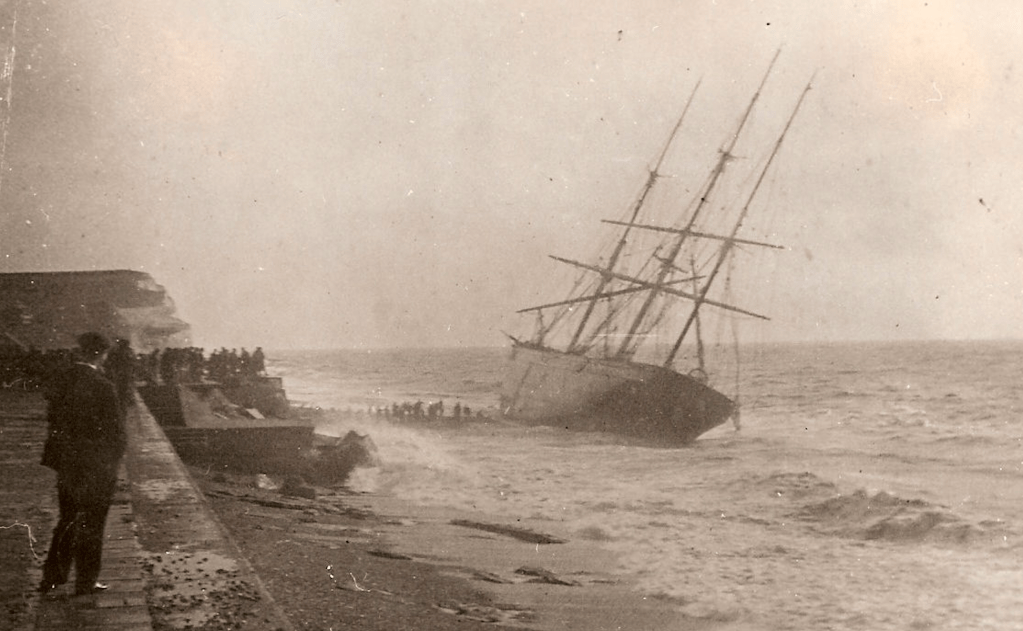
Repeated efforts were made to get a rocket line aboard but time after time it was blown away from the ship by the gale force winds. At daylight the wind dropped a little and a line was got aboard. One man was brought safely ashore but his companion, on stepping out of the breaches boy, was swept out to sea by a huge wave. His body was recovered later. The Peruvian was loaded with ivory nuts and some of these may be seen in Shoreham Museum.
My brother and I were going along the beach one day when we were surprised to see a small sailing barge high and dry on the beach. Full of excitement, we hurried along and as we got nearer, we saw two men filling wheelbarrows with shingle or boulders, pushing them up a plank and tipping them into the hold. We watched them for some time and then they spoke to us, I cannot remember what they said to us, but they helped us aboard and we peeped down a square hatch in the deck to look into their tiny cabin where they lived and slept. This was a wonderful experience for two small boys and it was all we could talk about for days and days.
At times dead cattle and sheep were washed ashore; they were either washed overboard or thrown overboard from passing ships after they had died. It was the duty of the coastguards to bury them in lime. I have watched this operation many times.
It was at Cuckmere that I first went carol-singing with other children from the Coastguard Station. We set out with little square coloured glass lanterns fixed to the end of a cane. After going round the station we went to the fisherman’s bungalow and sang songs and carols to Johnny Hicks and his wife Emma. When we were rewarded with a bag of sweets each but not before one of the kids said “Don’t give any to him mister, he can’t sing!” . How true that was. I have had lumps of wood and wet socks thrown at me when I was an apprentice when I tried to break forth into joyful song and even had postcards sent through the post. All given and taken in good part.
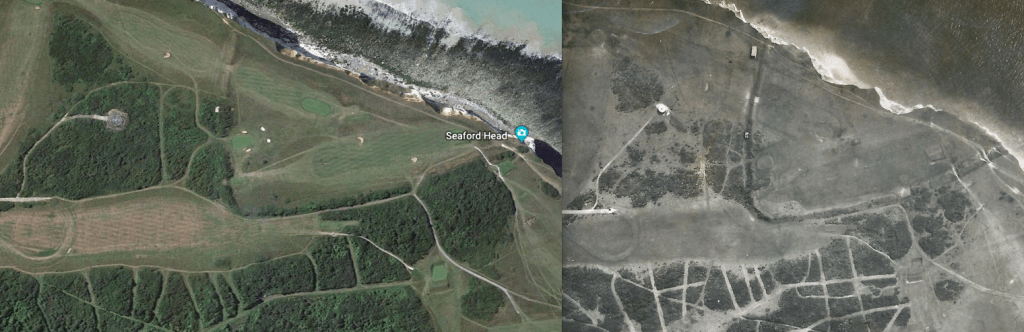
I remember my father pointing out some ancient earthworks near to the golf course which reminds me he used to bring home a golf ball occasionally which he had picked up whilst meeting with the coastguards from the next station.
While we were at Cuckmere a new station officer was appointed by the name of Lumburgh. ( I’m not certain of his spelling) It was a field day for us youngsters to hear the remarks by members of the crew as they unloaded his furniture. “Master Willie’s iron hoop” and “Master Jimmy’s wheelbarrow.” He built a punt which was like a box with a pointed end and painted yellow. He named it “Oh My”. When he stood it on end, it looked like a sentry box. The Coastguard crew were raking over the shingle paths when one of them stood in front of it with his rake over his shoulder, as though he was on sentry duty. The rake got caught in one of the thwarts and down it tumbled doing some little damage to the paintwork. There was a terrific row of about who did it, but we did not let out.
One day, the tanks ran dry and my father being the Senior Commissioned Boatman requested permission to fetch some water from the farm however this was refused and he was told to come back after the routine work was finished. You can guess what the wives felt, being desperate for water for cooking and washing. That night all kettles were emptied and the same requested a made again and refused. My father told the farmer that water came before routines and the farmer said he would report him but my father put in a request to see the Inspecting Commander and this settled the matter and from then on water came before the routines.
In the latter end of July 1899, my father went to the Royal Marine barracks at Portsmouth for a fortnight’s drill. We all went with our mother to stay with one of their grandmothers at Southampton and it was on August the 8th my other brother (Michael) was born. On getting up, we were told to go and see our mother in her room. Our grandmother was there, dressed in a cape and bonnet and we were shown our new little brother. We naturally asked where he came from, to which granny replied “I went out for a walk and found him under a seat on the common so I brought him home and put him in bed with your mother.” Later seeing my father come up the street, we shouted to him “we’ve got a new baby !”, as if he didn’t know!
Cuckmere was no place for a woman with a baby and young boys, so my father put in a request to be moved at his own expense and it was in the summer months that we moved to Lancing in Sussex. All I can remember of leaving Cuckmere was sitting in a railway carriage at Seaford station playing with a little kitten.
Note: Eddie’s father went on to be the Chief Coastguard Officer at Abbotsbury in Dorset. The family later moved to the Isle of Wight. Eddie did not follow his father’s maritime footsteps but became a builder. He married Emily Arnold in 1917 and they also settled on the Isle of Wight.
Eddie later wrote..
In the summer of 1960 my son George and I, spent a holiday in Sussex and we took the opportunity to visit the old Coastguard station at Cuckmere Haven. We had lunch at the Golden Galleon at Exceat bridge and then walked to the old station by a very rough cart track. Little had changed to outward appearances except there was no flagstaff but a lookout tower had been erected which we concluded with something to do with the last war.
I was pointing out the house we lived in, when a gentleman came out. We got into conversation and when he heard that I had lived in the house when I was young, he invited us in to meet his wife. What a surprise when we entered ,what in my time was the washhouse, but was now a kitchenette with a proper kitchen sink, running water and electric lights. There was also a bathroom and a toilet upstairs.
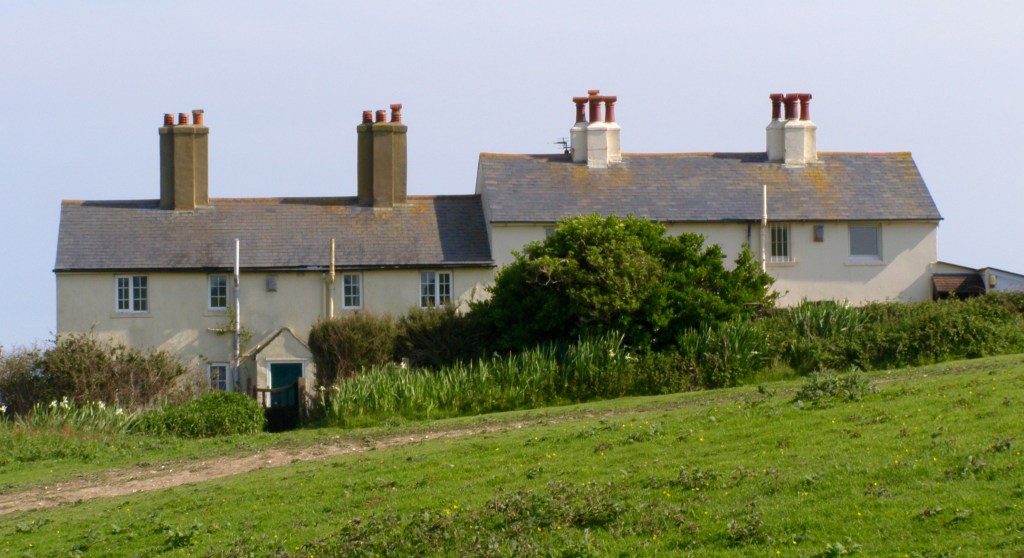
We spent a very nice afternoon with them and they told us they had bought the house for weekends and holidays. The gentleman ( I never learned his name) said that he used to come down to watch the firing-range at Cuckmere when he was a boy. He would not say which year it was as he said that would give his age away, but he knew Mr Berry. I don’t know if it was the same Berry who was stationed there at the same time as my father.
They were a little bit concerned about the cliff falls as part of an extension to the next house, owned by a relative of theirs, was getting very near to the cliff edge. I made another visit in 1961 and a concrete apron had been built in front of the officers house and a groyne was constructed at the mouth of the river to prevent silting. There was also a concrete structure in which was a telephone which was used by the army during the war. The fishermen’s bungalow on the other side of the river had disappeared as had the firing range which is now part of the Seven Sisters Country Park.
Edmund always remembered his time in Sussex. He died on the Isle of Wight in 1988 aged 94 years. All that sea air must have done him good!!
Sources:
Seaford Museum
Shirley Moth, Eastbourne Family Roots.

