My wife and I often visit the parish church of St Simon and St Jude Church at East Dean. My son Toby was christened there and my great-grandparents are buried in the churchyard. The well-maintained graveyard also contains the tomb of Parson Jonathan Darby. If you don’t know about Parson Darby, there is framed account of him inside the church porch; this is reproduced from an item reprinted from the Daily Chronicle of August 1919 which was written by the Reverend Alfred Arthur Evans (1862-1946) who had himself been the vicar of East Dean from 1908 to 1929.
Parson Jonathan Darby was born in 1667, at Lower Lemington in the Cotswolds. On 2nd August 1683, at just 16 years of age, he enrolled at Queen’s College, Oxford. He achieved a Batchelor of Arts degree in 1689 and a Master of Arts in 1704.
In 1691, Jonathan married 18-year-old Anne Segar of Durham. (I wonder where and how they met?) A few years later in 1697, he was appointed the Rector of St Mary and St Peter’s church Wilmington and in 1702, the vicar of St Michael the Archangel church. Litlington.
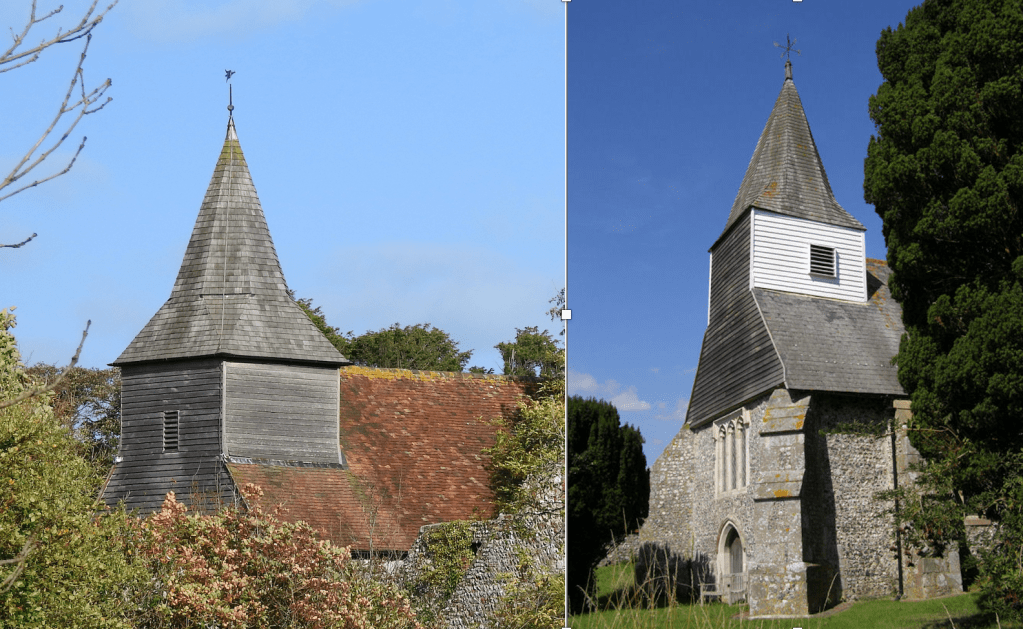
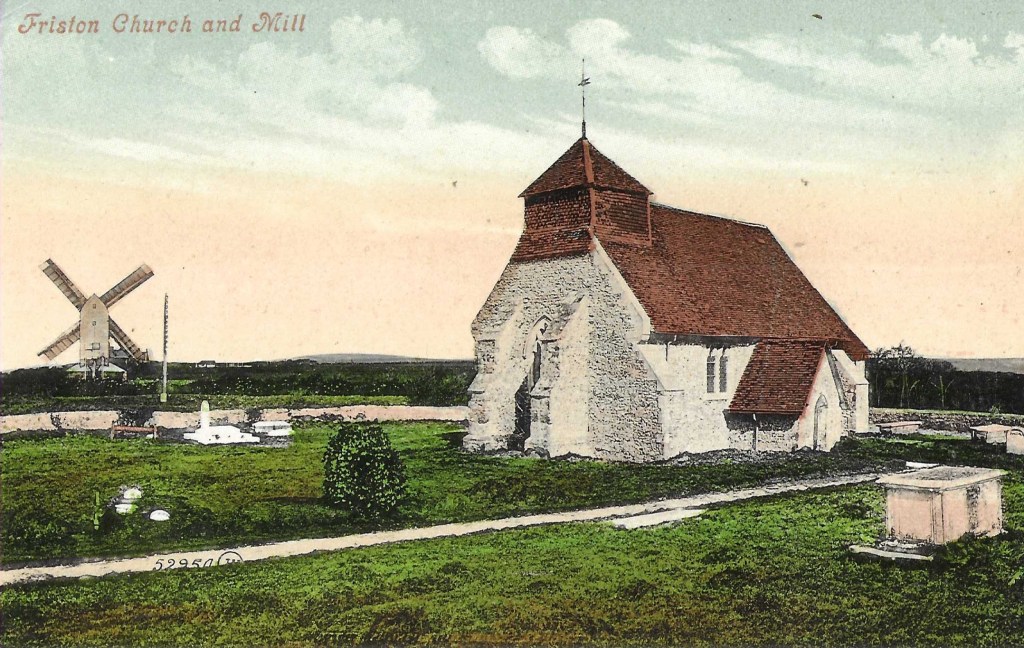
In 1705, he became the Vicar of East Dean and also the Vicar of St Mary’s Church, Friston the following year.
These parishes included the treacherous rocky coastline of Beachy Head, Birling Gap and the Seven Sisters which was littered with shipwrecks.
Reverend Evans was a prolific writer on local history, and was a regular contributor to the Sussex County Magazine; he was clearly an admirer of his predecessor. I will let him tell the story of the good Parson Darby … “The vicar’s heart was troubled by the constant loss of life on the sea-edge of his parish. In those days there were no lighthouses or protection for sailors and wrecks, with loss of life, were a frequent occurrence. The number of mounds of unknown burials in his churchyards were growing each winter, and so it was he did a work which must have cost him a vast amount of time and labour, but which has ever since been connected with his name.”
“Utilising a deep fissure In the chalk with chisel and axe, he hewed out a wide chamber with side recesses for shelter from the wind and he connected this (for his cave was some 20 feet up out of reach of the sea at high water) with the beach by a sloping tunnel and a set of steps. When the channel was running with winter gales, the Reverend Jonathan spent night after night in his cave. Outside hung a great lamp so to guide sailors who might be struggling below in the sea and within the little side recesses we have mentioned he would take rest and shelter and with ropes and other assistances at his side was always ready for an emergency.” The Reverend Evans wrote these lines in the very same study that Parson Darby used two hundred years earlier.
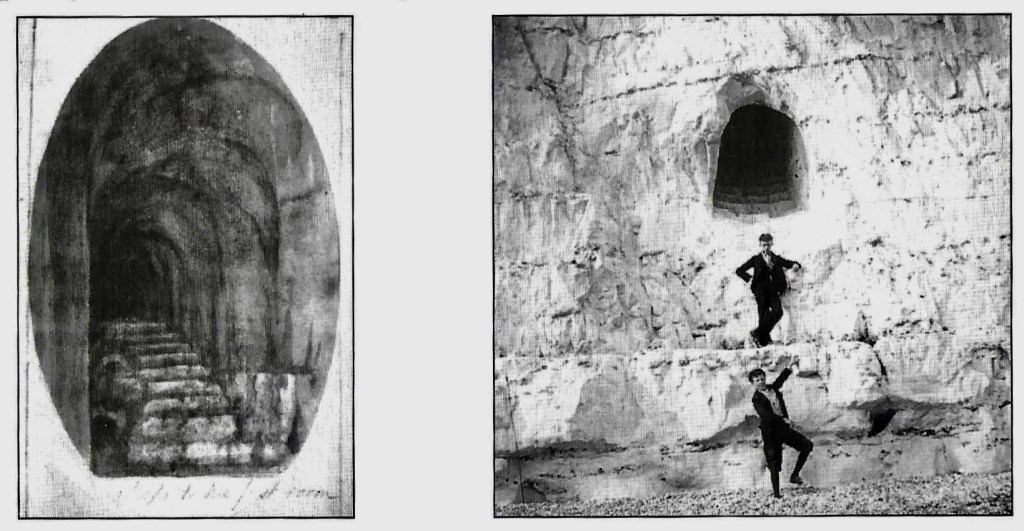
We will never know how affective Parson Darby’s early lighthouse was. There are stories of ships coming right up to the cave during high-tides to allow the crew to step into the cave, another tells of a Sunday shipwreck when the reverend implored his congregation to hurry to the cliffs and assist. I have even read of one ship-wreck which discharged its cargo of a half a million lemons onto the beaches of Birling Gap.
There was an article about Parson Darby in ‘Girls Realm’ magazine (September 1909) which reports that ‘…whilst the wind whistled in his ears and the salt spray drove against his face he would keep his lonely watch, straining his ears for the fitful cries of helpless men or the crashing and splitting of breaking masts. At other times, he would stumble along the shingle to some drenched sailor and revive him with stimulants warmed over the driftwood fire in his cave’. The magazine suggests that his heroism was equal to that of Grace Darling, and that he died of chills contracted through his labours.
The good Parson died on 25th October 1726, at the age of 59 years.
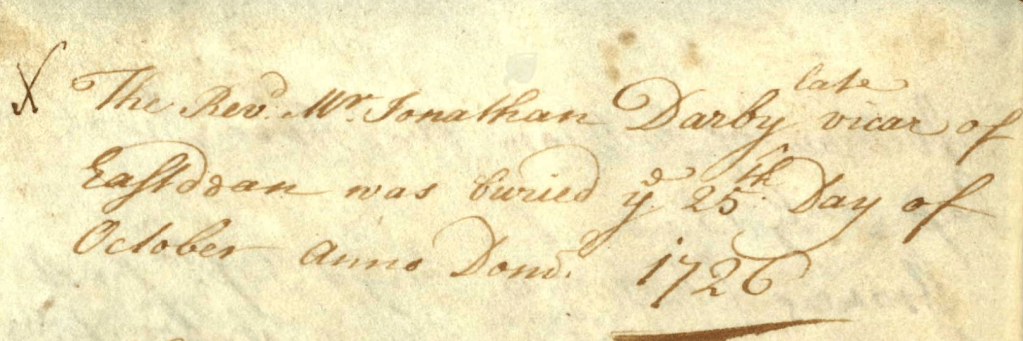
He may well have died of a chill but some say that he died of a broken heart following the death of his wife Anne in 1723.
Sadly over a hundred years later, a ‘humorous’ anecdote received publicity suggesting that Jonathan escaped to his cave to avoid his nagging wife. The Brighton Gazette of 6th September 1866 reports “Darby retired not infrequently to his chambers in the rock to escape from the termagant voice of his wife who was possessed of loquacity and temper to an unusual extent”. This slander is dismissed by the Reverend Evans and as recently as last week when local historian Rosalind Hodge told me ‘the rumours of Parson Darby having a nagging wife are completely untrue, if you look at the entry he made for the burial of his wife in the parish register you can see the blots in the ink where his tears fell whilst he made the entry”

The couple are buried close to the entrance of East Dean Church under a low box-tomb. The ledger stone reads:
HERE LIES THE BODY OF
PARSON DARBY MA OXON
VICAR OF EAST DEAN
WHO DIED ON 26 OCTOBER 1726
HE WAS THE SAILORS FRIEND.
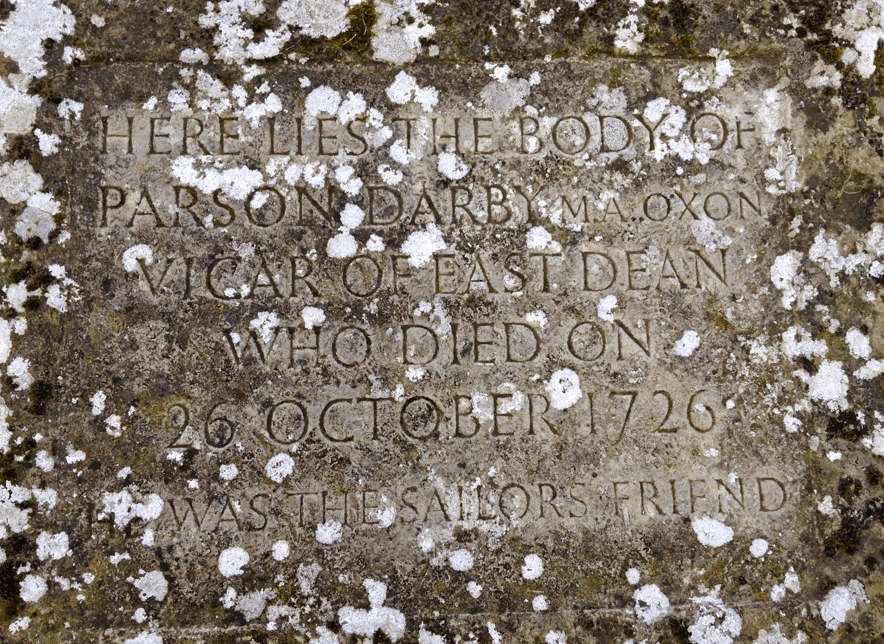
Country Life Magazine of November 1929 reports that ‘Alas! His tomb is neglected and can no longer be deciphered.’
Over the years, the story of Parson Jonathan Darby and his bravery became common knowledge locally although an item in the Eastbourne Gazette (20th September 1882) even suggests that Parson Darby might be ‘mythical’!. It goes on to say that ‘a hundred years ago the his cave consisted of a large cavern, bedchamber and a well-replenished dining room where he took refuge from the tongue of his wife’
In July 1883, the Brighton Standard and Fashionable Visitors List includes ‘Parson Darby’s Hole’ as one of the tourist attractions for visitors to Eastbourne. One of the visitors was Mrs H.L. Cox who wrote an (unpublished) book called ‘Parson Darby’s Cave – Memories of the Coast Blockade at Eastbourne and Beachy Head’. It was serialised in the same newspaper.
In 1880, the Eastbourne Gazette reported that in the 1830s Parson Darby’s Hole was ‘easily accessible from the beach, but the cliff has now worn away and it is now rather difficult to access and is undisturbed save for the cry of the sea-birds.’
Up to about 1910, Parson Darby’s Hole was still accessible via ‘the chimney’ and as late as 1973, a report in the Sussex Express, reports that parts of the cave were still visible.
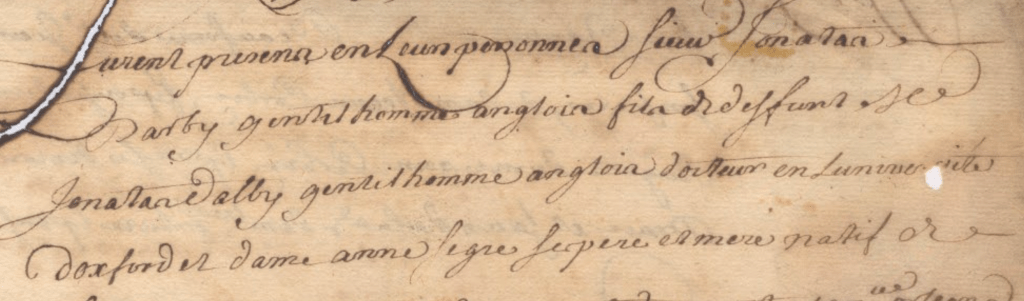
So, is that the end of the story? Well not quite. In 1719, Anne and Jonathan’s son (born in 1696 and also named Jonathan) emigrated to Louisiana in the United States. In 1737 he married Marie-Anne Bachemin in New Orleans. Their marriage certificate (in French) clearly states that Jonathan junior was the son of Jonathan Darby MA Oxford. The Darby family still live in the USA.
Earlier this year, I contacted Douglas Darby the 6 x great grandson of good Parson Darby. Doug lives in Texas and has researched his family tree on Ancestry and I was particularly interested to see a picture of Parson Jonathan Darby. Doug told me that he was planning to visit Sussex with his wife Amanda and I was amazed that he said he would be staying at my local pub, the Lamb Inn.
It was a pleasure to meet up with Parson Darby’s American descendants and we had a good chat over a pint at the Lamb. The following day was Doug and Amanda’s wedding anniversary and they had arranged to have their wedding vows renewed at the same church where their ancestor once officiated. My wife and I were truly honoured to act as their witnesses.
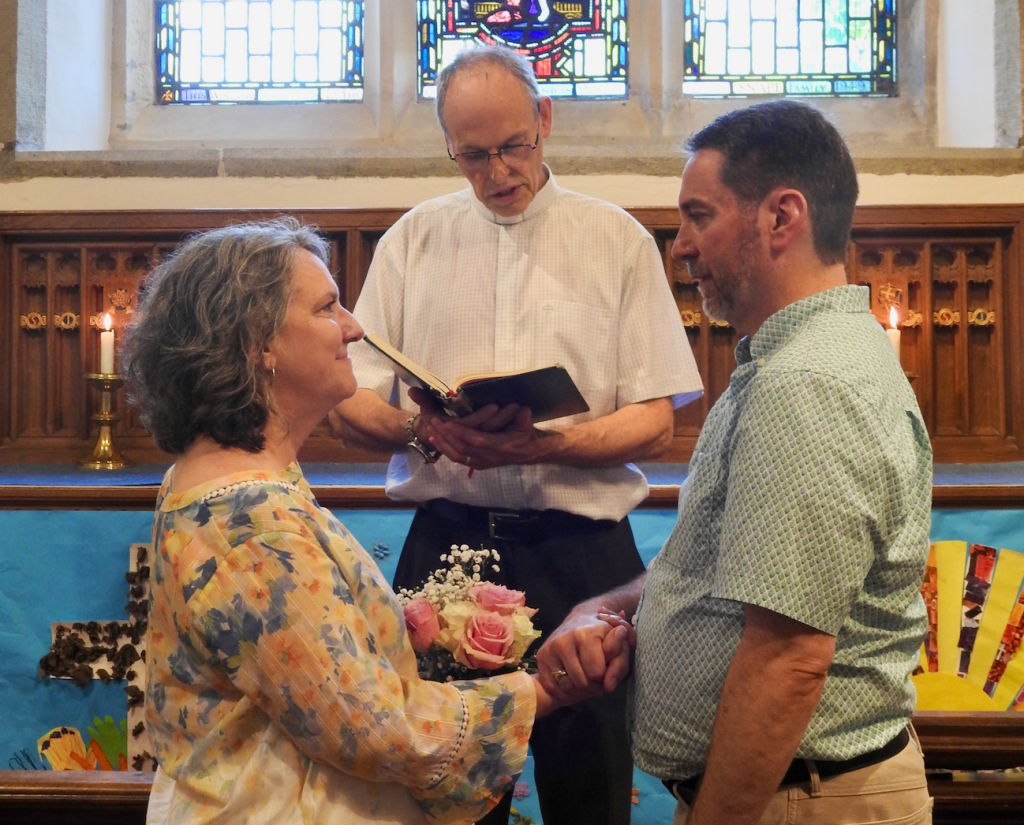
(Kevin Gordon)
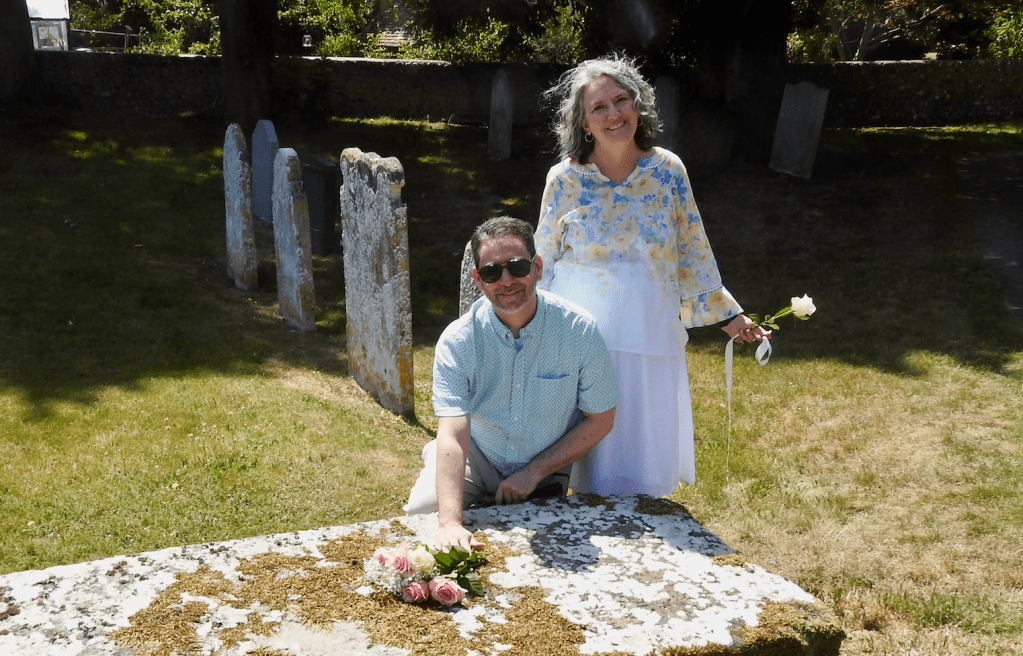
The Reverend Simon Foster officiated and we were all astounded for him to tell us that his middle name was ‘Darby’ and could potentially be a distant cousin of our American visitors. After the service we all visited Parson Darby’s grave where a posy of flowers were laid.
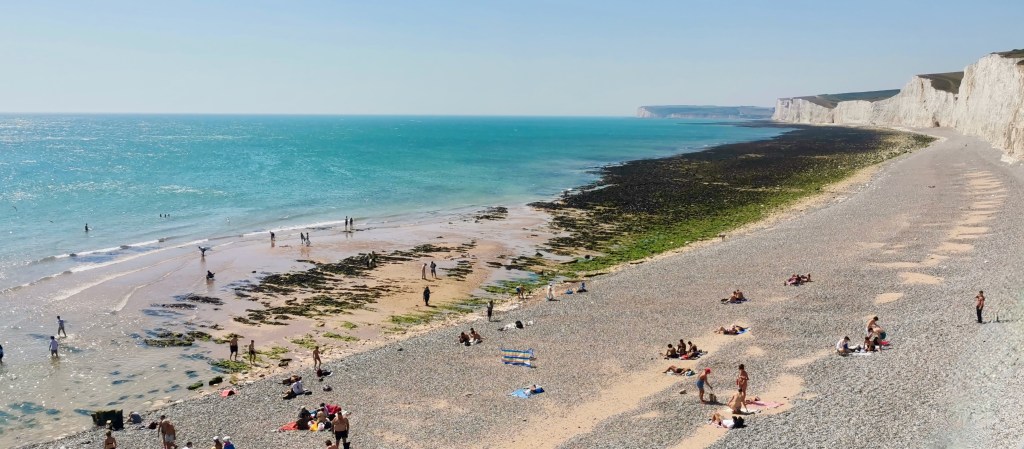
After lunch at the Tiger Inn, a pub which have been well known to Jonathan Darby we headed to Birling Gap, close to the location of Parson Darby’s Hole. The scene could not have been different from those windswept stormy nights when Jonathan kept his humanitarian vigil. It was a very warm day, the tide was out, the sea was calm and the beach dotted with sunbathers and holiday makers.
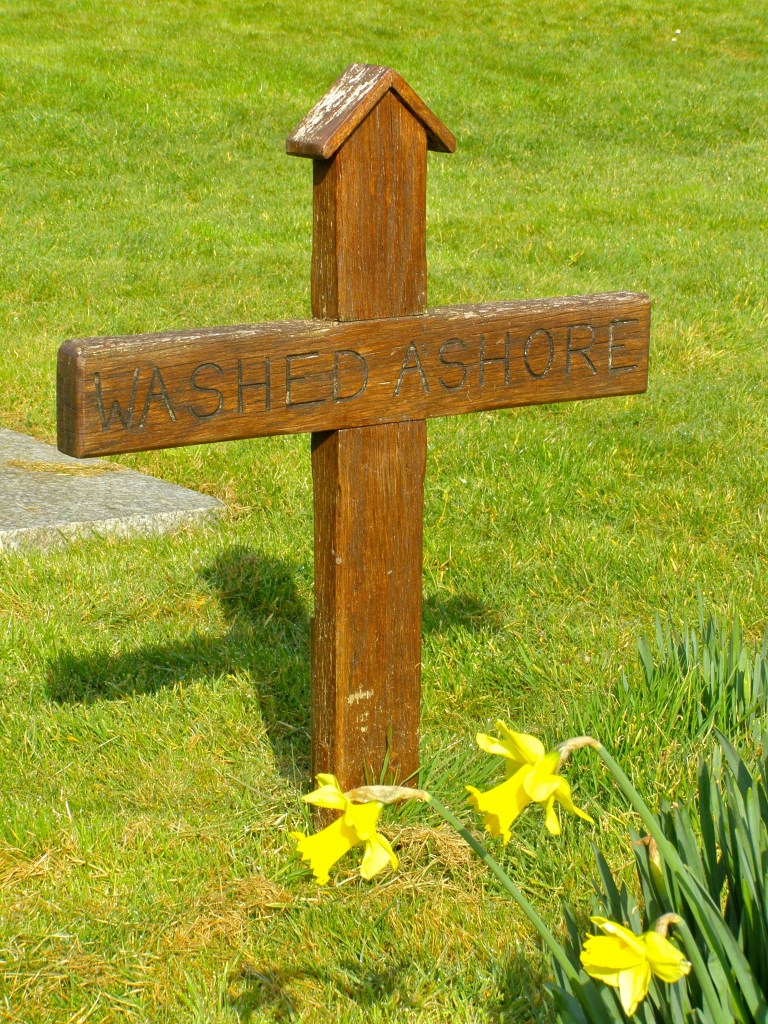
We next visited Friston Church where a solitary wooden grave marked ‘Washed Ashore’ reminded us of the good work of the parson. We also viewed the iconic Seven Sisters from Seaford Head and visited Alfriston and the Long Man of Wilmington. Doug and Amanda seemed to be surprised about how everything was so close-by and I was surprised to learn that you can fit well over five England’s into the size of their home state, Texas.
On our short drive home from East Dean to Eastbourne, my wife and I mused about the surprises and coincidences of the day – but there was to be one more – a 12A bus passed and what was the name on the front of the bus? Jonathan Darby!
SOURCES
National Newspaper Archives
Douglas Darby
East Dean Church
The late John Surtees
THE PORTRAIT OF PARSON DARBY
The portrait of Parson Jonathan Darby is a reconstruction based on facial traits shared across eight generations of his patrilineal descendants, combined with regional English ancestry and period-appropriate clothing and hairstyles. It represents a historical plausible likeness that captures and integrates family resemblance rather than a documented first-hand rendering.
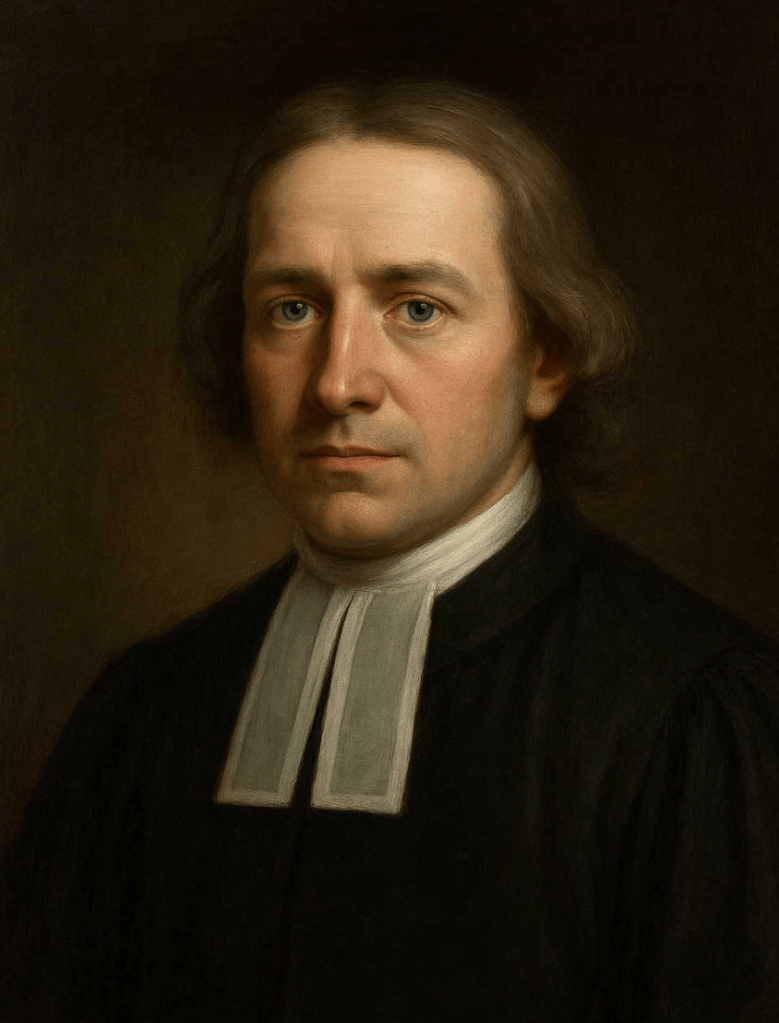
Dough Darby explains: This representation was generated as part of my academic research into AI and is derived from fifteen images of direct descendants across eight generations. I analysed the common traits apparent in the images and factored in the highest probable persistent structures and characteristics inherited through generations. Some of the initial genetic indicators suggested to have strongly been preserved include eye colour – blue is a recessive trait and the fact that it has persisted so consistently in the male line makes it quite likely that he either had blue eyes himself or carried the alleles that produce them, hair colour – medium to dark brown was also stable across the samples I analysed, and facial structures – based on samples, men in the line appear to share a broadly similar cranial shape (e.g., forehead height and face length) and mid-face structure. The jawlines, cheekbones, brows varied but did cluster into a fairly coherent family look. The representation of Parson Darby fell somewhere in the middle of the cluster, so it retains the “Darby look.”

